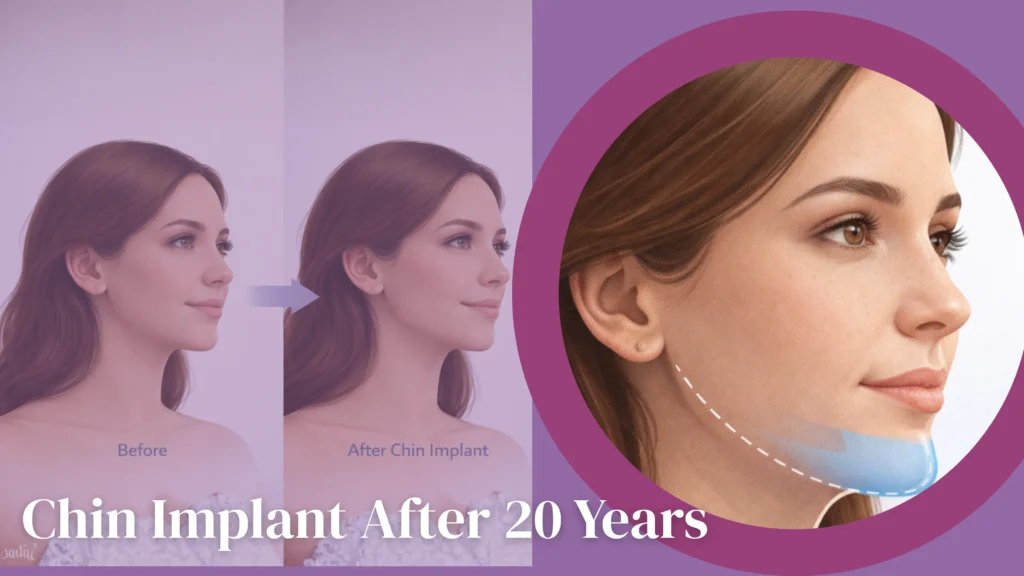
A well-defined chin plays a crucial role in facial balance. For many people, a chin implant has helped correct a weak chin, improve the jawline, and even reduce the appearance of a double chin. While the results can be transformative, a common long-term concern remains:
What happens to a chin implant after 20 years?
Is it still safe? Does it stay permanent? Can it affect aging or cause problems later in life?
If you already have a chin implant—or are considering chin implant surgery—understanding its long-term behavior is essential for making a confident decision.
Why Do People Worry About Chin Implants After 20 Years?
Any cosmetic surgery raises long-term questions, especially procedures involving implants. Patients commonly worry about:
Whether a chin implant is truly permanent
If aging will change how the implant looks
Chances of implant shifting or complications
Whether revision surgery may be required
If it can worsen facial aging or a double chin over time
Most of these concerns arise due to lack of clear, long-term information—not because chin implants frequently fail.
Is a Chin Implant Permanent?
Yes — modern chin implants are designed to be permanent.
High-quality materials such as silicone chin implants and porous polyethylene are created to remain stable for decades. Once placed correctly during chin implant surgery, the implant does not dissolve, shrink, or degrade.
However, it’s important to understand one key point:
The implant stays the same — your face continues to age.
Chin Implant After 20 Years: Implant vs Aging Face
Many people assume changes happen because the implant “fails,” but that’s rarely the case.
What does not change:
The implant’s shape
The implant material
Structural stability
What does change over 15–20 years:
Skin elasticity decreases
Facial fat shifts
Jawline definition may soften
A double chin can develop due to skin laxity or fat accumulation
As a result, the chin implant may appear slightly different—not because of a problem, but due to natural facial aging.
In fact, in many patients, a chin implant continues to support the jawline and reduce the appearance of a double chin even years later.
Can a Chin Implant Move After 20 Years?
In most cases, no.
When chin implant surgery is performed correctly, the implant is placed securely against the chin bone. Over time, surrounding tissues adapt and help stabilize it.
Rare cases of movement may occur due to:
Facial trauma or injury
Poor surgical technique
Significant bone or tissue changes with aging
If movement does happen, it usually develops slowly and can be corrected safely with revision surgery.
Chin Implant Gone Wrong: Is It Common After Many Years?
Searches like “chin implant gone wrong” are common, but the reality is reassuring.
Serious long-term complications are rare, especially when surgery is performed by an experienced plastic surgeon.
Possible long-term issues (uncommon) include:
Mild implant displacement
Capsular tightening
Changes in sensation
Bone pressure changes over many years
Most patients never experience these problems, particularly with proper surgical planning and follow-up care.
Chin Implant, Double Chin & Facial Balance
One often-overlooked benefit of chin implants is their effect on a double chin.
A weak or recessed chin can exaggerate:
Neck fullness
Sagging skin
Double chin appearance
By projecting the chin forward, a chin implant can:
Improve jawline definition
Reduce the visual appearance of a double chin
Enhance overall facial balance
However, after 15–20 years, aging-related skin laxity may still cause a double chin to reappear. In such cases, non-surgical treatments or procedures like neck contouring may be considered—without removing the implant.
Is Revision Surgery Needed After 20 Years?
Not always.
Many people keep their original chin implant for life. Revision surgery is usually aesthetic, not mandatory.
Patients may choose revision due to:
Changing beauty preferences
Facial aging creating imbalance
Desire to address sagging skin or a double chin
Combining procedures like facelift or neck lift
Revision is a choice—not a failure.
When Should You Consult a Surgeon?
Even if everything feels fine, consult a specialist if you notice:
New asymmetry
Persistent discomfort
Swelling or redness
Numbness or tingling
A sensation that the implant is shifting
Periodic check-ups years after chin implant surgery provide peace of mind and early detection of issues.
Chin Implant Surgery in Mumbai: Long-Term Care Matters
Mumbai has become a trusted destination for advanced cosmetic procedures, including chin implant surgery and double chin correction.
Long-term success depends on:
Surgeon expertise
Correct implant size and type
Personalized facial analysis
Post-operative and long-term follow-up
At Clinique Aesthetica, chin implant procedures are approached with a strong focus on facial harmony and longevity.
According to Dr. Vinod Vij, patients achieve the best outcomes when chin augmentation is customized to their facial structure rather than using a one-size-fits-all approach.
With over 29 years of experience, Dr. Vij emphasizes natural-looking results that continue to age gracefully—whether addressing a weak chin, jawline imbalance, or concerns related to a double chin.
Is a Chin Implant Still Worth It After 20 Years?
For most patients, yes.
A well-placed chin implant can:
Remain safe and stable for decades
Continue improving facial balance
Help maintain jawline definition
Support confidence and facial harmony
While aging may bring subtle changes, the core benefits of chin augmentation often last a lifetime—especially when performed by an experienced surgeon.
Final Thoughts
A chin implant after 20 years is usually not a problem—it’s proof of how reliable modern cosmetic surgery has become. With proper surgical technique, personalized planning, and long-term care, chin implants can continue to look natural, feel comfortable, and even help manage concerns like a double chin.
If you’re evaluating an existing chin implant or considering chin implant surgery in Mumbai, consulting an experienced cosmetic surgeon can help you plan confidently for both today and the decades ahead.