

Hair loss can affect your appearance, confidence and quality of life. If you are experiencing a receding hairline, thinning crown, bald patches or progressive hair loss, a hair transplant may be an option for restoring hair in areas where density has reduced.
Dr. Vinod Vij’s provides personalized hair restoration consultations at Clinique Aesthetica in Vashi, Navi Mumbai. Treatment planning is based on your hair-loss pattern, donor hair availability, scalp condition and individual goals.

A hair transplant is a surgical hair-restoration procedure in which hair follicles are taken from a donor area, usually the back or sides of the scalp, and transplanted into areas affected by thinning or baldness.
The goal is to restore hair coverage while creating a natural-looking hairline and appropriate density.
Common hair-transplant techniques include FUE (Follicular Unit Extraction) and FUT (Follicular Unit Transplantation). The appropriate technique depends on factors such as donor hair characteristics, hair-loss pattern, recipient area and treatment goals.
Not everyone with hair loss needs a hair transplant. Depending on the cause and stage of hair loss, medical treatment, PRP or other non-surgical options may be considered.
For more information, see our Hair Loss Treatment in Navi Mumbai guide.

Years of Experience

Happy Patients

Branches

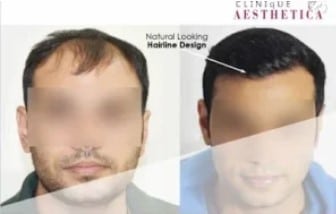


FUT Hair Transplant
Follicular Unit Transplantation (FUT) involves removing a strip of hair-bearing scalp from the donor area.
The strip is divided into individual follicular units, which are then transplanted into the recipient area.
FUT can remain an option for selected patients where strip harvesting is considered appropriate.
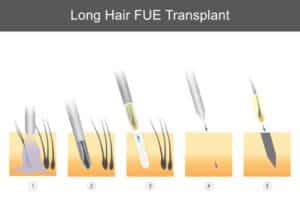
FUE Hair Transplant
Follicular Unit Extraction (FUE) involves harvesting individual follicular units from the donor area using a small punch instrument.
The extracted grafts are prepared and then transplanted into carefully planned recipient sites.
FUE may be suitable for selected patients depending on donor hair characteristics, the extent of hair loss and treatment goals.
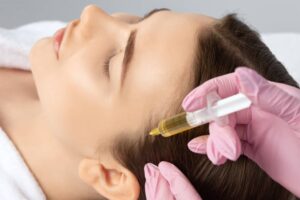
PRP (Platelet-Rich Plasma):
- Blood Collection: Dr. Vij draws a minor blood sample.
- Processing: He spins this blood sample in a centrifuge to segregate and concentrate the platelets and plasma.
- Injection: He then injects the scalp with the Platelet-Rich Plasma, enriched with growth factors, to kickstart hair growth.
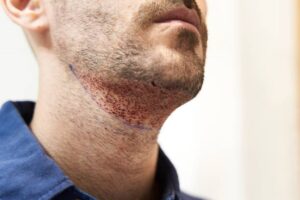
Beard Transplant:
- Donor Area Identification: A suitable area, usually the back of the scalp, is selected to extract hair.
- Extraction: Hair follicles are removed using either the FUE or FUT method.
- Placement: These follicles are then carefully transplanted to the beard region to create a fuller look.

Eyebrow Transplant:
- Donor Hair Selection: Hair is chosen, typically from the back of the scalp, for its fineness.
- Extraction: Hair follicles are gently extracted.
- Transplantation: These hairs are precisely transplanted into the brow area to enhance or reshape eyebrows.

Body Hair Transplant:
- Selection of Donor Area: An area of the body, like the chest or back, is chosen based on the type and quality of hair needed.
- Extraction: Hair is removed from this chosen body part.
- Transplantation: The extracted body hairs are then moved to the scalp or other areas where more hair density is desired.

 Avoid Strenuous Activities: For the first-week post-operation, avoiding heavy exercises is recommended. Physical exertion might hinder the healing process.
- Sleeping Position: To minimise swelling, patients should sleep with their heads elevated for a few days post-surgery. It ensures the treated area remains undisturbed.
- Avoid Direct Sunlight: The post-surgical scalp can be sensitive to the sun. It’s best to wear a hat or cap when outdoors during the first few weeks.
- Shampooing: Before washing the hair, it’s advisable to wait a few days. When shampooing, choose a mild product to prevent irritation.
- Medication: Patients should adhere strictly to any medication regimen their surgeon prescribes. This might include antibiotics or pain relievers.
- Avoid Scratching: While itching might occur as the scalp heals, it’s essential to resist the urge to scratch. Scratching might dislodge grafts or cause infections.
- Alcohol & Smoking: Both alcohol and smoking can negatively affect recovery. It’s recommended to abstain from both for at least a week after the procedure.
 Avoid Strenuous Activities: For the first-week post-operation, avoiding heavy exercises is recommended. Physical exertion might hinder the healing process.
Individual experiences can vary, and following your surgeon’s post-operative guidelines is pivotal for optimal results.
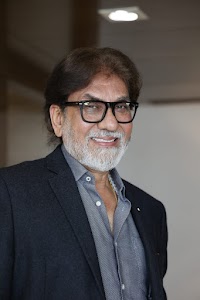





The experience was excellent. Dr. Vinod and his team have helped me with my Laser Hair Reduction treatment. I was a little anxious before the procedure. They reassured me and made me feel at ease throughout the entire process. They also provide the best after care advice and remind me to follow up with them regularly. They have the most advanced technology and equipments which made the procedure completely painless.
I would definitely recommend Dr. Vinod, the team and Clinique Aesthetica for all the skin related issues.


Thank you.
Thank you.

Experience regarding laser is good.
Experience regarding laser is good.






My son (7 yrs old) had surgery on nose a month back. He had cyst on nose bridge. We were worried that he should not suffer during/after surgery. And everything went smooth and much better than we thought. The cut on nose bridge is made such a way that it is not visible easily and with minimum stitches. Medicine given was bare minimum required. The staff is also very cooperative.
And now after a month, the scar on nose is almost invisible with medication. Had no pain or any issues during this period. Now By looking at nose it feels like only a scratch and no surgery is performed.
We are very happy with treatment..
Thank you doctor, team and entire staff.



Dr. Vinod Sir is really a great in his profession as well as an individual. One of the best doctor with perfect diagnosis and treatment, very kind, polite and soft spoken behaviour. I had surgery in left hand ulnar nerve. I made a speedy recovery because of him. Inspite of having a very busy schedule Sir always manage to give personal attention to his every patient and never neglect the patient even while dressing the wounds and normally addressing the reports.
His treatment is very effective and accurate.
The staff is very good, politely addresses your queries manage your appointments.
The infrastructure is very nice & cleanliness is well maintained in every corner.
Thank you so much Sir
& Thank you so much to the entire staff

The facility is so clean and sterile. The staff is friendly and answered all my questions before my surgery.
Overall Ratings 5/5 for Clinique Aesthetica; would definitely recommend!!!!

Thanks sir for everything 😇