
Chin Implant Surgery in Navi Mumbai – Procedure, Risks, Recovery and Cost
Chin implants in Navi Mumbai may be considered for selected individuals who wish to understand surgical options for a recessed or under-projected chin.
Chin augmentation is a surgical procedure in which an implant is placed over the chin bone to modify its projection and contour. It is different from procedures that reposition the jawbone or correct problems with the bite.
Dr. Vinod Vij provides plastic and cosmetic surgery consultations in Navi Mumbai. An individual examination can help determine whether chin augmentation is suitable and explain alternatives, complications, recovery and estimated expenses.
Chin implants are not appropriate for everyone, and a particular facial appearance cannot be guaranteed.
Discuss chin implant surgery in Navi Mumbai, including suitability, potential risks and recovery.
What Is Chin Implant Surgery?
Chin implant surgery, also known as implant-based chin augmentation, involves positioning a biocompatible implant over the front of the lower jawbone.
Depending on the anatomy and implant selected, the operation may change:
Chin projection.
Chin width or contour.
The visible relationship between the chin and lower facial structures.
Selected aspects of the side profile.
The procedure primarily changes chin contour. It does not correct every skeletal jaw difference, dental bite problem or functional disorder.
Read about facial surgery in Navi Mumbai for information about other operations involving facial structures.
Who May Be Considered for Chin Augmentation?
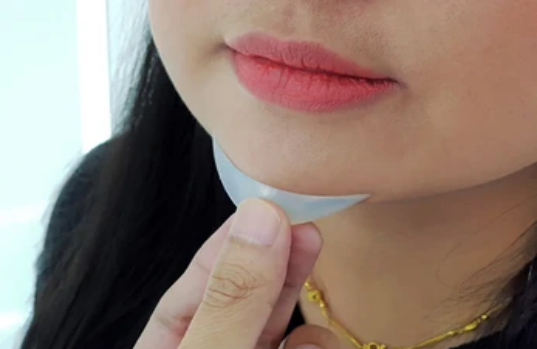
Chin implant surgery may be considered after assessment of the lower face, jawbone, teeth and surrounding soft tissues.
The assessment considers:
Existing chin position and projection.
Lower jaw structure.
Facial asymmetry.
Skin and soft-tissue thickness.
Dental bite and jaw alignment.
Previous facial surgery or injury.
General health and medications.
Smoking and wound-healing risks.
Expectations and understanding of possible outcomes.
Individuals with significant jaw misalignment or bite-related problems may require assessment by an appropriate maxillofacial specialist rather than implant-based augmentation alone.
Types of Chin Implants
The choice of implant material, design and size depends on anatomical findings and the proposed procedure.
Silicone Chin Implants
Solid silicone implants are available in different shapes and sizes.
They may be placed over the chin bone to modify projection. Potential complications include displacement, infection and changes involving surrounding tissues.
Porous Polyethylene Implants
Porous polyethylene implants permit tissue ingrowth into the implant surface.
This characteristic may affect implant stability and the complexity of removal if future surgery becomes necessary.
Custom-Made Chin Implants
A patient-specific implant may be considered in selected circumstances after detailed anatomical assessment.
Customisation does not eliminate surgical risks or guarantee symmetry.
Not every material or implant type is available or appropriate at every facility. The actual options offered should be confirmed before publication.
How Is Chin Implant Surgery Performed?
Step 1: Medical Consultation
The surgeon examines chin projection, lower facial anatomy, medical history and any relevant jaw or bite concerns.
Step 2: Surgical Planning
The proposed implant, incision location, anaesthesia, possible complications and postoperative requirements are discussed.
Step 3: Anaesthesia
Local anaesthesia with sedation or general anaesthesia may be considered according to the operation and individual needs.
Step 4: Incision
An incision may be made beneath the chin or inside the lower lip, depending on the selected surgical approach.
Step 5: Implant Placement
A space is prepared near the chin bone, and the selected implant is positioned. Fixation may be used when appropriate.
Step 6: Closure
The incision is closed, and dressings may be applied.
Step 7: Follow-Up
Postoperative visits help assess swelling, wound healing, implant position and possible complications.
The procedure varies according to anatomy and surgical planning.
What Are the Risks of Chin Implant Surgery?
Chin augmentation is an invasive operation and involves recognised risks.
Possible complications include:
Bleeding or haematoma.
Infection.
Pain and swelling.
Delayed wound healing.
Scarring.
Implant displacement or migration.
Implant exposure or extrusion.
Persistent asymmetry or contour irregularities.
Numbness or altered sensation involving the chin or lower lip.
Injury or irritation of nearby nerves.
Changes in the underlying bone.
Scar tissue around the implant.
Anaesthesia-related complications.
Need for implant removal or revision surgery.
Some complications may be persistent or require additional treatment.
The American Society of Plastic Surgeons identifies implant displacement, infection, sensation changes and revision surgery among the potential complications of chin surgery.
Individual risks should be explained before informed consent.
Chin Implant Recovery and Aftercare
Recovery depends on the incision approach, implant placement, individual healing and any additional procedures.
First Few Days
Swelling, bruising, tightness and discomfort may occur.
Dressings or a supportive bandage may be recommended.
First One to Two Weeks
Some patients gradually resume light activities, depending on medical advice.
An intraoral incision may require specific oral hygiene measures, mouth rinses or temporary dietary changes.
Following Weeks
Swelling generally continues to reduce.
Strenuous activity and pressure on the chin may need to be avoided for a period determined by the treating surgeon.
Longer-Term Healing
Residual swelling and changes in sensation can continue while tissues heal.
The final contour may become easier to assess over several months.
When Should Medical Care Be Sought?
Increasing pain, fever, spreading redness, wound discharge, unexpected swelling or implant exposure requires prompt medical assessment.
Sudden breathing difficulty or other severe symptoms require emergency care.
Chin Implants vs Sliding Genioplasty
Chin implants are generally intended for long-term placement.
However, long-term placement does not guarantee that an implant will never require removal or replacement.
Reasons for additional treatment may include:
Infection.
Implant movement.
Tissue or bone changes.
Persistent discomfort.
Changes in individual preferences.
Unsatisfactory contour or asymmetry.
Ageing and weight changes can also affect the appearance of surrounding facial tissues.
Are Chin Implant Results Permanent?
Chin implants are generally intended for long-term placement.
However, long-term placement does not guarantee that an implant will never require removal or replacement.
Reasons for additional treatment may include:
Infection.
Implant movement.
Tissue or bone changes.
Persistent discomfort.
Changes in individual preferences.
Unsatisfactory contour or asymmetry.
Ageing and weight changes can also affect the appearance of surrounding facial tissues.
Chin Implants vs Sliding Genioplasty
These procedures involve different anatomical approaches.
| Feature | Chin Implant | Sliding Genioplasty |
|---|---|---|
| Technique | Places an implant over the chin bone | Repositions a segment of the chin bone |
| Main structure | Implant and surrounding tissues | Patient’s own bone |
| Chin projection | Modified by implant selection | Modified by bone repositioning |
| Implant-specific risks | Present | No permanent chin implant required |
| Other risks | Infection, nerve injury, asymmetry | Bone healing problems, nerve injury, asymmetry |
| Suitability | Depends on anatomy | Depends on skeletal findings |
Sliding genioplasty is a separate operation. Patients with significant skeletal or bite-related concerns may require additional assessment.
Chin Implant vs Dermal Fillers
Chin implants and dermal fillers are not equivalent treatments.
| Feature | Chin Implant | Chin Filler |
|---|---|---|
| Method | Surgical implant placement | Injection of filler material |
| Duration | Intended for long-term placement | Usually temporary |
| Anaesthesia | Depends on surgical plan | Usually local measures |
| Recovery | Surgical healing required | Often shorter, but varies |
| Important risks | Infection, migration, nerve injury | Vascular blockage, tissue injury, other injection complications |
Dermal fillers can cause serious complications, including vascular occlusion.
Neither approach is suitable for everyone, and no treatment may also be an appropriate choice.
Chin Implants and Rhinoplasty
The appearance of the chin and nose can influence the perceived proportions of the facial profile.
However, this does not mean that chin surgery and rhinoplasty should routinely be performed together.
Any proposed combination requires separate assessment of indications, potential complications and anaesthesia requirements.
For information about nasal procedures, read about rhinoplasty surgery in Navi Mumbai.
How Much Do Chin Implants Cost in Navi Mumbai?
Chin implant cost in Navi Mumbai varies according to the implant, surgical complexity, anaesthesia and facility requirements.
Factors may include:
Standard or custom implant.
Implant material and size.
Surgical approach.
Surgeon and anaesthesia fees.
Operating theatre charges.
Preoperative investigations.
Prescribed medicines and dressings.
Follow-up requirements.
Possible additional care.
Patients should request an itemised written estimate before agreeing to treatment.
The original page contains an indicative range of ₹50,000–₹1,50,000 or more. This should only be republished if the practice confirms that it is current and accurately describes the services included.
For information about other surgical expenses, see plastic surgery cost in Navi Mumbai.
Is Chin Implant Surgery Covered by Insurance?
Chin augmentation undertaken solely for cosmetic purposes is generally excluded from standard health insurance.
Coverage for selected reconstructive procedures depends on the medical indication and individual policy.
Patients should confirm eligibility with their insurer.
Understand chin implant options, individual suitability, risks and recovery with Dr. Vinod Vij.
Frequently Asked Questions About Chin Implants
It is a surgical procedure that places an implant over the chin bone to modify chin projection or contour.
Suitability depends on chin anatomy, jaw alignment, general health, skin characteristics and individual clinical findings.
They are intended for long-term placement, but removal or replacement may become necessary.
Yes. Surgical incisions produce scars. Their location depends on whether an incision is made under the chin or inside the mouth.
Yes. Implant displacement is a recognised complication and may require further treatment.
Yes. Temporary or persistent numbness or altered sensation may affect the chin or lower lip.
Some individuals resume light activities within one to two weeks, while residual swelling and tissue healing can continue longer.
No. Implant-based augmentation does not correct an underlying dental bite or jaw alignment disorder.
Implant augmentation and sliding genioplasty are different surgical techniques. The terminology is sometimes used broadly, so the exact operation should be clarified.
Removal may be possible, but it requires medical assessment and may involve additional surgical risks.
Disclaimer: Website content and visuals are for general informational, educational and representational purposes only, may not reflect individual patient conditions or outcomes, and do not replace personalised medical advice, diagnosis or clinical assessment.