
Nipple Reduction Surgery for Males
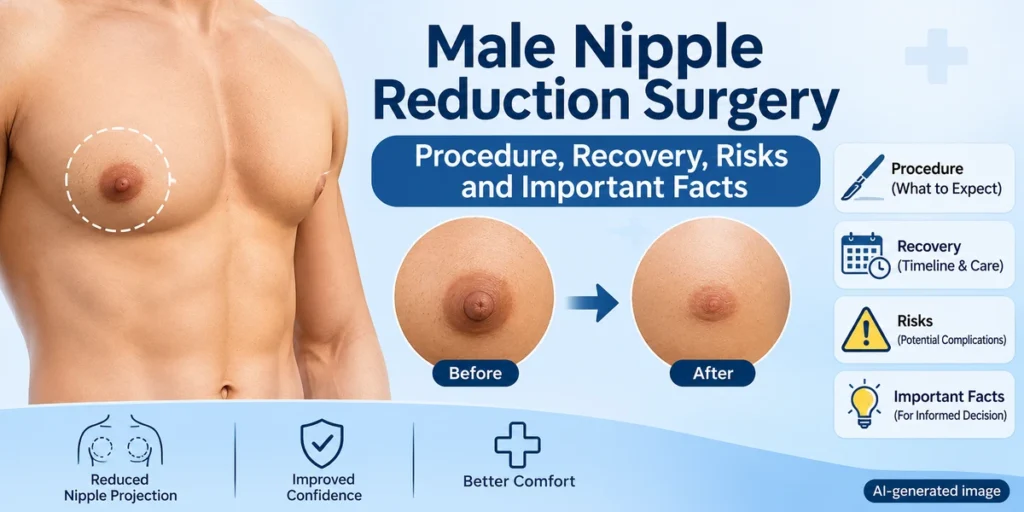
 Nipple size, shape and projection vary naturally among men. However, some men have enlarged, prominent, asymmetrical or elongated nipples that cause physical discomfort or concerns about appearance. Nipple reduction surgery is a procedure that modifies the size or projection of the nipple when appropriate. It differs from gynecomastia surgery, which primarily addresses excess male breast glandular tissue or fat. Understanding the causes, available treatment options, surgical techniques, recovery process and potential risks can help individuals make informed decisions about their health.
What Is Nipple Reduction Surgery for Males?
Nipple reduction surgery is a surgical procedure intended to reduce the height, width or projection of an enlarged nipple. The exact technique depends on the nipple’s anatomy, the degree of enlargement and the individual’s goals.
The procedure may be considered when the nipple itself is disproportionately prominent or elongated. In some cases, the areola—the pigmented skin surrounding the nipple—may also be enlarged and require separate assessment.
Nipple reduction is not the same as male breast reduction. Although both procedures involve the chest area, they address different anatomical concerns. The appropriate approach depends on whether the change involves the nipple, areola, breast tissue, excess fat or a combination of these structures.
For an overview of the differences between these procedures, the American Society of Plastic Surgeons’ information on gynecomastia surgery provides additional background on the treatment of enlarged male breast tissue.
What Causes Enlarged or Prominent Nipples in Males?
Nipple appearance varies considerably, and prominent nipples are not necessarily a sign of a medical problem. Several factors can influence their size and projection.
1. Natural Anatomical Variation
Some males naturally have larger, longer or more projecting nipples. This can be a normal variation in anatomy and does not automatically require treatment.
2. Hormonal Changes
Hormonal changes during puberty can affect breast and nipple development. In many adolescents, breast tissue changes gradually settle over time, so early surgical intervention is not always necessary.
The NHS guide to gynaecomastia explains how hormonal changes can contribute to the development of enlarged male breast tissue.
3. Gynecomastia
Gynecomastia refers to the enlargement of male breast glandular tissue. It can cause the nipple and areola to appear more prominent because of the underlying tissue. Nipple-only surgery may not address the main concern if breast tissue enlargement is responsible.
A medical evaluation can help distinguish enlargement of the nipple itself from changes caused by underlying breast tissue.
4. Changes in Body Weight
Changes in body fat and the distribution of tissue around the chest may influence the overall appearance of the nipple and areola.
5. Ageing and Changes in Skin Elasticity
Age-related changes in skin elasticity and tissue support may affect nipple projection and shape.
6. Previous Surgery or Injury
Scarring, tissue changes or altered healing after an injury or previous procedure may affect nipple shape or symmetry.
Important: A newly enlarged nipple, a persistent lump, nipple discharge, bleeding, skin changes or unexplained pain should be medically evaluated rather than assumed to be a cosmetic concern. The NHS information on breast lumps provides further guidance on symptoms that may need assessment.
Who May Consider Male Nipple Reduction?
Nipple reduction may be considered by adults who have stable nipple anatomy and understand the possible outcomes and limitations of surgery.
A medical assessment may be appropriate when:
The nipple is disproportionately long, wide or prominent.
The appearance remains a concern after normal development has stabilised.
Clothing causes friction or irritation around the nipple.
There is a noticeable difference in nipple size or shape.
The individual understands that scars and changes in sensation may occur.
General health and other factors are suitable for an elective procedure.
Not everyone with prominent nipples needs surgery. If the appearance is related to a treatable medical condition, addressing that condition may be more appropriate than performing nipple reduction alone.
For adolescents, the timing of any elective procedure requires particular care because development may still be ongoing.
Nipple Reduction Surgery vs. Gynecomastia Surgery
How Is Male Nipple Reduction Surgery Performed?

Male nipple reduction surgery begins with an assessment of nipple dimensions, symmetry, skin quality, medical history and individual concerns. The potential benefits, limitations, scarring and possible changes in sensation should be discussed before a treatment decision is made.
Nipple reduction focuses on the nipple itself, whereas gynecomastia surgery addresses enlarged male breast tissue. The appropriate procedure depends on the underlying anatomy and individual clinical assessment.
1. Anaesthesia
Depending on the technique and extent of correction, nipple reduction may be performed under local anaesthesia, sometimes with sedation. The anaesthetic plan depends on the procedure, the patient’s health and the treating medical team’s assessment.
2. Surgical Planning
The surgeon assesses the amount of tissue to be removed while considering the nipple’s natural contour, blood supply, symmetry and sensory function. Careful planning helps determine the appropriate degree of reduction while preserving healthy tissue.
3. Tissue Reduction and Reshaping
Small incisions are used to remove or reshape selected tissue. The technique varies depending on whether the concern involves nipple height, width, projection or a combination of these features.
The objective is to achieve an appropriate reduction while preserving adequate tissue and blood supply. Excessive tissue removal may compromise healing, sensation or the final shape.
4. Closure and Dressing
The incisions are closed using suitable sutures, and a dressing may be applied to protect the area during early healing.
The duration of the procedure and whether it can be performed as a day procedure depend on the surgical technique, anaesthesia and individual circumstances.
Recovery After Male Nipple Reduction Surgery
Recovery varies according to the amount of tissue treated, the surgical technique and the individual’s healing response. Following postoperative instructions and attending recommended follow-up appointments can help monitor healing.
For related information, the American Society of Plastic Surgeons’ gynecomastia surgery recovery guide explains general postoperative considerations for male breast surgery. Recovery instructions may differ for nipple reduction.
First Few Days
Mild discomfort, tenderness, swelling and bruising may occur. Keeping the area protected and following the prescribed wound-care instructions can support healing.
First One to Two Weeks
Swelling and tenderness may begin to settle during this period. Dressings and sutures should be managed according to the treating clinician’s instructions. Avoid unnecessary friction, pressure or stretching around the operated area.
Returning to Normal Activities
Light daily activities may be resumed when comfortable and permitted by the treating clinician. Strenuous exercise, heavy lifting and activities that place pressure on the chest should be avoided until the treating medical professional confirms that they are appropriate.
Scar Maturation and Final Appearance
Incisions may initially appear pink or firm. Scars generally change gradually over several months. The final appearance can take time to stabilise, and some asymmetry or residual differences may remain.
There is no single recovery timeline that applies to everyone. Follow-up assessments help identify healing concerns and guide the return to normal activities.
Benefits and Limitations of Nipple Reduction
Potential benefits of male nipple reduction may include:
A reduction in nipple height, width or projection.
Improved proportionality between the nipple and surrounding chest.
Reduced friction-related discomfort in selected cases.
Greater satisfaction with nipple appearance for some individuals.
However, surgery cannot guarantee perfect symmetry or a specific appearance. Results depend on the original anatomy, healing response, surgical technique and other individual factors.
Nipple reduction may not address concerns caused primarily by enlarged breast tissue or an enlarged areola. A clinical assessment can help determine whether nipple reduction alone or another approach is appropriate.
The decision should be based on a balanced understanding of potential benefits, limitations and alternatives.
Risks and Possible Complications
Nipple reduction is a surgical procedure and carries potential risks. These may include:
Bleeding or infection.
Swelling, bruising and temporary discomfort.
Delayed wound healing.
Visible or thickened scars.
Asymmetry or an unsatisfactory contour.
Temporary or permanent changes in nipple sensation.
Changes in nipple projection or shape during healing.
Reduced blood supply to the nipple in uncommon cases.
The need for revision surgery.
The likelihood and severity of complications vary. A qualified medical professional should explain the risks relevant to the proposed procedure and discuss how complications would be managed.
For additional background on surgical risks, consult the American Society of Plastic Surgeons’ safety information on gynecomastia surgery. This resource concerns male breast surgery, and its information should not be interpreted as a precise estimate of risks for every nipple reduction technique.
Seek prompt medical assessment if you experience increasing pain, spreading redness, fever, unusual discharge, wound separation or significant changes in nipple colour after surgery.
How to Prepare for Nipple Reduction Surgery
Preparation begins with a medical history and examination. The assessment may include a review of medications, allergies, smoking or nicotine use, existing medical conditions and previous chest procedures.
Before surgery:
Discuss your goals: Explain your concerns and expectations to the treating medical professional.
Review medications: Inform the clinician about all prescription medicines, over-the-counter products and supplements.
Follow preoperative instructions: Follow individual guidance about fasting and any medication adjustments.
Discuss smoking and nicotine: Ask about stopping nicotine use before surgery, as it may impair wound healing.
Arrange support: Organise transport and assistance if sedation or general anaesthesia is planned.
Understand aftercare: Discuss wound care, follow-up appointments, activity restrictions and the possibility of revision surgery.
For general guidance, refer to MedlinePlus: Preparing for Surgery. This resource provides general preoperative information; instructions from the treating medical team should take priority.
Do not stop prescribed medicines or begin new treatments without appropriate medical advice.