
Tummy Tuck After Pregnancy: Complete Guide, Benefits, Recovery & Safety

How to Reduce Hair Fall for Men: Causes, Remedies & Best Treatments in India
February 9, 2026
Rhinoplasty Surgery in Mumbai: Complete Guide by a Plastic Surgeon
February 17, 2026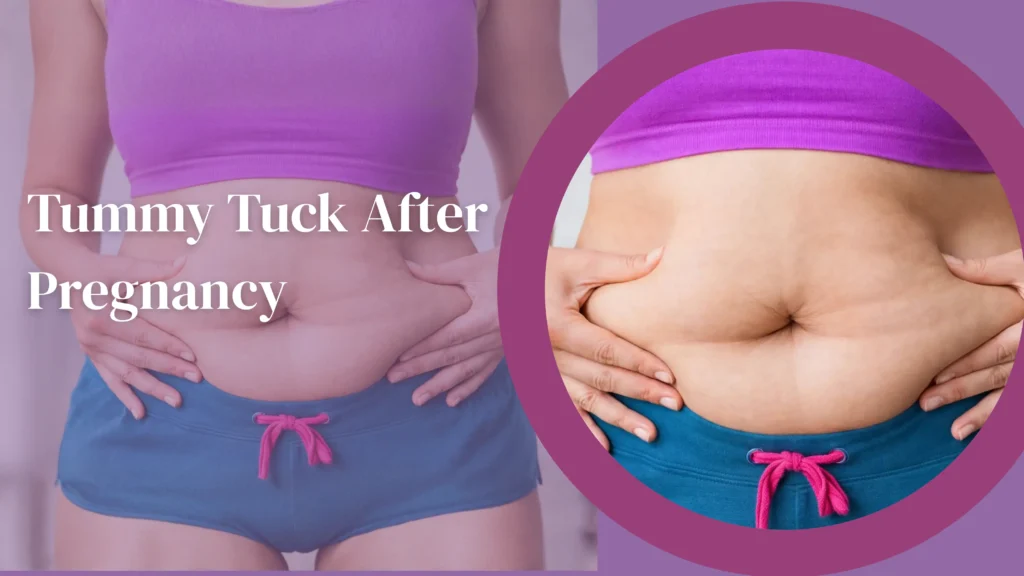
Pregnancy is a beautiful phase of life, but it can leave long-lasting changes in a woman’s body. Many women notice loose belly skin, a constant tummy bulge, stretch marks, and weakened abdominal muscles even months after delivery. Despite following a healthy diet and regular exercise, the body often does not return to its pre-pregnancy shape.
If you are considering a tummy tuck after pregnancy, it is important to understand the procedure, benefits, recovery, and safety aspects before making a decision. Dr. Vinod Vij, a renowned plastic surgeon in Navi Mumbai, specializes in advanced tummy tuck procedures that help restore abdominal shape with natural-looking and long-lasting results.
This guide explains everything in simple and easy-to-understand language—how pregnancy changes the body, why exercise alone may not work, how a tummy tuck helps, its benefits, recovery process, risks, and common questions—so you can decide confidently and with complete clarity.
What Changes Does Pregnancy Cause in the Body?
During pregnancy, the body stretches and adapts to support the growing baby. While some changes improve naturally, others may remain even after childbirth.
Skin Changes
The skin on the abdomen stretches a lot during pregnancy. In many women, the skin loses its elasticity and does not shrink back fully. This results in loose, sagging, or hanging skin, especially in the lower abdomen.
Muscle Changes
To make space for the baby, the abdominal muscles move apart. This condition is known as diastasis recti. When these muscles do not come back together after delivery, it causes a permanent belly bulge, poor posture, and weak core strength.
Fat Accumulation
Hormonal changes during and after pregnancy can lead to stubborn fat deposits, especially around the lower belly. This fat is often resistant to diet and exercise.
Why Exercise and Diet Often Fail
Exercise and diet are very important for overall health, but they have limitations when it comes to post-pregnancy body changes:
- Exercise cannot tighten loose skin
- Separated abdominal muscles do not naturally rejoin
- Stretch marks cannot be removed completely
- Stubborn lower-belly fat may not respond to workouts
That is why many women feel frustrated even after months of effort. When the main problem is skin damage and muscle separation, surgery becomes the only effective solution.
How Does a Tummy Tuck Work?
A tummy tuck (abdominoplasty) is a cosmetic surgery that reshapes the abdomen by addressing the root causes of post-pregnancy belly changes.
During the procedure:
- Excess loose skin is removed
- Weak or separated abdominal muscles are repaired and tightened
- The abdomen is reshaped to look flatter, smoother, and firmer
If needed, liposuction may be added to remove stubborn fat and improve waistline contour. It is important to note that a tummy tuck is not a weight-loss surgery, but a body-contouring procedure.
Benefits of Tummy Tuck After Pregnancy
- Flatter and firmer abdomen
- Repair of weakened or separated abdominal muscles
- Removal of loose skin and improvement in stretch marks
- Better posture and stronger core support
- Clothes fit better and look more flattering
- Improved physical comfort and confidence
Many women also notice relief from lower back discomfort caused by weak abdominal muscles.
Types of Tummy Tuck After Pregnancy
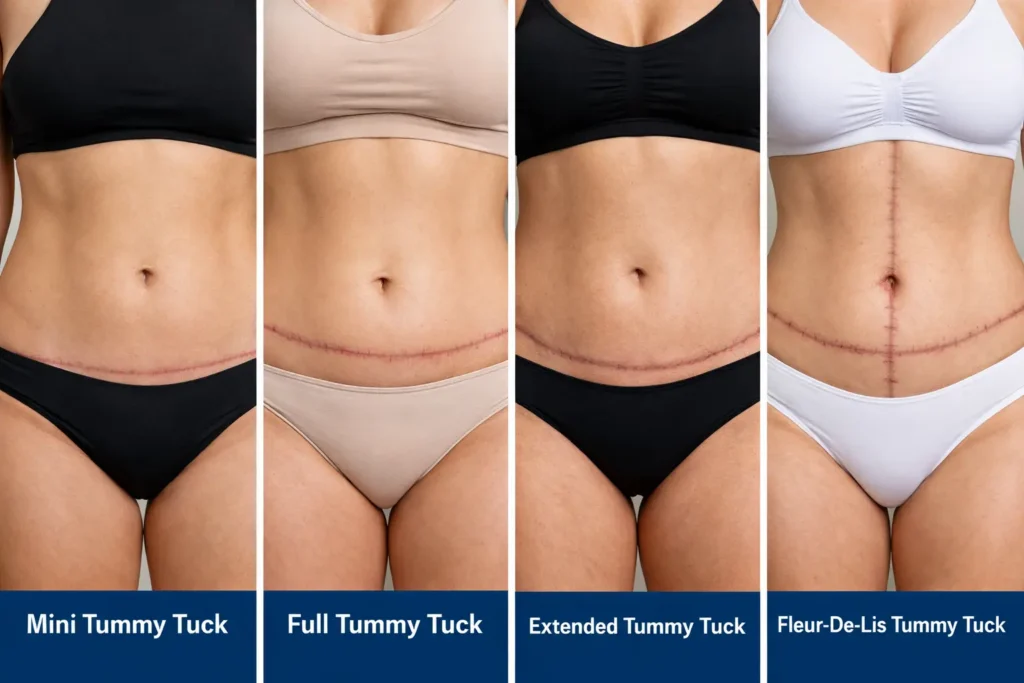
Mini Tummy Tuck
- Best for mild loose skin and fat below the belly button
- Smaller incision and shorter recovery time
- Does not usually involve belly button repositioning
Full Tummy Tuck
- Suitable for moderate to severe loose skin and muscle separation
- Belly button is repositioned
- Most common option for post-pregnancy cases
Fleur-de-Lis Tummy Tuck
- Used in cases of extreme skin laxity
- Involves vertical and horizontal incisions
- Provides more dramatic tightening when excess skin is present both vertically and horizontally
Who Should and Should Not Get a Tummy Tuck?
You May Be a Good Candidate If:
- You have loose belly skin or a persistent tummy bulge after pregnancy
- Your family planning is complete
- Your weight is stable
- You are in good overall health
- You have realistic expectations
You Should Avoid It If:
- You plan to become pregnant again
- You have serious medical conditions like uncontrolled diabetes or heart disease
- Your weight fluctuates frequently
Recovery Timeline (Short Overview)
- Week 1–2: Pain, swelling, rest, and light walking
- Week 3–4: Gradual return to daily activities
- Week 5–6: Exercise may restart with doctor approval
Strenuous activity, heavy lifting, and running should be avoided until fully cleared by your surgeon.
For detailed recovery insights, you can read:
3 Weeks After Tummy Tuck – What to Expect
5 Week Post-Op Tummy Tuck Recovery
Risks and Safety Considerations
Like any surgery, a tummy tuck has risks, though serious complications are rare when performed by an experienced surgeon.
- Pain, swelling, and bruising
- Temporary numbness
- Infection or bleeding (rare)
- Scarring
Poor healing can sometimes lead to more visible scars or require revision surgery. Following post-operative instructions carefully and choosing a qualified surgeon greatly reduces these risks.
Are you thinking about transforming your midsection? Schedule an appointment with a trusted plastic surgeon to explore your options and ensure a smooth recovery
Have you got questions? Let’s dive into the most common concerns and provide clear answers.
Frequently Asked Questions (FAQs)
Will pregnancy again affect tummy tuck results?
Yes. A future pregnancy can stretch the skin and muscles again, reducing the results.
Can a tummy tuck remove a C-section scar?
In many cases, the old scar can be removed or hidden within the new incision.
Is a tummy tuck the same as weight-loss surgery?
No. It is not a weight-loss procedure. For bariatric options, you can read Gastric Sleeve After Tummy Tuck.
When are final results visible?
Most women see final results within 2–3 months, once swelling fully settles.
Choosing the Right Surgeon Matters
A tummy tuck is a major procedure, and results depend heavily on the surgeon’s experience. Choosing a trusted clinic ensures safety, proper guidance, and natural-looking results.
