
Gain the confidence with Blepharoplasty (Eyelid Surgery)
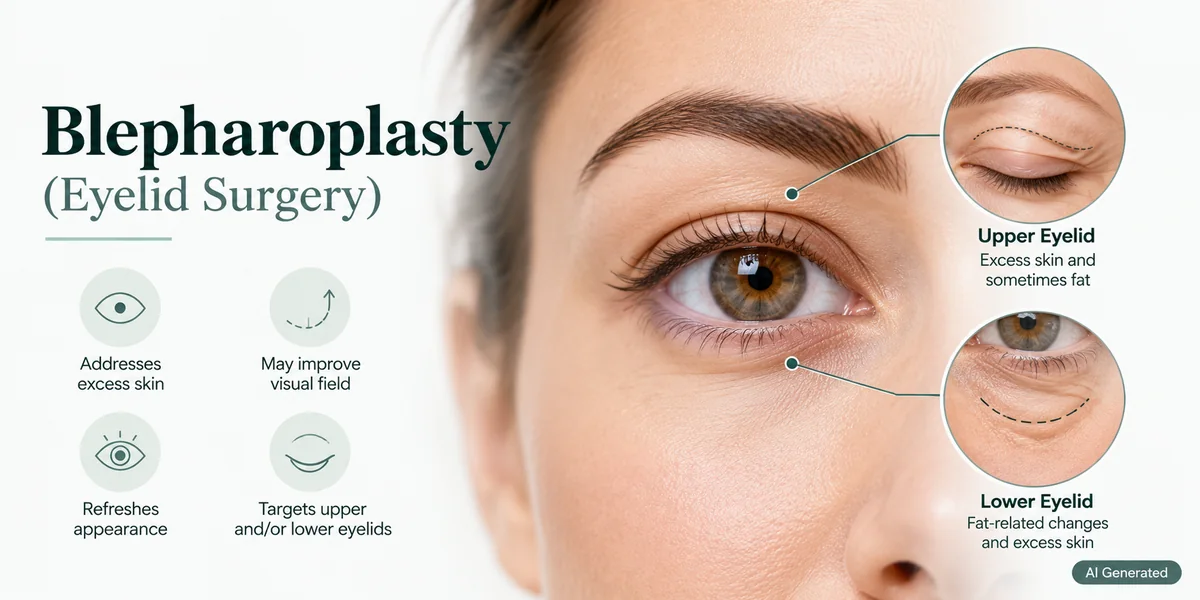
Blepharoplasty, commonly called eyelid surgery, is a surgical procedure performed to modify excess skin, fat or selected tissues around the upper or lower eyelids. It may be considered when eyelid changes affect appearance, comfort or, in certain cases, the upper field of vision.
The skin around the eyes is relatively thin and undergoes changes with age. Over time, reduced skin elasticity, tissue relaxation and changes in fat distribution may contribute to upper eyelid skin folds or fullness beneath the eyes.
However, not every change in eyelid appearance requires surgery. Some concerns may be associated with allergies, fluid retention, underlying medical conditions or natural anatomical variation.
Understanding the indications, limitations and possible complications of blepharoplasty is important before considering the procedure.
What Is Blepharoplasty?
Blepharoplasty is a surgical procedure involving the removal or repositioning of selected eyelid tissues. Depending on the clinical findings, surgery may involve the upper eyelids, lower eyelids or both.
The main objective is to address specific anatomical concerns while preserving eyelid function and protecting the surface of the eye.
There are two principal types of blepharoplasty:
– Upper eyelid blepharoplasty: Addresses excess upper eyelid skin and, when appropriate, underlying fat.
– Lower eyelid blepharoplasty: Addresses selected lower eyelid concerns, including protruding orbital fat, excess skin or tissue irregularities.
The surgical approach depends on eyelid anatomy, skin condition, eye health and individual clinical requirements.
Blepharoplasty does not necessarily correct every cause of drooping eyelids, dark circles or under-eye swelling.
Why Do Eyelids Change With Age?
Age-related changes affect several structures around the eyes, including skin, muscles, connective tissue and orbital fat.
1. Reduced Skin Elasticity
With age, changes in collagen and elastin may reduce the skin’s ability to maintain its original firmness.
This can contribute to loose or folded upper eyelid skin.
2. Changes in Orbital Fat
Fat surrounding the eyeball normally provides cushioning and support.
Changes in supporting tissues may allow some fat compartments to become more prominent, contributing to fullness around the eyelids.
3. Relaxation of Supporting Structures
The tissues supporting the eyelids may gradually weaken, affecting eyelid position and contour.
4. Genetic and Anatomical Factors
Some individuals naturally have fuller upper eyelids or more prominent under-eye fat compartments.
These characteristics may be present even at a younger age.
5. Other Medical Factors
Allergies, thyroid-related eye disease, inflammation and fluid retention may also affect eyelid appearance.
A clinical examination helps distinguish age-related anatomical changes from conditions requiring different treatment.
What Are the Different Types of Blepharoplasty?
Upper Eyelid Blepharoplasty
Upper eyelid blepharoplasty involves modifying excess skin and, when clinically indicated, selected fat or muscle tissue.
It may be considered when:
– Upper eyelid skin forms prominent folds.
– Excess skin rests near or over the eyelashes.
– Eyelid skin interferes with the upper visual field.
– Upper eyelid fullness is associated with anatomical changes.
An important distinction exists between excess eyelid skin, known as dermatochalasis, and true eyelid ptosis, in which the upper eyelid margin sits abnormally low.
These conditions may coexist but do not always require the same surgical procedure.
Lower Eyelid Blepharoplasty
Lower eyelid blepharoplasty focuses on anatomical concerns involving the lower eyelid.
It may involve repositioning or removing selected fat deposits and addressing excess skin when appropriate.
Two commonly used approaches are:
Transcutaneous approach: An incision is generally made just below the lower eyelashes, allowing access to selected tissues.
Transconjunctival approach: An incision is made on the inner surface of the lower eyelid. This approach may be suitable for certain fat-related concerns and does not create an external skin incision.
The choice depends on skin laxity, fat distribution, lower eyelid support and other examination findings.
Lower eyelid surgery does not reliably eliminate all dark circles, pigmentation or fine wrinkles.
Who May Be Considered for Blepharoplasty?
Blepharoplasty may be considered following medical assessment when an individual has specific eyelid concerns that could reasonably be addressed surgically.
Factors evaluated may include:
– Excess upper eyelid skin.
– Selected forms of lower eyelid fullness.
– Functional visual-field interference caused by excess upper eyelid skin.
– Eyelid position and symmetry.
– Tear production and ocular surface health.
– Previous eye surgery or medical conditions.
– General health and ability to undergo surgery.
Suitability cannot be determined from photographs or cosmetic concerns alone.
A qualified clinician should assess whether blepharoplasty, another procedure or non-surgical management is appropriate.
How Is Blepharoplasty Performed?
The surgical technique varies according to the eyelid being treated, the amount of tissue modification required and the patient’s medical condition.
Step 1: Preoperative Assessment
Before surgery, the clinician evaluates the eyelids, surrounding tissues and relevant eye health.
Assessment may include eyelid position, skin laxity, eyebrow position, tear-film function and the ability to close the eyes completely.
Where upper eyelid skin interferes with vision, visual-field testing may be considered.
Step 2: Anaesthesia
Blepharoplasty may be performed under local anaesthesia, sometimes with sedation, or under general anaesthesia.
The choice depends on the planned procedure, individual health factors and the anaesthetic assessment.
Step 3: Surgical Incision
For upper eyelid surgery, the incision is generally positioned within the natural eyelid crease.
For lower eyelid surgery, an incision may be made below the eyelashes or inside the eyelid.
Step 4: Tissue Modification
Depending on the findings, the surgeon may remove excess skin, reposition or conservatively remove fat, or address selected supporting tissues.
Care is required to preserve eyelid closure, support and eye protection.
Step 5: Incision Closure
External incisions are usually closed using fine sutures. Internal incisions may not require sutures in every case.
The patient receives postoperative instructions and a follow-up plan.
The NHS describes blepharoplasty as a procedure that commonly takes approximately 45 minutes to two and a half hours, although duration varies.
What Should Be Checked Before Eyelid Surgery?
A thorough preoperative assessment is important because eyelid surgery involves structures responsible for protecting the eye.
| Assessment | Why It Matters |
|---|---|
| Medical History | Identifies conditions that may affect surgery or healing. |
| Eye Health | Helps identify dry eye, glaucoma and other ocular conditions. |
| Eyelid Position | Distinguishes excess skin from true ptosis. |
| Eyebrow Position | Identifies brow descent that may contribute to upper eyelid hooding. |
| Medication Review | Identifies medicines that may affect bleeding or anaesthesia. |
| Smoking History | Helps assess wound-healing risks. |
| Expectations | Clarifies what surgery can and cannot reasonably address. |
Patients should disclose prescription medicines, non-prescription medicines, herbal supplements and previous eye procedures.
Do not independently discontinue blood thinners or other prescribed medicines. Any medication changes should be directed by the treating clinician in coordination with the prescribing doctor.
What Is the Recovery Time After Blepharoplasty?
Recovery after blepharoplasty varies depending on the surgical approach, extent of tissue modification, individual healing and any associated procedures.
Swelling, bruising, temporary irritation and mild discomfort are common during early recovery.
Typical blepharoplasty recovery timeline
Illustrative ranges, not guaranteed milestones.
First 48 hours
Swelling, bruising and discomfort may develop. The surgical team may recommend carefully applied cold compresses, head elevation and prescribed eye care.
Days 3–7
Swelling and bruising may remain noticeable. External sutures may be assessed or removed according to the surgical technique and healing progress.
Days 7–14
Many individuals experience improvement in visible swelling and bruising. Some can resume desk-based activities, depending on comfort and medical advice.
Weeks 3–6
Residual swelling may continue to decrease. Physical activities may be resumed progressively when cleared by the treating clinician.
Following months
Scar maturation, tissue settling and subtle changes in eyelid contour may continue. Final healing can take several months.
The American Society of Plastic Surgeons notes that visible recovery and complete healing occur on different timelines.
How Should You Care for Your Eyes After Blepharoplasty?
Postoperative instructions should always be individualized.
General recommendations may include:
Keep the head elevated: This may help manage postoperative swelling.
Use prescribed medications: Eye drops, ointments or other medicines should be used exactly as directed.
Apply cold compresses when advised: Avoid excessive pressure on the eyelids.
Avoid rubbing the eyes: Friction may irritate healing tissues.
Limit strenuous activities: Heavy lifting and vigorous exercise may need to be restricted temporarily.
Protect the eyes from sunlight: Sunglasses may help reduce light sensitivity and provide protection.
Follow instructions for contact lenses and cosmetics: Resume their use only when cleared by the treating clinician.
Attend follow-up appointments: These allow assessment of healing and identification of complications.
Routine reading or screen use does not necessarily need to be avoided for an entire week, but activities may need to be limited if they cause dryness or discomfort.
Similarly, there is no standard evidence-based requirement to avoid eggs, seafood or fermented foods for several weeks after uncomplicated blepharoplasty unless an individual medical reason exists.
What Are the Possible Risks and Complications of Blepharoplasty?
Blepharoplasty is a surgical procedure and carries potential complications.
Possible risks include:
| Risk or Complication | Explanation |
|---|---|
| Swelling and Bruising | Common during early recovery. |
| Dry Eyes | Tear-film symptoms may develop or worsen. |
| Infection | Can occur at the surgical site. |
| Bleeding | May occur during or after surgery. |
| Asymmetry | Eyelids may heal or settle differently. |
| Scarring | External incisions may leave visible scars. |
| Difficulty Closing the Eyes | May occur temporarily or persist in some cases. |
| Ectropion | Outward turning of the lower eyelid. |
| Lower Eyelid Retraction | Abnormal downward positioning of the lower eyelid. |
| Visual Disturbance | Temporary blurred vision may occur; serious visual complications are rare. |
| Revision Surgery | May be required for complications or an unsatisfactory result. |
Rarely, bleeding within the orbit can threaten vision and requires emergency treatment.
When Should You Seek Urgent Medical Attention?
Following eyelid surgery, seek immediate medical assessment for sudden loss or reduction of vision, severe or rapidly worsening eye pain, marked swelling (particularly on one side), significant bleeding, or new difficulty moving the eye.
Fever, increasing redness, discharge or worsening discomfort also require prompt assessment for possible infection.
Can Blepharoplasty Improve Vision?
Blepharoplasty may improve the upper visual field when excess upper eyelid skin physically obstructs vision.
In such cases, the procedure may be considered functional rather than solely cosmetic.
However, visual-field impairment can have several causes, including true eyelid ptosis, eyebrow descent and eye disease.
Blepharoplasty does not correct refractive errors such as short-sightedness or long-sightedness.
The American Society of Plastic Surgeons published an evidence-based clinical practice guideline addressing surgical management of upper visual-field impairment related to eyelid ptosis and excess skin.
What Can Blepharoplasty Not Correct?
Understanding the limitations of eyelid surgery is essential.
Blepharoplasty does not consistently correct:
Dark circles caused primarily by pigmentation.
Fine wrinkles around the outer corners of the eyes.
Significant eyebrow descent.
True eyelid ptosis unless the relevant muscles or supporting structures are specifically addressed.
Under-eye swelling caused by allergies or systemic medical conditions.
All forms of facial asymmetry.
Different underlying causes require different management approaches.
What Is the Difference Between Blepharoplasty and Ptosis Surgery?
Although both procedures involve the eyelids, they address different anatomical problems.
| Feature | Blepharoplasty | Ptosis Surgery |
|---|---|---|
| Main Concern | Excess skin or selected fat-related changes | Abnormally low upper eyelid margin |
| Primary Structure | Skin, fat and selected supporting tissues | Eyelid-lifting mechanism |
| Functional Purpose | May relieve obstruction caused by excess skin | May raise an abnormally low eyelid margin |
| Assessment | Skin laxity, fat distribution and eyelid function | Eyelid height and levator muscle function |
| Combined Treatment | May be performed with ptosis correction | May be combined with blepharoplasty |
Swipe left or right to view the full table.
A clinical examination is necessary because dermatochalasis and ptosis may occur together.
How Long Do Blepharoplasty Results Last?
The effects of blepharoplasty may be long-lasting, but they are not guaranteed to be permanent.
Surgery modifies selected tissues at the time of the procedure. It does not stop natural ageing or prevent future changes in skin elasticity, tissue support and fat distribution.
Long-term outcomes depend on individual anatomy, surgical technique, healing and subsequent ageing.
Some individuals may require additional treatment or revision surgery.
Is There an Alternative to Blepharoplasty?
The appropriate alternative depends on the underlying concern.
For example, allergy-related swelling may improve with treatment of the allergy, while dry-eye symptoms require appropriate ocular management.
Selected skin-related concerns may be managed with non-surgical treatments, although these cannot reliably reproduce the anatomical changes achieved through surgery.
Where true ptosis is present, a separate corrective procedure may be necessary.
Observation without treatment may also be appropriate when there is no functional problem and the individual does not wish to undergo surgery.
Frequently Asked Questions About Blepharoplasty
1. Is blepharoplasty a major surgery?
Blepharoplasty is often performed as an outpatient procedure, but it remains an operation involving delicate structures around the eyes. It requires appropriate medical assessment, surgical planning and postoperative care.
2. Is eyelid surgery painful?
Anaesthesia is used to manage pain during surgery. Afterward, some discomfort, tightness or irritation may occur. Severe or increasing pain is not expected and should be assessed promptly.
3. How long does swelling last after blepharoplasty?
Swelling is commonly most noticeable during early recovery and may improve substantially over one to two weeks. Mild residual swelling can persist longer.
4. Can blepharoplasty remove dark circles?
Blepharoplasty does not reliably treat dark circles caused by pigmentation, visible blood vessels or thin skin. It may change shadows associated with certain anatomical contours, but the outcome varies.
5. Will there be scars after eyelid surgery?
External incisions create scars. Upper eyelid incisions are commonly positioned within the natural crease, while lower eyelid incisions may be placed near the eyelashes. Scar visibility varies.
6. Can blepharoplasty affect eyesight?
Temporary blurred vision may occur because of swelling, ointment or ocular surface irritation. Rare but serious vision-threatening complications are possible. Sudden visual changes require emergency evaluation.
7. Is blepharoplasty suitable for younger adults?
Age alone does not determine suitability. Some younger adults have inherited eyelid characteristics that may be evaluated, but surgery is not automatically necessary.
Conclusion
Blepharoplasty is a surgical procedure used to address selected anatomical changes of the upper and lower eyelids. It may have a functional role when excess upper eyelid skin obstructs vision, while other procedures are undertaken for cosmetic concerns.
The appropriate surgical approach depends on eyelid anatomy, eye health, medical history and individual circumstances.
Although improvements may be possible, blepharoplasty carries risks, and results vary. Understanding the limitations, recovery requirements and potential complications supports informed decision-making.
Medical References
The following resources provide further information about eyelid surgery, recovery, risks and clinical assessment.
Medical Disclaimer
This article is intended for general educational purposes only and does not replace individual medical advice, diagnosis or treatment. The information should not be used to determine personal suitability for surgery. A qualified medical professional should