
Chin Implant Recovery: Swelling, Diet, Exercise & Results
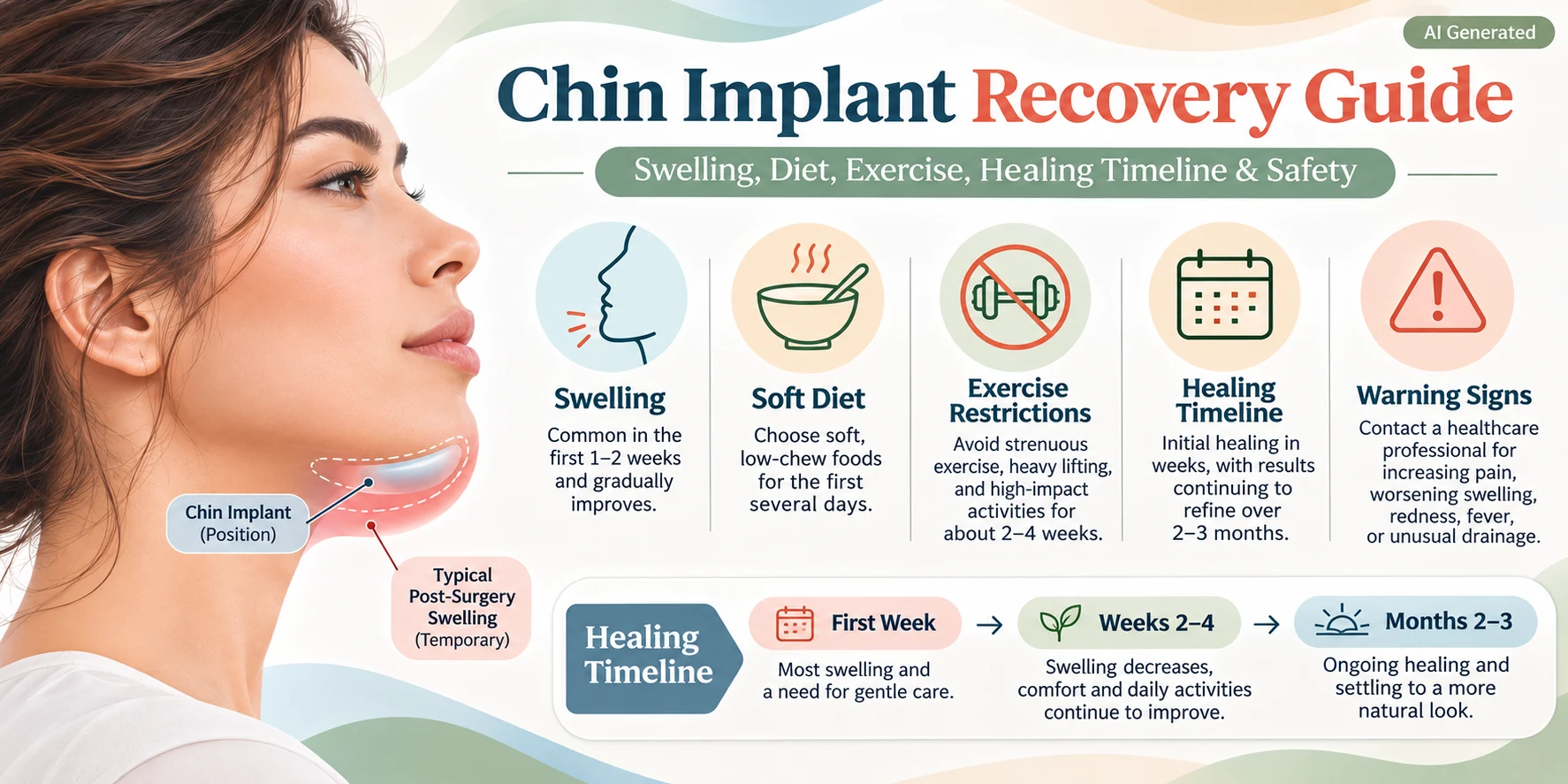
Chin implant recovery generally involves swelling, bruising, tenderness and temporary tightness during the first several days after surgery. Many patients experience noticeable improvement over the following one to two weeks, although complete healing and the final appearance of the chin may take several weeks or months.
Recovery depends on several factors, including the surgical technique, implant placement, incision location, underlying medical conditions and individual healing response.
Chin augmentation is a surgical procedure, and it carries risks such as infection, bleeding, implant displacement, nerve injury, scarring and possible revision surgery. Understanding appropriate postoperative care helps patients recognise expected healing changes and identify symptoms that require medical attention.
This guide explains the stages of chin implant recovery, swelling management, dietary precautions, physical activity, wound care, potential complications and long-term considerations.
What Is a Chin Implant?
A chin implant is a surgically placed device designed to increase chin projection or modify the contour of the lower face.
The implant is usually positioned over the chin bone through an incision made either inside the mouth or beneath the chin.
The procedure is also known as implant-based chin augmentation or implant mentoplasty.
Chin augmentation differs from sliding genioplasty, which involves repositioning part of the chin bone rather than placing an implant.
Surgical planning considers facial anatomy, chin projection, jaw relationships, soft-tissue characteristics and individual medical suitability.
A chin implant does not correct every form of jaw imbalance. Patients with significant skeletal discrepancies or bite abnormalities may require a different type of evaluation or treatment.
How Long Does Chin Implant Recovery Take?
Chin implant recovery typically progresses through several stages. The first week usually involves the most noticeable discomfort and swelling, followed by gradual improvement.
Many patients can resume some routine activities within one to two weeks, while more demanding activities may require additional restrictions.
Recovery Period | Common Healing Changes | General Precautions |
|---|---|---|
First 24–48 hours | Swelling, tenderness, tightness and possible bruising | Rest, protect the chin and follow prescribed medication instructions |
Days 3–7 | Swelling may peak before gradually improving | Follow wound-care instructions and avoid strenuous activity |
Week 2 | Bruising and visible swelling often decrease | Gradually resume light daily activities if cleared |
Weeks 3–4 | Continued reduction in swelling and discomfort | Increase physical activity only as advised |
Weeks 4–8 | Further soft-tissue healing and contour refinement | Attend follow-up appointments and monitor persistent symptoms |
Months 2–3 | Residual swelling and altered sensation may continue improving | Seek assessment for unexpected changes |
Months 3–6 | Further settling of tissues may occur | Review the final contour and any continuing concerns |
These are approximate stages rather than fixed recovery deadlines. Some patients heal more quickly, while others need longer.
The American Society of Plastic Surgeons explains that healing continues over several weeks as postoperative swelling decreases.
American Society of Plastic Surgeons+1
What Happens During the First 48 Hours After Chin Implant Surgery?
The first 48 hours are an important period for rest, observation and early wound care.
Patients may experience:
Mild to moderate discomfort around the chin.
Swelling affecting the chin and lower face.
Bruising near the surgical area.
A feeling of tightness or pressure.
Temporary numbness or altered sensation.
Mild difficulty chewing or moving the lower lip comfortably.
These symptoms can occur after uncomplicated surgery, but their severity varies.
Managing Early Swelling
The operating surgeon may recommend keeping the head elevated while resting or sleeping.
Cold compresses may also be suggested during the early recovery period. They should be applied only according to the surgeon’s instructions, with protection between the cold pack and the skin.
Direct pressure on the implant or prolonged exposure to extreme cold should be avoided.
Rest and Positioning
During early recovery:
Sleep in the position recommended by the surgeon.
Avoid resting the chin directly against a pillow or firm surface.
Do not apply unnecessary pressure to the surgical area.
Avoid heavy lifting and strenuous physical activity.
Take prescribed medication exactly as instructed.
Some patients may have dressings, surgical tape or a supportive garment. These should not be removed or adjusted without appropriate instructions.
Chin Implant Swelling: What Is Normal?
Swelling is an expected response to surgical tissue manipulation.
It occurs because the body’s inflammatory and healing processes temporarily increase fluid accumulation around the operated area.
The chin may initially appear larger, firmer or less symmetrical than anticipated.
How Does Swelling Change Over Time?
Days 1–3: Swelling may increase and can be most noticeable during this period.
Days 4–7: Swelling often begins to decrease, although firmness and tightness may continue.
Weeks 2–3: Many patients notice improvement in visible swelling and facial comfort.
Weeks 4–8: Further soft-tissue healing occurs, with gradual refinement of the chin contour.
Following months: Mild residual swelling or altered sensation may persist in some individuals.
These patterns are not universal. The amount and duration of swelling depend on the extent of surgery and individual healing factors.
When Is Swelling a Warning Sign?
Seek prompt medical assessment if swelling:
Increases rapidly or becomes unusually severe.
Is accompanied by worsening pain.
Occurs with fever or spreading redness.
Produces pus or foul-smelling drainage.
Develops alongside a sudden change in chin shape.
Causes difficulty swallowing or breathing.
Difficulty breathing or rapidly progressive swelling affecting the airway requires emergency medical care.
Eating After Chin Implant Surgery: Diet and Nutrition
Dietary instructions depend partly on the incision location.
Patients with an incision inside the mouth may require additional oral-hygiene precautions and temporary dietary modifications.
Soft foods are often recommended during early healing because they require less chewing and place less strain on the operated tissues.
Foods Commonly Suitable During Early Recovery
Food Category | Examples | Considerations |
|---|---|---|
Soft protein foods | Scrambled eggs, soft tofu, well-cooked lentils | Provide protein for normal tissue repair |
Dairy foods | Yoghurt, soft paneer, milk if tolerated | May provide protein and other nutrients |
Soft carbohydrates | Porridge, mashed potatoes, soft rice | Usually require minimal chewing |
Cooked vegetables | Soft carrots, pumpkin, mashed vegetables | Provide a variety of nutrients |
Soft fruits | Banana, stewed apple, fruit purée | Generally easier to chew |
Fluids | Water, soups and other suitable drinks | Support hydration |
Patients with diabetes, food allergies, swallowing difficulties or other medical conditions may need individual dietary advice.
Foods That May Need Temporary Restriction
Depending on the surgical approach and the surgeon’s instructions, patients may need to limit:
Hard foods that require forceful chewing.
Tough or chewy foods.
Crunchy foods that may irritate an intraoral incision.
Very hot foods or drinks if the mouth remains numb.
Foods that cause discomfort around the surgical area.
There is no single dietary timeline appropriate for every patient.
Why Is Adequate Nutrition Important?
Normal wound healing requires sufficient energy, protein, fluids, vitamins and minerals.
A balanced diet can support the body’s repair processes, but no specific food or supplement guarantees faster recovery or prevents surgical complications.
Nutritional supplements should be used when medically indicated rather than routinely taken in high doses.
When Can You Exercise After Chin Implant Surgery?
Returning to physical activity too early may increase swelling, discomfort or bleeding and can place unnecessary stress on healing tissues.
Exercise restrictions depend on the procedure, implant position, surgical approach and individual recovery.
First Week: Rest and Gentle Movement
During the first week, light walking may be appropriate once the treating surgical team confirms it is safe.
Patients are generally advised to avoid:
Heavy weightlifting.
Running or high-intensity cardiovascular exercise.
Activities involving prolonged bending or straining.
Exercises that place direct pressure on the chin.
Contact sports or activities with a risk of facial injury.
Gentle movement may support general circulation, but exercise should not be used as a treatment for postoperative swelling.
Weeks 2–3: Gradual Return to Activity
Some patients may be permitted to increase light activity as swelling and tenderness improve.
The decision should depend on:
Wound healing.
Pain and swelling.
Incision location.
Implant stability.
The surgeon’s postoperative assessment.
Patients should not assume that feeling comfortable means the surgical tissues have fully healed.
Weeks 4–6: Increasing Physical Activity
Some individuals may gradually return to more demanding exercise during this period if healing is satisfactory and their surgeon provides clearance.
Activities involving impact to the chin may require longer restrictions.
There is no universal date when weightlifting, gym exercise or contact sports becomes safe after chin implantation.
When Can You Return to Work After Chin Implant Surgery?
Returning to work depends on both recovery progress and the physical demands of the job.
Some patients with desk-based jobs may feel ready to return within approximately one week, while others need more time.
Individuals whose work involves heavy lifting, prolonged physical activity or possible facial impacts may require longer restrictions.
Factors Affecting Return to Work
Persistent swelling or bruising.
Pain or discomfort.
Physical demands of the occupation.
Medication-related drowsiness.
Wound healing.
The need for postoperative follow-up.
Driving should be avoided while taking medicines that impair alertness, and patients should follow any restrictions related to anaesthesia.
The ability to resume work should be assessed individually rather than based on a fixed recovery schedule.
How Should You Care for the Incision After Chin Implant Surgery?
Incision care is an important part of reducing wound-related complications.
Instructions differ depending on whether the incision is located beneath the chin or inside the mouth.
External Incision Care
When an incision is placed beneath the chin, the surgeon may provide specific instructions regarding dressings, cleaning, bathing and stitch removal.
General precautions include:
Follow the prescribed wound-cleaning instructions.
Avoid unnecessary touching or rubbing of the incision.
Do not apply unapproved creams, oils or cosmetic products.
Avoid picking at scabs or removing dressings prematurely.
Attend scheduled appointments for wound examination.
Stitches may require removal or may be absorbable, depending on the technique.
Intraoral Incision Care
An incision inside the mouth requires particular attention to oral hygiene.
The surgeon may prescribe or recommend a specific mouth rinse and temporary dietary restrictions.
Patients should avoid using harsh mouthwashes or introducing home remedies without medical advice.
Maintaining oral hygiene and following the prescribed aftercare plan can help reduce irritation and support wound healing.
Is Numbness Normal After Chin Implant Surgery?
Temporary numbness, tingling or altered sensation can occur after chin augmentation.
These symptoms may affect the chin, lower lip or nearby skin.
They can result from temporary swelling or irritation involving sensory nerves around the surgical area.
How Long Can Numbness Last?
Mild sensory changes may improve gradually over several weeks.
Some patients experience symptoms for longer, depending on the extent of tissue manipulation and individual healing.
However, not every sensory change resolves completely.
Persistent or worsening numbness, unusual facial weakness or severe nerve-related pain should be evaluated by the treating surgeon.
What Are the Possible Complications of Chin Implant Surgery?
Chin augmentation carries risks associated with surgery, anaesthesia and the presence of an implanted device.
Understanding these possibilities is important even when the initial recovery appears uncomplicated.
1. Infection
Infection may develop around the incision or implanted material.
Possible warning signs include increasing redness, warmth, pain, fever or discharge.
A suspected implant infection requires prompt medical assessment. Depending on its severity, treatment may involve medication, surgical management or implant removal.
2. Bleeding or Hematoma
Bleeding can sometimes lead to a collection of blood beneath the tissues, known as a hematoma.
Rapidly increasing swelling, significant pain or unusual firmness may require urgent evaluation.
3. Implant Displacement
A chin implant can occasionally move from its intended position.
This may result in a change in chin contour or asymmetry.
Sudden or progressive changes in implant position should be examined rather than corrected through massage or manual pressure.
4. Nerve Injury
The chin and lower lip contain sensory nerves that may be affected during surgery.
Nerve irritation can cause temporary altered sensation, while more significant injuries may result in prolonged or permanent symptoms.
5. Scarring
An external incision may leave a visible scar beneath the chin.
Scarring varies according to skin characteristics, surgical technique and wound healing.
Some patients may develop raised, thickened or otherwise noticeable scars.
6. Bone Changes
Long-term pressure from a chin implant may contribute to changes in the underlying bone, including bone resorption in some patients.
The clinical significance varies, and not every implant produces a problematic change.
7. Implant Exposure or Extrusion
In uncommon circumstances, an implant may become exposed through the surrounding tissues or incision.
This requires medical assessment and may necessitate surgical treatment.
8. Persistent Pain or Unsatisfactory Contour
Some patients may experience prolonged discomfort, asymmetry, implant-related firmness or an appearance different from what was anticipated.
Revision surgery may be considered in selected circumstances, but additional operations carry their own risks.
These complications are recognised in clinical descriptions of chin surgery and implant-based augmentation.
American Society of Plastic Surgeons+1
How Can You Tell Whether Chin Implant Healing Is Progressing Normally?
Normal recovery generally involves gradual improvement rather than worsening symptoms.
The following comparison may help patients understand when to contact a medical professional.
Common Recovery Findings | Symptoms Requiring Medical Assessment |
|---|---|
Swelling that gradually decreases | Rapidly increasing or severe swelling |
Mild tenderness that improves | Severe or progressively worsening pain |
Bruising that gradually fades | New significant bleeding or rapidly expanding bruising |
Temporary mild numbness | Increasing or persistent sensory problems |
Mild tightness during early healing | Sudden changes in chin shape or implant position |
A healing incision without concerning changes | Spreading redness, pus, wound opening or fever |
These distinctions are general and cannot establish whether healing is normal in an individual patient.
Seek emergency care for breathing difficulty, significant chest pain, severe uncontrolled bleeding or rapidly progressive swelling affecting the airway.
Patients should contact their treating surgical team promptly for suspected infection, implant movement or other concerning postoperative changes.
When Will the Final Chin Implant Results Become Visible?
The appearance of the chin immediately after surgery does not necessarily reflect its eventual contour.
Early swelling, bruising and tissue firmness can affect the way the chin looks.
First Few Weeks
The implant’s effect on projection may be noticeable, but postoperative swelling can temporarily distort the contour.
One to Three Months
As inflammation decreases and the surrounding soft tissues heal, the appearance may become more settled.
Some patients may continue to experience minor swelling or sensory changes.
Three to Six Months
Further tissue settling and scar maturation may occur.
However, three to six months is not a guaranteed recovery period for every patient, and ongoing changes may require further assessment.
Can Chin Implant Results Change Over Time?
Yes.
Although a chin implant is intended to provide long-lasting structural augmentation, its appearance can change due to:
Natural ageing.
Changes in skin and soft tissue.
Implant displacement.
Scar tissue formation.
Bone changes.
Trauma.
Implant-related complications.
Chin implants should not be described as producing guaranteed permanent results without the possibility of future complications or revision.
For further educational background, read the chin implant procedure and jawline correction guide, which explains implant placement, anatomy and treatment considerations.
Does Every Patient Recover at the Same Rate?
No.
Recovery varies depending on surgical and individual factors.
Surgical Technique
An incision beneath the chin may involve different wound-care considerations from an incision inside the mouth.
The extent of tissue dissection and the complexity of the procedure can also influence recovery.
Overall Health
Medical conditions such as poorly controlled diabetes may affect wound healing and infection risk.
Smoking and Nicotine Exposure
Smoking and nicotine use can impair tissue circulation and interfere with healing.
Patients should follow their surgeon’s recommendations regarding smoking cessation.
Medications
Certain medications may influence bleeding, bruising or postoperative management.
Patients should disclose prescription medicines, over-the-counter drugs and supplements.
Medication changes should be made only under appropriate medical guidance.
Combined Facial Procedures
When chin augmentation is performed alongside another facial operation, recovery may be longer or more complex.
For example, patients who undergo both chin augmentation and rhinoplasty may have different swelling patterns and activity restrictions.
To understand long-term changes following nasal surgery, see this educational article on rhinoplasty after 20 years.
How Important Are Follow-Up Appointments After Chin Implant Surgery?
Postoperative follow-up helps the surgical team evaluate wound healing, swelling, implant position and possible complications.
The frequency and timing of appointments depend on the procedure and individual needs.
Follow-up assessment may include:
Examination of the surgical incision.
Evaluation of swelling and bruising.
Assessment of chin symmetry and implant position.
Review of pain or altered sensation.
Discussion of diet and activity restrictions.
Assessment of wound infection or healing problems.
Planning further monitoring when necessary.
Imaging or additional investigations are not routinely required for every patient but may be considered when symptoms or examination findings suggest a problem.
Patients should understand their postoperative follow-up arrangements before undergoing an elective procedure.
For a broader patient-safety discussion, read Facial Plastic Surgery Consultation: 10 Essential Questions to Ask.
Chin Implant Recovery: Practical Safety Checklist

The following checklist summarises important areas of postoperative care.
Recovery Consideration | General Safety Advice |
|---|---|
Medications | Take prescribed medicines according to instructions |
Sleeping position | Follow guidance on head elevation and pressure avoidance |
Cold compresses | Use only as recommended and avoid direct pressure |
Diet | Follow the prescribed dietary plan, especially after intraoral surgery |
Hydration | Maintain appropriate fluid intake |
Incision care | Follow wound-cleaning and dressing instructions |
Oral hygiene | Use recommended oral-care measures if the incision is inside the mouth |
Exercise | Avoid strenuous activity until medically cleared |
Chin protection | Avoid direct pressure, injury or impact |
Smoking | Follow advice regarding nicotine avoidance |
Follow-up | Attend scheduled postoperative reviews |
Warning signs | Report unexpected swelling, fever, severe pain or changes in implant position |
The treating surgeon’s individual instructions take priority over any general recovery checklist.
Frequently Asked Questions
1. How long does chin implant recovery usually take?
Many patients experience improvement in swelling and discomfort within one to two weeks. However, complete soft-tissue healing and final contour refinement may take several weeks or months. Recovery varies between individuals.
2. How long does swelling last after a chin implant?
Swelling is often most noticeable during the first few days and generally decreases over the following weeks. Mild residual swelling can persist longer. Rapidly increasing or painful swelling should be evaluated promptly.
3. When can I eat solid food after chin implant surgery?
Dietary restrictions depend on the surgical approach and wound healing. Soft foods may be advised initially, particularly when the incision is inside the mouth. Patients should return to firmer foods according to their surgeon's instructions.
4. When can I return to the gym after chin augmentation?
Light activity may be permitted during early recovery, but strenuous exercise, heavy lifting and contact sports usually require temporary restrictions. The appropriate return date depends on healing and medical clearance.
5. Is numbness normal after chin implant surgery?
Temporary numbness or altered sensation may occur because of swelling or irritation near sensory nerves. Symptoms often improve, but persistent or worsening changes require medical evaluation. Some nerve-related changes can be long-lasting.
6. Can a chin implant move after surgery?
Yes. Implant displacement is a recognised complication, although it does not occur in every patient. A new change in chin symmetry, contour or implant position should be examined by the treating surgeon.
7. When should I contact a doctor during chin implant recovery?
Contact the surgical team promptly for worsening pain, spreading redness, fever, unusual drainage, persistent wound problems or suspected implant movement. Severe breathing difficulty or rapidly progressive swelling requires emergency medical attention.
Conclusion
Chin implant recovery is a gradual process involving postoperative swelling, tissue healing, wound care and temporary restrictions on physical activity.
Many patients experience improvement in discomfort and visible swelling during the first one to two weeks, but complete healing and contour refinement can take longer.
Appropriate recovery care includes following prescribed medication instructions, maintaining suitable nutrition, protecting the surgical area, attending follow-up appointments and recognising potential complications.
Although chin augmentation can produce long-lasting changes in chin projection, outcomes vary and implant-related complications may occasionally require further treatment.
Patients should follow their treating surgeon’s individual postoperative instructions rather than relying on a fixed recovery timeline.
Disclaimer: All content and visuals on this website are for educational and informational purposes only. Images may be AI-generated or illustrative. Individual treatment results may vary. This information does not replace professional medical advice, diagnosis or consultation.