
Hair Transplant Assessment for Young Adults
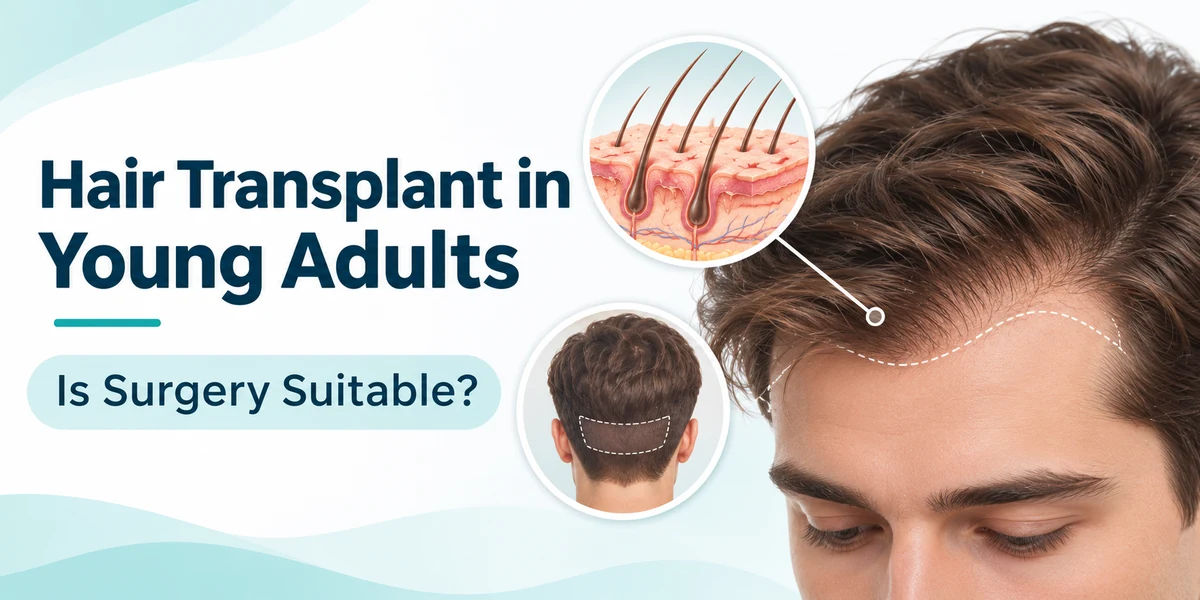
Hair transplant surgery can be an effective solution for permanent hair loss, but its suitability for young adults depends on more than chronological age. A thorough assessment looks at the stability of androgenetic alopecia, donor‑area capacity, family history, and realistic expectations. In most cases, surgeons recommend waiting until hair loss has stabilised to avoid future thinning that could compromise the transplanted zone. Early transplantation may therefore create aesthetic and technical challenges, making a careful, individualized medical evaluation essential.
What Is a Hair Transplant Assessment?
A hair transplant assessment is a structured clinical review that determines whether a patient has sufficient healthy donor follicles, a stable pattern of loss, and realistic goals for surgery. The process includes scalp examination, densitometry, trichoscopy, and discussion of medical history. According to donor area assessment research, the surgeon must answer three key questions: how much usable hair remains, how it is distributed, and whether previous procedures have compromised the donor zone.
Why Is the Assessment Performed?
The primary purpose is to avoid over‑harvesting a limited donor supply and to ensure that transplanted grafts will remain visible for years. Progressive androgenetic alopecia can continue after surgery, thinning surrounding native hair and making the grafted area appear unnatural. An assessment also identifies scalp conditions (e.g., scarring, infection) that could affect graft survival.
Who May Need It?
Young adults (typically aged 18‑30) who notice early signs of androgenetic alopecia often wonder whether to act now. Candidates usually have:
- Family history of patterned hair loss, indicating a genetic predisposition.
- A clearly defined loss pattern on the Norwood (men) or Ludwig (women) scales.
- Enough donor density to support current and future graft needs.
- No active scalp disease or uncontrolled systemic illness.
When these criteria are not met, non‑surgical management or delayed surgery may be advised.
How Does the Assessment Work?
During the consultation the surgeon evaluates several parameters:
- Hair‑loss stability: Recent photographs and patient history are reviewed to confirm that the pattern has not accelerated in the past 12‑24 months. Hair loss stability guidelines stress that stability is a prerequisite for safe surgery.
- Donor‑area evaluation: Trichoscopy and densitometry measure follicular unit density and calculate the usable graft pool. The technique described by Bernstein Medical highlights the shift from raw hair‑density counts to follicular‑unit analysis.
- Scalp laxity and skin quality: Laxometers assess how easily the scalp can be stretched, influencing the choice between FUT and FUE techniques.
- Psychological readiness: A brief mental‑health screen ensures that expectations are realistic and that the patient can cope with postoperative appearance changes.
What Outcomes Are Realistic?
For young adults, surgeons typically aim for a conservative hairline that can be adjusted as future loss occurs. Over‑aggressive front‑line placement may look natural initially but can become conspicuous when surrounding hair thins. Evidence suggests that a modest graft count (often 1,500‑2,500 grafts) provides a balanced result while preserving donor reserve for potential future sessions.

Benefits and Limitations
Benefits include permanent restoration of hair in the treated zone, low long‑term maintenance, and improved self‑esteem. Limitations are particularly relevant for younger patients:
- Donor‑area exhaustion: Early use of grafts reduces options for later procedures. donor area assessment research notes that a depleted donor zone cannot be replenished.
- Progressive thinning: Ongoing androgenetic loss may create a “halo” of thin hair around the transplant, compromising aesthetics.
- Future graft requirements: If loss continues, additional sessions may be needed, increasing cost and surgical exposure.
Below is a quick suitability checklist for clinicians and patients:
- Hair‑loss pattern is stable for at least 12 months.
- Donor density ≥ 40 follicular units/cm².
- No significant scalp scarring or dermatologic disease.
- Realistic expectations about hairline placement and future thinning.
- Good overall health (no uncontrolled diabetes, hypertension, or autoimmune disease).
- Psychological readiness confirmed through brief counseling.
Risks or Possible Complications
As with any surgery, hair transplantation carries risks. Common complications include:
- Follicle shock loss (temporary shedding of transplanted hairs).
- Scarring, especially with strip‑harvest (FUT) techniques.
- Infection or delayed wound healing.
- Unsatisfactory aesthetic result if the hairline is placed too low.
- Potential for cyst formation or folliculitis in the recipient area.
Rare but serious complications such as nerve injury or severe allergic reaction to anesthetic are documented in the literature.
Recovery or Follow‑Up
Most patients resume light activities within 2‑3 days and return to work within a week. Post‑operative care includes gentle shampooing, avoidance of direct sunlight, and monitoring for signs of infection. Follow‑up visits at 1 week, 1 month, and 6 months assess graft survival and guide any future planning.
When to Seek Medical Advice
Young adults should consult a qualified hair‑restoration surgeon if they notice:
- Gradual recession of the hairline or thinning at the crown.
- Rapid progression of loss over several months.
- Scalp irritation, redness, or unexplained hair shedding.
- Any medical condition that could affect wound healing (e.g., uncontrolled diabetes).
Early professional evaluation allows for a tailored plan that may include medical therapy, lifestyle advice, or delayed transplantation.
Patient Suitability Checklist
- Age alone is not a contraindication; stability of loss is paramount.
- Adequate donor‑area density confirmed by densitometry.
- Family history suggests predictable progression.
- Realistic expectations about hairline and future thinning.
- Good overall health and no contraindicating systemic disease.
- Psychological readiness confirmed.
Medical References
Frequently Asked Questions
Can a 20-year-old safely undergo a hair transplant?
A 20-year-old may be a candidate if their hair-loss pattern has been stable for at least a year, donor density is adequate, and expectations are conservative. Age alone is not a contraindication.
What is the main reason surgeons often delay transplants in young adults?
The primary concern is progressive androgenetic alopecia; transplanting too early can leave surrounding native hair thinning, creating an unnatural contrast and exhausting the donor supply.
How is donor-area capacity measured?
Donor capacity is assessed with trichoscopy and follicular-unit densitometry, which count the number of viable follicular units per square centimetre and estimate the total graft pool.
Is it necessary to have a family history of baldness to be considered for a transplant?
A family history helps predict future loss but is not mandatory. Patients without a clear hereditary pattern are still evaluated based on their own progression and donor reserve.
What non-surgical options are recommended while waiting for stability?
Topical minoxidil, oral finasteride (where appropriate), low-level laser therapy, and lifestyle measures can slow progression and improve density while the hair-loss pattern stabilises.
Can a transplant be revised later if more hair loss occurs?
Yes, additional sessions can be planned, but they depend on remaining donor follicles. Early transplantation reduces the number of grafts available for future revisions.
What psychological factors should be assessed before surgery?
Patients should demonstrate realistic expectations, stable mood, and an understanding that results develop over months. Screening for body-image concerns helps prevent post-operative disappointment.
Conclusion
Hair transplant surgery can be appropriate for young adults, but only after a comprehensive assessment confirms stable loss, sufficient donor reserve, and realistic expectations. Chronological age alone does not dictate eligibility; the key is ensuring that the procedure will not be compromised by future thinning. When uncertainty remains, clinicians should prioritize medical therapy and defer surgery until the pattern of loss stabilises, preserving options for later, more effective transplantation.
Medical Disclaimer
This article is intended for general educational purposes only and does not replace individual medical advice, diagnosis or treatment. Suitability, risks and outcomes vary. Consult a qualified healthcare professional for medical guidance specific to your situation.