
Nasal Skin Thickness in Rhinoplasty: Why It Matters
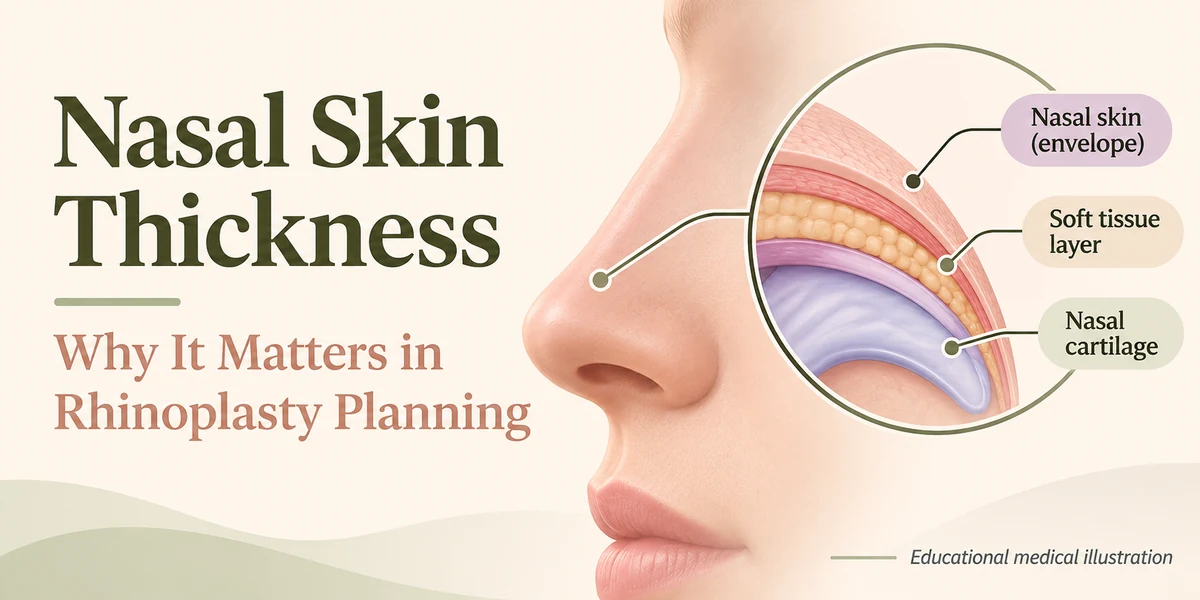
In rhinoplasty, the thickness of the nasal skin envelope directly influences how surgical changes appear, how quickly swelling resolves, and the overall healing trajectory. Thin skin can expose subtle irregularities, while medium or thick skin may mask fine contour refinements, requiring different techniques and patient counseling. Understanding skin thickness helps surgeons tailor their approach and set realistic expectations for each individual.
What Is Nasal Skin Thickness?
Nasal skin thickness refers to the combined depth of epidermis, dermis, and subcutaneous tissue covering the nasal framework. It varies across the nose and among individuals, often categorized as thin, medium, or thick based on visual and tactile assessment.
Why Is It Important in Rhinoplasty?
Skin thickness determines how well underlying cartilage and bone modifications are visualised post‑operatively. Thin skin may reveal even minor irregularities, making precise sculpting essential. Conversely, thick skin can conceal subtle refinements, sometimes resulting in a bulbous appearance despite an optimally reshaped framework. It also affects postoperative edema, scar visibility, and the weight load placed on the structural support Davis Rhinoplasty article.
Who May Need Assessment?
All patients considering rhinoplasty should have skin thickness evaluated, especially those with a history of thick‑skinned noses, prior nasal surgery, or ethnic backgrounds known for denser skin. Assessment is also valuable when planning extensive tip work or when the patient seeks a high degree of definition.
How Is Thickness Evaluated?
Surgeons primarily use clinical examination: gentle pinching, visual inspection under varied lighting, and assessment of skin elasticity. In selected cases, imaging such as ultrasound or low‑dose CT can quantify soft‑tissue envelope thickness, though most rely on tactile evaluation PMC study on soft tissue envelope.
What Do Findings Mean for Surgical Planning?
When thin skin is identified, surgeons may prioritize precise cartilage work and consider camouflage grafts to avoid visible imperfections. With medium skin, standard techniques often suffice. Thick skin may require strategies such as structural reinforcement, aggressive thinning of soft tissue, or staged procedures to achieve desired definition while managing swelling and scar risk Aaron Fletcher’s thick skin challenges.
Benefits and Limitations
Recognising skin thickness allows for customised operative plans, improving aesthetic predictability and patient satisfaction. However, thickness alone does not guarantee a specific outcome; cartilage strength, nasal anatomy, airway function, healing response and patient expectations also play pivotal roles.
Risks or Possible Complications
Thick skin can prolong edema and increase the chance of visible scarring or a ‘bulbous’ tip if structural support is insufficient. Thin skin may be prone to visible irregularities or contour depressions if over‑resected. Both extremes require careful technique to avoid compromising nasal function.
Recovery or Follow‑Up
Post‑operative swelling typically resolves faster in thin‑skinned noses, while thick‑skinned patients may experience prolonged edema and slower skin contraction. Regular follow‑up enables the surgeon to monitor healing, address any contour concerns, and plan adjunctive treatments such as scar management or minor revisions.

When to Seek Medical Advice
If you notice persistent swelling, asymmetry, or skin changes beyond the expected healing window, or if you have concerns about the thickness of your nasal skin affecting your desired result, schedule a consultation with a qualified facial plastic surgeon.
Medical References
- Davis Rhinoplasty – Importance of Nasal Skin
- Optimising rhinoplasty outcomes in patients with thick skin – PMC
- Thick Skin Rhinoplasty Challenges – Aaron Fletcher MD
- Does skin thickness affect satisfaction post‑rhinoplasty? – PMC
Frequently Asked Questions
How can I tell if I have thin or thick nasal skin?
A surgeon will gently pinch the skin and assess its translucency and elasticity; thin skin feels delicate and may show underlying structures, while thick skin feels dense, less elastic, and often oilier.
Will thick skin make my nose look larger after surgery?
Thick skin can mask refined contours, sometimes giving the impression of a bulkier tip even when the underlying framework is well shaped, especially during the early healing phase.
Can skin thickness be changed before rhinoplasty?
Pre-operative measures such as topical retinoids or controlled weight loss may modestly improve skin quality, but they cannot dramatically alter inherent thickness.
Does skin thickness affect the risk of postoperative scarring?
Yes, thicker skin is more prone to visible scar formation and prolonged edema, while thin skin may show finer scar lines but is more sensitive to contour irregularities.
Is ultrasound imaging necessary to assess nasal skin thickness?
Ultrasound can provide objective measurements, but most surgeons rely on clinical examination; imaging is reserved for complex cases or research settings.
Will my nasal airway function be impacted by skin thickness?
Skin thickness itself does not directly affect airway patency, but surgical plans that address structural support must consider the added weight of thick skin to avoid functional compromise.
Can I expect the same recovery timeline regardless of skin thickness?
Recovery varies; thin-skinned noses often experience quicker resolution of swelling, whereas thick-skinned noses may have a longer period of edema and skin contraction.
Conclusion
Understanding nasal skin thickness is essential for realistic rhinoplasty planning. It influences how surgical changes are displayed, the duration of swelling, and the risk of visible scarring. By assessing skin characteristics alongside cartilage strength, airway function and patient expectations, surgeons can tailor techniques to each nose, improving safety and satisfaction without guaranteeing specific results.
Medical Disclaimer
This article is intended for general educational purposes only and does not replace individual medical advice, diagnosis or treatment. Suitability, risks and outcomes vary. Consult a qualified healthcare professional for medical guidance specific to your situation.