
Post-Gender Reassignment Surgery: Embracing a New You
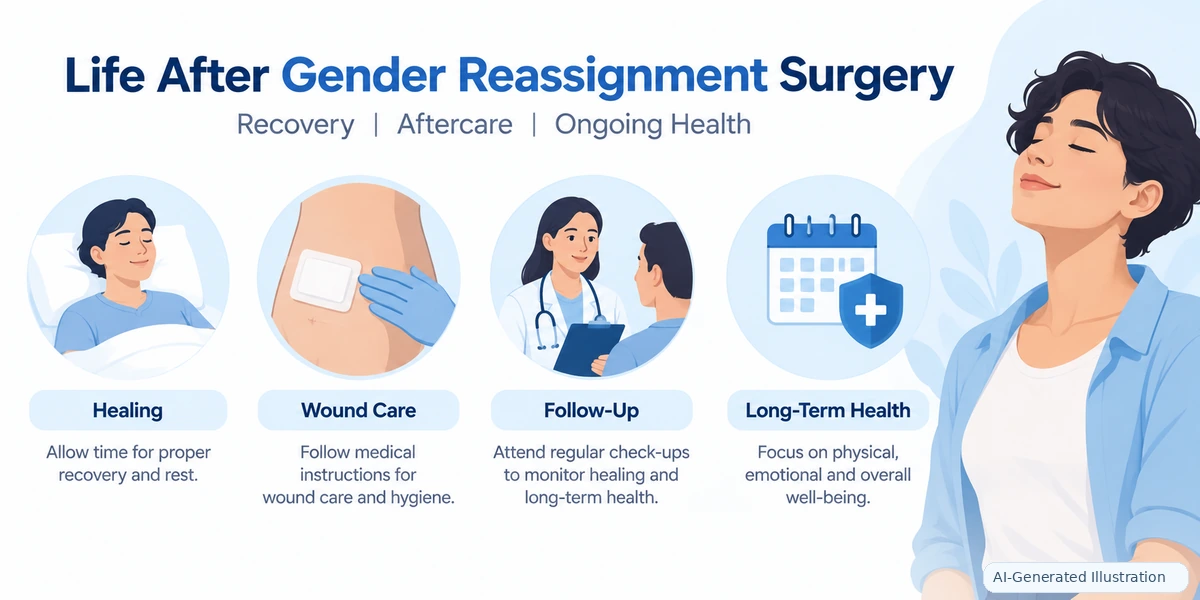
Gender-affirming surgery refers to a range of surgical procedures that may help align a person’s physical characteristics with their gender identity and individual healthcare goals. These procedures can involve the chest, genitals, reproductive organs, face or other anatomical areas.
The term gender reassignment surgery is still commonly used in online searches, although gender-affirming surgery is generally preferred in contemporary healthcare discussions.
Recovery after gender-affirming surgery involves more than the healing of surgical incisions. Depending on the procedure, individuals may experience temporary pain, swelling, changes in sensation, limitations in mobility and adjustments to everyday activities.
Some operations also require ongoing functional care, such as vaginal dilation, urinary monitoring or management of graft and donor sites.
The experience of post gender reassignment surgery recovery varies significantly between individuals. There is no single recovery timeline that applies to every procedure.
This article explains what to expect after gender-affirming surgery, the differences between top and bottom surgery, general healing stages, postoperative care, possible complications, emotional well-being and long-term healthcare considerations.
What Is Gender-Affirming Surgery?
Gender-affirming surgery is an umbrella term for procedures performed to address specific physical characteristics in relation to an individual’s gender identity.
Not every transgender or gender-diverse person wants or requires surgery.
Gender affirmation may involve social changes, hormone therapy, surgery, some combination of these, or none of them. Medical and surgical decisions should be individualized.
Common categories of gender-affirming surgery include:
1. Chest Masculinization Surgery
Chest masculinization surgery, commonly called masculinizing top surgery, involves removing or reshaping chest tissue to create a chest contour consistent with the individual’s goals.
Techniques vary according to chest size, skin characteristics, nipple positioning and other anatomical factors.
2. Breast Augmentation
Breast augmentation may be performed to increase breast volume or alter chest contour.
It can involve implants or, in selected circumstances, fat transfer.
Breast augmentation has its own potential complications, including infection, altered sensation, capsular contracture and future implant-related procedures.
3. Vaginoplasty
Vaginoplasty is a genital reconstructive procedure that may create a vulva and vaginal canal.
Different techniques use different tissues and surgical approaches.
When a vaginal canal is created, postoperative dilation is usually an essential part of aftercare.
4. Vulvoplasty
Vulvoplasty creates external vulvar structures without constructing a full-depth vaginal canal.
Its recovery requirements differ from those of full-depth vaginoplasty.
5. Phalloplasty
Phalloplasty involves reconstructing a phallus using tissue from another part of the body.
Depending on individual goals and the surgical plan, it may involve urethral reconstruction, scrotoplasty or other procedures.
Phalloplasty can involve multiple stages and requires monitoring of both the reconstruction and tissue donor site.
6. Metoidioplasty
Metoidioplasty uses hormonally enlarged genital tissue to create a phallus.
It may be combined with urethral lengthening or other reconstructive procedures.
Its recovery differs from phalloplasty and depends on the specific surgical technique.
7. Other Gender-Affirming Procedures
Additional procedures may include facial surgery, hysterectomy, oophorectomy, orchiectomy or other individualized operations.
The recovery requirements depend on the anatomical structures involved and the extent of surgery.
What Happens Immediately After Gender Reassignment Surgery?
 The first postoperative period generally focuses on pain control, wound protection, circulation, hydration and detection of complications.
A person may initially remain under hospital observation depending on the procedure and their health status.
Pain and Discomfort
Pain is expected after many surgical procedures, but its intensity varies.
Some operations produce moderate discomfort, while complex reconstructive procedures may involve more extensive postoperative pain management.
Prescribed medications should be used according to medical instructions.
Pain that becomes progressively worse rather than improving requires assessment.
Swelling and Bruising
Swelling occurs as the body responds to surgical tissue injury.
Bruising may also appear around the operative area.
Although these symptoms commonly decrease as healing progresses, severe or rapidly increasing swelling may indicate a complication.
Dressings and Drains
Surgical dressings protect incisions and may absorb fluid.
Some operations require temporary drains to remove postoperative fluid.
Drains should be managed and removed only according to the treating team’s instructions.
Urinary Catheters
Certain genital procedures involve temporary urinary catheterization.
The catheter allows urine to drain while the reconstructed or operated tissues heal.
The duration of catheter use varies according to the procedure and individual recovery.
Temporary Movement Restrictions
Surgical areas may require protection from excessive tension, pressure or friction.
Certain movements, lifting and physical activities may be restricted during early healing.
Medical Monitoring
Early postoperative monitoring may assess bleeding, infection, tissue circulation, urinary function and other procedure-specific concerns.
Following complex reconstruction, close observation of blood supply to transferred tissues may be particularly important.
How Long Does Recovery Take After Gender-Affirming Surgery?
There is no universal recovery period because the procedures differ considerably.
The following table provides broad recovery considerations rather than fixed milestones.
| Procedure | General early recovery considerations | Longer-term considerations |
|---|---|---|
| Chest masculinization | Wound care, restricted lifting and gradual return to movement over several weeks | Scar maturation, sensation changes and chest contour settling |
| Breast augmentation | Pain, swelling and activity limitations during the first weeks | Implant monitoring, sensation changes and possible future procedures |
| Orchiectomy | Early wound healing and activity restrictions, often over several weeks | Hormone management and general health follow-up |
| Vulvoplasty | Wound care and recovery from genital reconstruction, often requiring several weeks | Monitoring urinary function and tissue healing |
| Vaginoplasty | Several weeks of substantial recovery, with procedure-specific wound and catheter care | Ongoing dilation when a vaginal canal is created, functional follow-up |
| Metoidioplasty | Recovery depends on whether urethral lengthening and additional procedures are performed | Urinary function, wound healing and possible revisions |
| Phalloplasty | Often involves extensive recovery, tissue-flap monitoring and possible staged operations | Donor-site recovery, urinary complications, sensation and reconstructive follow-up |
These are general descriptions rather than guaranteed recovery durations.
Some individuals return to selected daily activities within weeks, while others require several months before resuming demanding physical activities.
Complications or additional surgical stages can extend the recovery period.
Top Surgery vs. Bottom Surgery: How Does Recovery Differ?
Top surgery and bottom surgery affect different anatomical structures and therefore involve different aftercare requirements.
Recovery After Top Surgery
Chest surgery commonly involves healing of skin incisions and deeper tissues.
Possible postoperative experiences include:
-
Chest swelling
-
Bruising
-
Tenderness
-
Reduced skin sensation
-
Temporary limitations in shoulder or arm movement
-
Surgical drains in some cases
-
Compression or support garments when prescribed
The position, extent and appearance of scars depend on the surgical technique.
Some people experience altered nipple or chest sensation, which may improve over time or remain permanent.
Recovery After Bottom Surgery
Genital reconstruction often involves additional considerations.
Depending on the procedure, these may include:
-
Urinary catheter care
-
Monitoring of reconstructed tissues
-
Genital swelling
-
Wound healing in areas exposed to moisture and friction
-
Functional rehabilitation
-
Vaginal dilation when indicated
-
Monitoring urinary complications
-
Care of tissue donor sites
-
Possible additional surgical stages
Bottom surgery does not refer to one standard procedure, so aftercare must follow the exact operation performed.
Recovery After Vaginoplasty
Vaginoplasty involves complex reconstruction of genital tissues.
The specific technique influences postoperative wound care, urinary management and long-term maintenance.
Initial Hospital Recovery
Individuals undergoing full-depth vaginoplasty commonly require a period of hospital observation.
Temporary packing, stents, dressings or urinary catheters may be used.
The timing of their removal is determined by the surgical team.
Swelling and Discomfort
Genital swelling may remain noticeable for several weeks.
Pressure from prolonged sitting or standing may increase discomfort during early recovery.
However, marked worsening of pain or swelling should not be assumed to be normal.
Hygiene and Wound Care
Gentle hygiene is important, but cleansing instructions vary according to surgical technique and healing stage.
Individuals should follow the specific instructions provided for bathing, genital cleaning and wound protection.
Unprescribed antiseptics, soaps or other products may irritate healing tissues.
Vaginal Dilation
When a vaginal canal is created, dilation is usually necessary to maintain its depth and width.
Dilation typically begins according to the surgeon’s postoperative protocol.
The recommended frequency, duration and technique can vary.
Dilation should not be forced through severe pain or unusual resistance.
Difficulty with dilation may require assessment for scar-related narrowing, pelvic floor dysfunction or another complication.
The University of California, San Francisco’s clinical guidance on vaginoplasty procedures and aftercare explains postoperative wound care, dilation and selected complications.
These guidelines provide general information; individual instructions from the treating surgical team take priority.
Possible Urinary Changes
Some individuals experience temporary changes in urination after surgery.
Possible concerns include urinary retention, changes in stream direction or discomfort.
Persistent difficulty emptying the bladder or inability to urinate requires prompt medical evaluation.
Recovery After Phalloplasty and Metoidioplasty
Phalloplasty and metoidioplasty are different reconstructive procedures and should not be treated as interchangeable.
Phalloplasty Recovery
Phalloplasty may involve tissue transfer from areas such as the forearm or thigh.
Recovery can include care of both the reconstructed phallus and the donor site.
Important considerations may include:
-
Monitoring blood supply to transferred tissue
-
Surgical wound care
-
Catheter management
-
Restricted movement
-
Care of grafted or donor areas
-
Urinary assessment
-
Management of swelling and discomfort
-
Additional procedures when indicated
Metoidioplasty Recovery
Metoidioplasty generally uses existing genital tissue that has enlarged under testosterone exposure.
When urethral lengthening is performed, urinary healing becomes an important postoperative consideration.
The degree of discomfort, mobility restriction and catheter use varies with the surgical plan.
Urinary Complications
Procedures involving urethral reconstruction can be associated with:
-
Urethral fistula
-
Urethral stricture
-
Urinary leakage
-
Difficulty urinating
-
Urinary tract infection
A fistula is an abnormal connection that may allow urine to leak outside the intended urinary passage.
A stricture is a narrowing that can restrict urine flow.
These complications may require imaging, catheter management or further surgical treatment.
The UCSF clinical overview of phalloplasty, metoidioplasty and postoperative considerations discusses surgical recovery, tissue-related complications and urinary concerns.
Gender-Affirming Surgery Recovery Timeline


Although each procedure requires an individual plan, several healing phases are common to major surgical operations.
First 24–72 Hours
This period generally focuses on immediate surgical recovery.
Possible experiences include:
-
Pain or tenderness
-
Swelling
-
Fatigue
-
Nausea related to anaesthesia or medicines
-
Limited mobility
-
Dressings, drains or catheters where indicated
Some individuals require inpatient monitoring.
First Week
Inflammation and swelling may remain prominent.
Wound care, prescribed medicines and protection of the operated area are important.
Patients should follow instructions on mobilisation, nutrition, hydration and bathing.
Weeks 2–4
Some individuals notice improving discomfort and mobility.
However, wounds may still be healing, and lifting or exercise restrictions often remain.
Genital reconstruction may involve continued catheter-related care, dilation or specific wound management.
Weeks 4–8
Certain everyday activities may gradually become easier.
Some individuals return to desk-based work during this period.
More extensive operations may still require substantial limitations or further treatment.
Months 2–3
Swelling may continue decreasing, and the appearance of healing tissues may change.
Some activities may resume after medical clearance.
Functional rehabilitation may continue.
Months 3–6
Scar tissue continues maturing.
Changes in sensation, swelling and tissue flexibility may still occur.
Individuals who have undergone genital reconstruction may continue procedure-specific follow-up.
Beyond 6 Months
Long-term concerns may include scar maturation, altered sensation, urinary function, implant monitoring, dilation and the possibility of additional operations.
Recovery should be assessed according to actual healing and function rather than a calendar date alone.
What Are the Common Side Effects After Gender-Affirming Surgery?
Postoperative symptoms depend on the procedure.
1. Pain
Mild to moderate postoperative discomfort may be expected.
Severe or progressively worsening pain requires assessment.
2. Swelling
Swelling is common after tissue surgery.
Its duration varies according to the operation and individual response.
3. Bruising
Bruising can develop around surgical areas and usually changes colour as it resolves.
4. Fatigue
Fatigue may be associated with healing, changes in activity, sleep disturbance and medications.
5. Numbness
Surgical manipulation or division of small nerves can affect sensation.
Some sensory changes may persist.
6. Scarring
Permanent scars develop where surgical incisions heal.
Scar colour, thickness and flexibility may change over months.
For additional information about general scar maturation, see this educational explanation of surgical scars six months after breast lift surgery.
Although scar locations differ, several basic principles of wound healing are shared across surgical procedures.
7. Temporary Emotional Changes
Major surgery can be physically and psychologically demanding.
Some individuals experience relief or satisfaction, while others report fatigue, uncertainty, stress or mixed emotions.
These experiences should not be treated as evidence that every person will have the same psychological response.
Possible Complications After Gender-Affirming Surgery
As with other operations, gender-affirming procedures can involve complications.
The risks depend on anatomy, surgical technique, medical history and the extent of reconstruction.
Infection
Possible signs include increasing redness, warmth, swelling, discharge or fever.
Bleeding or Haematoma
Excessive bleeding or a collection of blood beneath the tissue may require treatment.
Wound Separation
An incision may partially reopen because of tissue tension, infection or delayed healing.
Tissue Necrosis
Reduced blood supply can cause tissue damage or loss.
This concern may be particularly important after tissue-flap reconstruction.
Seroma
A collection of fluid beneath the skin may cause swelling or a localized bulge.
Scar-Related Problems
Thickened scars, contracture and persistent discomfort can develop.
Changes in Sensation
Sensation may become reduced, altered or, occasionally, persistently painful.
Urinary Complications
Urethral reconstruction may be associated with strictures, fistulas, infections or urinary obstruction.
Vaginal Stenosis
Following full-depth vaginoplasty, scar-related narrowing can affect vaginal depth or width.
Implant-Related Problems
When implants are used, potential complications include infection, displacement, implant failure and the need for further surgery.
Blood Clots
Major surgery and reduced mobility can increase the risk of venous thromboembolism.
Symptoms of a deep vein thrombosis may include one-sided leg swelling, tenderness or pain.
Sudden breathlessness, chest pain or fainting may indicate a pulmonary embolism and require emergency medical attention.
How Should Surgical Wounds Be Cared For?
Appropriate wound care is a central part of postoperative recovery.
However, different procedures may require different instructions.
Keep the Area Clean as Directed
Follow the surgical team’s instructions for cleansing and bathing.
Change Dressings Correctly
Dressings should be changed using the recommended technique and schedule.
Avoid Unprescribed Products
Creams, oils, antiseptics and herbal products should not be applied to fresh wounds without appropriate guidance.
Monitor for Infection
Increasing redness, pain, warmth, discharge or wound breakdown should be reported.
Avoid Unnecessary Pressure
Pressure on delicate reconstructive tissues may interfere with comfort and healing.
Attend Follow-Up Appointments
Clinical review allows the team to assess wound closure, swelling, circulation and other procedure-specific concerns.
When Can Someone Return to Work After Gender-Affirming Surgery?
Return to work depends on the procedure, recovery progress and job requirements.
Desk-Based Work
Some individuals return to light work within several weeks after certain procedures.
However, more extensive reconstruction may require a longer period away from work.
Physically Demanding Work
Jobs involving lifting, prolonged standing, bending or repeated strenuous movement may require additional recovery.
Work Involving Long Periods of Sitting
Sitting may be uncomfortable following certain genital procedures.
Individual restrictions and comfort should be considered.
Important Consideration
An incision that appears healed externally does not necessarily mean deeper tissues have recovered sufficiently for strenuous activity.
The return-to-work decision should follow medical assessment.
When Is Exercise Safe After Surgery?
Activity restrictions vary significantly.
Gentle Walking
Walking is commonly encouraged when medically permitted because it supports circulation and mobility.
Lifting and Resistance Exercise
Heavy lifting may place tension on healing tissues.
The appropriate return date depends on the surgery.
Running and High-Impact Activity
Impact-related activities may need to be postponed until sufficient healing has occurred.
Swimming
Swimming and immersion in water should generally wait until wounds have healed and the surgical team has provided clearance.
Sexual Activity
The timing of sexual activity after genital surgery depends on tissue healing, the procedure performed and the individual’s circumstances.
A fixed universal timetable should not be applied.
For a related explanation of why activity restrictions differ during major surgical recovery, see what to expect three weeks after tummy tuck surgery.
How Does Gender-Affirming Surgery Affect Urination?
Urinary outcomes depend on which structures have been operated on.
After Vaginoplasty
Vaginoplasty typically involves repositioning or shortening the urethra.
Urine passes through the urethral opening, not through the neovaginal canal.
Some individuals experience changes in urinary stream or temporary swelling-related difficulty.
After Vulvoplasty
Urinary anatomy may also be modified depending on the technique.
After Phalloplasty
When urethral lengthening is performed, the reconstructed urethra may allow urination through the phallus.
However, the ability to urinate while standing is not guaranteed and depends on surgical anatomy and healing.
After Metoidioplasty
Urinary function varies according to whether urethral lengthening was included.
Persistent urinary leakage, repeated infections or reduced urine flow warrants medical evaluation.
Inability to pass urine requires urgent medical attention.
Does Gender-Affirming Surgery Affect Fertility?
Some gender-affirming operations can permanently affect reproductive capacity.
The implications depend on which organs are removed or altered.
Orchiectomy
Removal of both testes eliminates the body’s ability to produce sperm.
Hysterectomy
Removal of the uterus eliminates the ability to carry a pregnancy.
Oophorectomy
Removal of both ovaries affects egg production and endogenous hormone production.
Genital Reconstruction
Some forms of genital reconstruction involve removal of reproductive organs or changes that affect fertility.
However, not every gender-affirming procedure causes infertility.
For example, chest surgery does not itself remove reproductive organs.
Fertility Preservation
Depending on the individual’s anatomy, treatment history and goals, options may include sperm, egg, embryo or reproductive tissue preservation.
Fertility counselling is ideally considered before treatments that may permanently affect reproductive function.
Can a Person Become Pregnant After Gender-Affirming Surgery?
Pregnancy potential depends on the reproductive organs present and their function.
A person who retains a uterus and functioning reproductive capacity may be able to become pregnant, including some transgender men and nonbinary individuals.
Testosterone treatment is not a reliable contraceptive.
Individuals who do not wish to become pregnant may still need contraception if pregnancy is biologically possible.
A person without a uterus cannot carry a pregnancy.
Standard vaginoplasty does not create a uterus or ovaries, and it does not create the ability to carry a pregnancy.
Reproductive possibilities should be discussed according to anatomy rather than gender identity alone.
What Happens to Hormone Therapy After Surgery?
Hormone treatment after surgery depends on the procedures performed and the individual’s medical needs.
After Gonadectomy
Removal of testes or ovaries changes endogenous hormone production.
Some individuals require ongoing hormone therapy to maintain appropriate hormone levels and support bone and general health.
After Chest Surgery
Chest surgery does not automatically require stopping or permanently changing hormone therapy.
After Genital Surgery
Hormone regimens may require review according to the surgery and individual medical circumstances.
Long-Term Monitoring
Depending on treatment, follow-up may include assessment of hormone levels, cardiovascular risk factors, bone health and other relevant parameters.
Medication should not be independently stopped, restarted or changed.
Emotional Well-Being After Gender-Affirming Surgery
Emotional experiences after surgery are individual.
Some people report reduced gender dysphoria or greater satisfaction with their bodies.
Others experience a more complicated period of adjustment.
Positive Emotional Changes
Possible experiences include relief, greater comfort or increased confidence.
These changes should not be promised as inevitable.
Postoperative Stress
Pain, sleep disruption, reduced independence and the demands of recovery may cause temporary emotional strain.
Body Image Adjustment
Adapting to changes in appearance or function can take time.
Social Support
Support from trusted people, peer communities and qualified professionals may be helpful when desired.
Mental Health Support
Counselling or psychological care may assist individuals experiencing persistent distress, anxiety, depression or difficulties adjusting.
Psychological support should be available without assuming that a person’s gender identity is itself a mental disorder.
What Are the Long-Term Effects of Gender-Affirming Surgery?
Long-term effects vary according to the procedure.
Permanent Scars
Surgical scars remain, although their appearance may change over time.
Sensory Changes
Some individuals experience lasting changes in sensation.
Functional Differences
Changes in urination, sexual function or tissue mobility may occur.
Reconstructive Maintenance
Some procedures require continued care, such as dilation or periodic functional assessment.
Hormonal Considerations
Individuals who have undergone removal of hormone-producing organs may require long-term endocrine management.
Future Surgical Procedures
Some people require additional surgery for complications or to complete staged reconstruction.
Psychological Outcomes
Long-term emotional and quality-of-life outcomes vary.
It is important to avoid describing either positive or negative experiences as universal.
Is Revision Surgery Sometimes Necessary?
Yes.
Revision surgery may be considered when a previous procedure results in a functional or structural concern.
Possible reasons include:
-
Wound-healing complications
-
Urethral fistula or stricture
-
Vaginal narrowing
-
Significant scar contracture
-
Persistent tissue deformity
-
Implant-related complications
-
Problems affecting reconstructive function
Some reconstructive techniques also involve planned stages, which are not necessarily complications.
Further surgery introduces additional risks and should be considered through individualized assessment.
Long-Term Healthcare After Gender-Affirming Surgery
Gender-affirming surgery does not eliminate the need for routine preventive healthcare.
Long-term care should be based on the organs present, medical history, hormone treatment and individual risk factors.
Primary Care Follow-Up
Routine preventive care remains important.
Hormone Monitoring
Hormone therapy may require periodic monitoring.
Bone Health
Bone-health assessment may be relevant in individuals with reduced sex hormone production or other risk factors.
Cancer Screening
Screening should be based on the organs present and established clinical recommendations.
For example, some individuals may still require cervical, breast, prostate or other organ-specific screening depending on their anatomy.
Urological Follow-Up
Individuals who have undergone urethral reconstruction may need long-term assessment for urinary symptoms.
Vaginal Health
People with a surgically created vaginal canal may require procedure-specific evaluation and care.
Scar and Tissue Monitoring
Persistent pain, lumps, changing scars or tissue abnormalities should be medically assessed.
When Should You Seek Medical Attention After Surgery?
Certain symptoms require prompt assessment.
Contact an appropriately qualified healthcare professional if you experience:
-
Increasing pain
-
Worsening redness or swelling
-
Fever
-
Unusual wound discharge
-
Wound opening
-
Persistent bleeding
-
New or enlarging lumps
-
Difficulty urinating
-
New urinary leakage
-
Significant changes in reconstructed tissue appearance
-
Loss of expected tissue colour or warmth
-
Difficulty following required postoperative functional care
Seek emergency medical attention for severe bleeding, sudden chest pain, acute breathlessness, fainting, inability to urinate or rapidly worsening signs of tissue compromise.
A person should not wait for a routine follow-up appointment when serious complications are suspected.
Practical Postoperative Recovery Checklist
The following general measures may help individuals organize their recovery.
1. Understand the Specific Operation
Know which procedures were performed and what anatomical changes were made.
2. Follow Wound-Care Instructions
Use the prescribed dressing, hygiene and wound-care plan.
3. Take Medicines as Directed
Do not independently change prescribed medications.
4. Follow Movement Restrictions
Avoid activities that place excessive strain on healing tissues.
5. Attend Follow-Up Appointments
Clinical assessments are important for identifying complications.
6. Maintain Adequate Nutrition
Sufficient calories, protein and essential nutrients support tissue repair.
7. Avoid Smoking and Nicotine
Nicotine can interfere with tissue circulation and wound healing.
8. Follow Procedure-Specific Functional Care
This may include dilation, catheter management or donor-site care when applicable.
9. Recognize Warning Signs
Know when symptoms require medical assessment or emergency attention.
10. Make Space for Emotional Recovery
Emotional adjustment is individual, and support should be available when needed.
For another educational discussion of postoperative swelling, wound recovery and the importance of clinical evaluation, see swelling six months after liposuction and its possible causes.
Although liposuction and gender-affirming operations are different procedures, understanding general surgical swelling can provide useful background.