
What to expect post transgender bottom surgery?
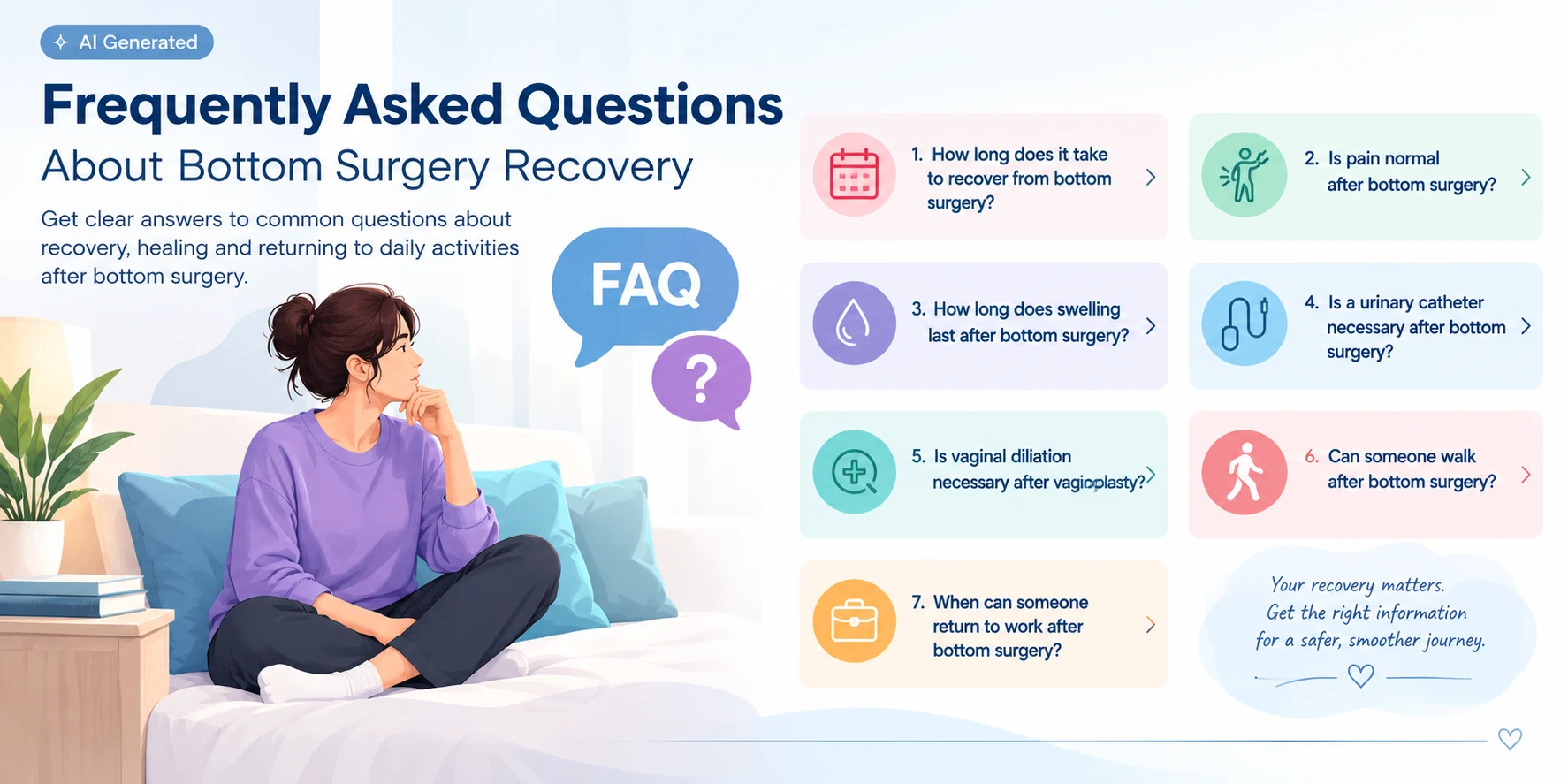

Bottom surgery is a broad term used for surgical procedures involving the genital or reproductive anatomy. In gender-affirming care, these operations may be considered by transgender and gender-diverse individuals whose personal goals include changing aspects of their genital anatomy or function.
Procedures differ considerably in their surgical techniques, recovery requirements, potential complications and long-term care.
Some operations involve the reconstruction of genital structures, while others involve the removal or modification of existing reproductive organs. Not every individual chooses surgery, and no single surgical pathway is appropriate for everyone.
Recovery after bottom surgery depends primarily on the type and extent of the procedure performed, overall health, healing response and whether additional operations are planned.
Pain, swelling, temporary restrictions on physical activity and ongoing medical follow-up may be expected. Some procedures also require long-term care, such as vaginal dilation or monitoring of urinary reconstruction.
This article explains the different procedures, common recovery experiences, potential complications and important aspects of postoperative health.
What Is Gender-Affirming Bottom Surgery?
Gender-affirming bottom surgery refers to procedures intended to modify genital or reproductive anatomy in accordance with an individual’s goals and clinical needs.
The term does not describe one standard operation.
Depending on the procedure, surgery may involve changes to:
External genital appearance.
Genital sensation.
Urinary function.
Vaginal or penile anatomy.
Reproductive organs.
Selected aspects of sexual function.
Surgical planning involves a detailed discussion of anatomy, medical history, fertility considerations, expected outcomes, limitations and risks.
Some procedures can affect fertility permanently. Others may change urinary or sexual function, and certain operations require multiple surgical stages.
Importantly, bottom surgery is not medically necessary or personally desired for every transgender or gender-diverse individual.
Types of Bottom Surgery
Bottom surgery includes several procedures involving genital or reproductive anatomy. The procedures, expected outcomes and long-term care requirements vary.
| Procedure | General Description | Important Consideration |
|---|---|---|
| Vaginoplasty | Creation of a vaginal canal and associated genital structures. | Ongoing dilation is usually required when a vaginal canal is created. |
| Vulvoplasty | Creation of external vulvar structures without a vaginal canal. | Does not provide a surgically created vaginal canal. |
| Orchiectomy | Removal of one or both testicles. | Can affect fertility and hormone requirements, depending on the procedure. |
| Metoidioplasty | Construction of a small phallus using hormonally enlarged existing genital tissue. | Size and urinary function vary according to anatomy and surgical technique. |
| Phalloplasty | Construction of a phallus using tissue transferred from another body area. | May involve multiple stages and donor-site complications. |
| Scrotoplasty | Creation or reconstruction of scrotal structures. | May be performed alongside other genital reconstruction procedures. |
| Urethral Lengthening | Reconstruction intended to extend the urethra and change the location of the urinary opening. | Can increase the risk of urinary complications, including fistula and stricture. |
| Hysterectomy | Surgical removal of the uterus. | Permanently removes the ability to carry a pregnancy. |
| Oophorectomy | Removal of one or both ovaries. | Removal of both ovaries changes endogenous hormone production. |
| Vaginectomy | Removal or closure of vaginal tissue in selected surgical plans. | Requires individual planning and may affect future reconstructive options. |
Medical note: Not every procedure is performed together or is appropriate for every individual. Surgical planning should consider personal goals, medical history, fertility implications, potential complications and long-term care needs.
These procedures are not interchangeable, and they are not all performed together.
What Happens Immediately After Bottom Surgery?
The first few days after surgery usually involve hospital monitoring, pain management and protection of the operated tissues.
The level of care depends on the procedure.
Following extensive genital reconstruction, hospital admission may be necessary for several days or longer. Some less extensive procedures may be managed through outpatient or shorter-stay surgical care.
Pain and Discomfort
Discomfort around the operated area is expected during early recovery.
Pain may arise from surgical incisions, tissue swelling, muscle tension or donor sites used for reconstructive procedures.
The treating team may prescribe pain medicines and other supportive treatment.
Pain should generally become more manageable with healing. Severe, rapidly worsening or unexpected pain warrants urgent assessment.
Swelling and Bruising
Swelling and bruising may affect the genital region and surrounding tissues.
Following phalloplasty, swelling may also involve the tissue donor site, such as the forearm or thigh.
Swelling commonly improves over several weeks, although residual changes may persist for months.
Urinary Catheter
Some patients require a urinary catheter while tissues heal.
A catheter may drain urine through the urethra or through an opening in the lower abdomen, depending on the procedure.
Catheter duration varies. It may be necessary for days or weeks, particularly when urethral reconstruction is performed.
The catheter should not be removed or adjusted without instructions from the treating surgical team.
Surgical Dressings and Drains
Dressings protect incisions, while drains may be used to remove accumulated fluid.
Some procedures also involve temporary packing or supportive devices.
The type and duration of these measures depend on the operation and the healing response.
Monitoring Blood Supply
After complex reconstruction involving transferred tissue, the surgical team may monitor tissue colour, temperature and blood circulation.
This is particularly important after flap-based phalloplasty because inadequate blood supply can threaten the reconstructed tissue.
How Long Does Recovery Take After Bottom Surgery?
Recovery duration differs substantially between operations.
For example, recovery after orchiectomy is generally shorter than after complex phalloplasty.
The following table provides approximate timeframes for selected procedures. These are broad educational estimates, not individual recovery predictions.
Bottom Surgery Recovery Timeline
Recovery after gender-affirming surgery varies according to the procedure, individual health, healing progress and whether additional procedures are performed. The timeframes below are approximate and should not be treated as fixed recovery deadlines.
| Procedure | Approximate Early Recovery | Longer-Term Considerations |
|---|---|---|
| Orchiectomy | Several weeks | Hormonal and fertility implications |
| Vulvoplasty | Approximately 6–8 weeks | Scar maturation, changes in sensation and follow-up |
| Vaginoplasty | Approximately 6–8 weeks for initial recovery | Ongoing dilation when indicated, tissue settling and follow-up |
| Metoidioplasty | Several weeks to a few months | Urinary healing and possible staged procedures |
| Phalloplasty | Several months for substantial recovery | Further surgical stages and functional recovery may take a year or longer |
UCSF describes an expected 6–8-week initial recovery for vaginoplasty and vulvoplasty, with procedure-specific follow-up requirements. Cleveland Clinic notes that phalloplasty recovery may take considerably longer and that some reconstructive pathways involve multiple operations.
Individual recovery instructions provided by the operating surgeon take priority over general timelines.
What Is Recovery Like After Vaginoplasty?
Vaginoplasty is a reconstructive operation that creates a vaginal canal and external genital structures using available tissues.
Different techniques may involve penile and scrotal skin, additional skin grafts or, in selected circumstances, other tissues.
The technique influences postoperative care and long-term maintenance.
1. Early Healing and Swelling
Following vaginoplasty, swelling, bruising and discomfort around the genital region are common.
Temporary numbness, changes in skin sensation and mild wound discharge may also occur.
The surgical team monitors wound healing, urinary function and signs of infection.
Some patients may require temporary vaginal packing, a surgical stent or a urinary catheter.
The removal of these devices is determined by the treating team.
2. Vaginal Dilation
When a vaginal canal is created, postoperative dilation is commonly an essential part of recovery.
Dilation uses a specially designed medical device to help maintain the surgically created canal’s depth and width.
The frequency and duration vary according to the surgical technique and healing progress.
In general, dilation may be required several times daily during early healing, followed by a reduced frequency over time.
Long-term dilation may remain necessary, depending on the procedure and individual circumstances.
Patients should follow their own surgeon’s dilation instructions rather than adopting a schedule from an online article.
Persistent pain, bleeding or difficulty inserting a dilator should be discussed with the surgical team. Dilation should not be forced.
UCSF provides detailed clinical guidance about vaginoplasty aftercare, including dilation, wound care and long-term monitoring.
3. Hygiene and Wound Care
Hygiene recommendations depend on whether the procedure creates a vaginal canal, what tissue lines that canal and the stage of healing.
Patients may receive instructions regarding gentle cleaning, drying, dressing changes and equipment hygiene.
Some surgical teams recommend specific vaginal rinsing protocols, while others use different approaches.
Patients should not independently use antiseptics, vaginal products or douching solutions without guidance from the operating team.
4. Urinary Changes
After vaginoplasty, the position and length of the urethra may change.
Temporary urinary difficulties can include:
Burning or discomfort during urination.
Changes in urinary direction or spraying.
Difficulty emptying the bladder.
Urinary retention related to swelling.
Urinary tract infection.
Persistent urinary problems may require evaluation for urethral narrowing or other complications.
5. Changes in Sensation
Temporary numbness or altered sensitivity may occur because of swelling and nerve healing.
Sensation can change gradually over several months.
However, recovery of sensation varies. It is not possible to guarantee a particular level of genital sensitivity or sexual function.
What Is Recovery Like After Phalloplasty?
Phalloplasty involves reconstructing a phallus using tissue transferred from another part of the body.
Common donor sites include the forearm and thigh.
Depending on the surgical plan, phalloplasty may include urethral lengthening, scrotoplasty or subsequent prosthetic procedures.
It is often more complex than some other genital operations and may require multiple surgical stages.
Tissue Flap Monitoring
In the early postoperative period, the surgical team may closely monitor circulation within the reconstructed tissue.
Changes in tissue colour, temperature or blood supply can indicate complications that require urgent evaluation.
Donor Site Healing
Phalloplasty creates wounds at both the genital reconstruction site and the tissue donor site.
The donor region may require dressings, skin grafting or rehabilitation.
Potential donor-site concerns include:
Scarring.
Altered sensation.
Skin-graft complications.
Reduced movement or stiffness.
Wound-healing difficulties.
Urinary Reconstruction
When urethral lengthening is performed, patients may need a catheter for an extended period.
Potential complications include:
Urethral fistula, an abnormal opening that allows urine to escape.
Urethral stricture, a narrowing that interferes with urine flow.
Urine leakage or dribbling.
Difficulty emptying the bladder.
Additional procedures may be necessary to address these complications.
Functional Recovery
Urinary function, sensation and sexual function are important aspects of long-term recovery.
Some patients may undergo subsequent surgery involving penile prostheses or other reconstructive components.
The timing and suitability of additional surgery depend on healing and individual goals.
Cleveland Clinic explains that complete phalloplasty reconstruction may involve multiple procedures and that functional outcomes can take a year or longer to develop.
What Is Recovery Like After Metoidioplasty?
Metoidioplasty is a gender-affirming operation that uses existing hormonally enlarged genital tissue to create a small phallus.
Depending on the surgical plan, it may include urethral lengthening, scrotoplasty or other associated procedures.
Recovery requirements vary with the extent of reconstruction.
Common Early Recovery Experiences
Patients may experience:
Genital swelling and bruising.
Temporary discomfort.
Changes in skin sensitivity.
Limited physical activity.
Catheter use when urinary reconstruction is performed.
Temporary restrictions on sexual activity.
Potential Complications
Important complications include wound separation, infection, urinary fistula and urethral stricture.
Not every metoidioplasty involves urethral lengthening, and the associated risks depend on which components are performed.
The procedure generally does not create the same penile size as phalloplasty.
Functional outcomes should therefore be discussed according to individual anatomy and surgical goals.
What Are the Possible Complications of Bottom Surgery?
As with other major reconstructive operations, bottom surgery carries potential complications.
The risks vary by procedure and technique.
Bottom Surgery Recovery Timeline
Recovery after gender-affirming bottom surgery varies depending on the procedure, surgical technique, individual health and healing progress. The following timeframes are approximate, not guaranteed recovery deadlines.
| Procedure | Approximate Early Recovery | Longer-Term Considerations |
|---|---|---|
| Orchiectomy | Several weeks | Hormonal and fertility implications |
| Vulvoplasty | Approximately 6–8 weeks | Scar maturation and changes in sensation |
| Vaginoplasty | Approximately 6–8 weeks for initial recovery | Ongoing dilation when indicated, tissue settling and follow-up |
| Metoidioplasty | Several weeks to a few months | Urinary healing and possible staged procedures |
| Phalloplasty | Several months for substantial recovery | Further surgical stages and functional recovery may take a year or longer |
When Should Someone Seek Urgent Medical Attention After Bottom Surgery?
Some postoperative symptoms require immediate medical evaluation.
Warning signs that require urgent assessment
Heavy or uncontrolled bleeding.
Severe or rapidly worsening pain.
Fever with worsening wound redness, swelling or discharge.
Sudden inability to pass urine, particularly after catheter removal.
A catheter that stops draining, especially with bladder pain or swelling.
Reconstructed tissue becoming unusually pale, blue, dark or cold.
Significant wound separation or tissue breakdown.
New swelling or pain in one leg.
Sudden shortness of breath, chest pain or fainting.
Chest pain, severe breathing difficulty or suspected loss of blood supply to reconstructed tissue requires emergency care.
Do not wait for a scheduled follow-up appointment if serious symptoms develop.
How Should Surgical Wounds Be Cared for After Bottom Surgery?
Appropriate wound care supports healing and helps clinicians identify complications early.
General principles include:
Follow the surgical team’s dressing and cleaning instructions.
Wash hands before handling wound dressings or medical devices.
Take prescribed medicines as directed.
Avoid applying unapproved creams, powders or antiseptics to healing wounds.
Protect incisions from friction and excessive tension.
Avoid smoking and nicotine exposure because they can impair wound healing.
Maintain sufficient nutrition and hydration.
Attend scheduled follow-up appointments.
Report increasing pain, redness, discharge or wound separation.
Instructions for showering, bathing and wound exposure vary between procedures.
These decisions should be guided by the operating team.

When Can Sexual Activity Resume After Bottom Surgery?
Sexual activity should resume only after an appropriate postoperative assessment and clearance from the treating surgical team.
The timing depends on:
Procedure type.
Incision healing.
Tissue sensitivity.
Presence of complications.
Vaginal canal healing, if applicable.
Urinary reconstruction.
Any planned additional procedures.
Following vaginoplasty, penetrative sexual activity may be restricted for several months.
After phalloplasty or metoidioplasty, the timeline depends on healing, sensation and the surgical components performed.
Sexual activity should not be resumed solely because pain or swelling has reduced.
Will Sexual Sensation Change?
Sexual sensation may change following genital reconstruction.
Some changes are expected during nerve healing, while others may persist.
Outcomes depend on anatomy, surgical technique, nerve preservation and individual healing.
It is not possible to guarantee orgasm, erectile capability, penetrative function or any specific sexual experience after surgery.
What Emotional Changes May Occur During Recovery?
Recovery after major surgery involves more than physical wound healing.
Individuals may experience relief, satisfaction, discomfort, frustration, anxiety or other emotions during different stages of recovery.
These experiences are not uniform and do not necessarily indicate that the surgical decision was inappropriate.
Pain, sleep disruption, reduced mobility, uncertainty about healing and temporary dependence on caregivers can influence emotional wellbeing.
Support may involve:
Clear communication with the surgical team.
Practical help from trusted people.
Access to mental health professionals when desired or clinically indicated.
Peer support.
Appropriate pain management.
Realistic expectations about healing.
If emotional distress becomes persistent, overwhelming or interferes with daily functioning, professional assessment is appropriate.
Is Hormone Therapy Required After Bottom Surgery?
The need for hormone therapy depends on which organs are removed, which hormone-producing tissues remain and the individual’s treatment goals and health circumstances.
Hormone therapy is not automatically required in the same form for everyone after bottom surgery.
For example, removal of both testicles or both ovaries substantially changes endogenous sex-hormone production.
Depending on individual circumstances, hormone replacement may be important for bone health and other physiological functions.
Where hormone-producing organs remain, requirements may differ.
Patients should not independently discontinue or change prescribed hormone therapy.
An endocrinologist or other appropriately qualified clinician may help develop a monitoring plan.
Can Bottom Surgery Affect Fertility?
Some bottom surgery procedures can permanently remove reproductive capacity involving particular organs.
For example:
Orchiectomy involving both testicles removes the ability to produce sperm.
Hysterectomy removes the ability to carry a pregnancy.
Removal of both ovaries eliminates future egg production.
Certain reconstructive procedures affect reproductive anatomy without necessarily removing every reproductive organ.
The fertility effects of each procedure should be explained before surgery.
Where relevant and available, fertility preservation options may include sperm freezing, egg freezing or embryo freezing.
WPATH’s Standards of Care Version 8 recommends counselling about fertility effects and preservation options before treatments that may affect reproductive potential.
What Long-Term Follow-Up Is Needed?
Long-term care depends on the procedure performed and which organs remain after surgery.
Possible areas of follow-up include:
| Possible Complication | Explanation |
|---|---|
| Bleeding | May occur during or after surgery. Significant bleeding requires urgent medical assessment. |
| Infection | May involve surgical wounds, urinary structures or other operated tissues. |
| Wound separation | Surgical incisions may partially open during healing. |
| Tissue necrosis | Inadequate blood supply may damage or cause loss of reconstructed tissue. |
| Urinary retention | Temporary or persistent difficulty passing urine may occur. |
| Urethral stricture | Narrowing of the urethra may obstruct urine flow. |
| Urinary fistula | An abnormal connection may allow urine to leak into surrounding tissues or through an unintended opening. |
| Altered sensation | Temporary or persistent changes in genital or donor-site sensitivity may occur. |
| Scarring | Scar tissue may affect appearance, comfort or function. |
| Vaginal stenosis | Narrowing or loss of depth of a surgically created vaginal canal may occur after vaginoplasty. |
| Granulation tissue | Excess healing tissue may cause irritation, discharge or spotting. |
| Blood clots | Deep vein thrombosis or pulmonary embolism may occur following surgery and can be life-threatening. |
| Revision surgery | Additional treatment or surgery may be required to address complications or other surgical concerns. |
Having gender-affirming surgery does not remove the need for routine preventive healthcare.
For example, individuals with a retained prostate may still require prostate-related assessment according to risk and symptoms. Those with a retained cervix may require cervical screening according to applicable guidelines.
Johns Hopkins emphasises that preventive screening should reflect the organs a person has, not assumptions based on gender identity
Long-Term Follow-Up After Bottom Surgery
| Area | Long-Term Consideration |
|---|---|
| Wound and scar health | Assessment of persistent discomfort, abnormal scarring or tissue changes. |
| Urinary function | Monitoring for strictures, fistulas, recurrent infections or urinary obstruction, where relevant. |
| Vaginal canal care | Dilation as directed and evaluation of narrowing, pain or unusual discharge when applicable. |
| Sexual health | Assessment of changes in sensation, pain or function when concerns arise. |
| Hormone management | Individual endocrine follow-up where indicated, particularly after removal of hormone-producing organs. |
| Bone health | Assessment of risk factors, particularly when sex-hormone levels may remain low after removal of hormone-producing organs. |
| Cancer screening | Organ-specific screening based on retained anatomy, personal medical history and individual risk. |
| Emotional wellbeing | Optional psychological or peer support, according to personal preference and clinical needs. |
| Further reconstruction | Assessment and planning when additional surgical stages or revision procedures are being considered. |
Conclusion
Recovery after bottom surgery depends on the specific procedure, the extent of reconstruction, individual health and the healing process.
Vaginoplasty, vulvoplasty, metoidioplasty, phalloplasty and other genital operations have different postoperative requirements. Some involve vaginal dilation, urinary catheters, donor-site care or multiple surgical stages.
Pain, swelling and temporary limitations are common during early recovery, but complications can also occur. Long-term considerations may include urinary function, genital sensation, hormone management, sexual health and fertility.
Understanding the procedure-specific recovery process and recognising warning signs can help patients participate in informed postoperative care.
Individual medical assessment and continued follow-up remain important throughout healing.
Medical References and External Links
These sources provide additional clinical information about genital reconstruction and postoperative care.
1. UCSF Gender Affirming Health Program — Vaginoplasty Procedures, Complications and Aftercare
2. UCSF — Genital Surgical Procedures and Recovery
3. Cleveland Clinic — Vaginoplasty: Procedure, Risks and Recovery
4. Cleveland Clinic — Phalloplasty: Procedure, Risks and Recovery
5. World Professional Association for Transgender Health — Standards of Care Version 8
6. Johns Hopkins Medicine — Gender Affirmation and Treatment Options
7. Johns Hopkins Medicine — Transgender Health and Preventive Care
Disclaimer: Website content and visuals are for general informational, educational and representational purposes only, may not reflect individual patient conditions or outcomes, and do not replace personalised medical advice, diagnosis or clinical assessment.