
Traction Alopecia Hair Regrowth: Treatment, Recovery Time & Cost in Mumbai
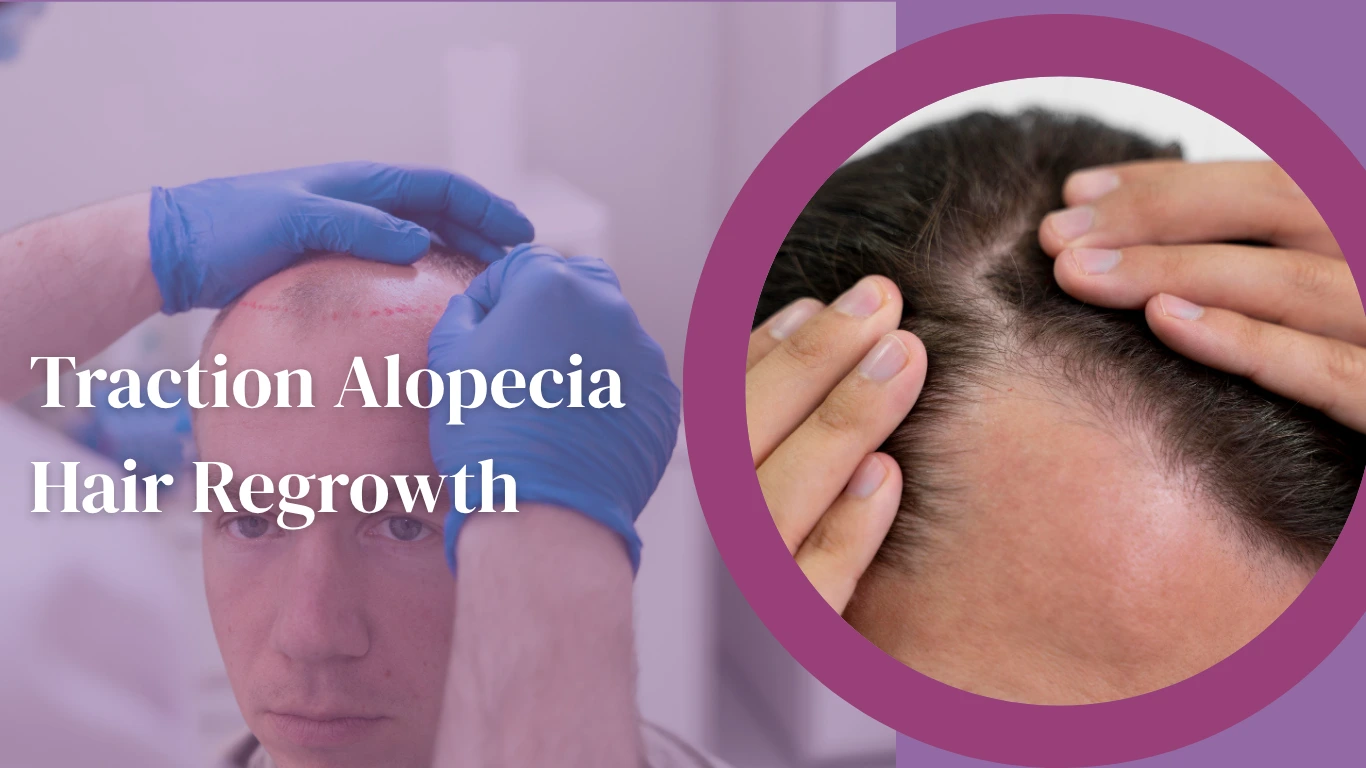
Hair regrowth after traction alopecia is possible when hair follicles have not been permanently damaged. Early traction alopecia may improve after tight hairstyles or other sources of repeated pulling are stopped. However, prolonged tension can cause scarring and irreversible follicle damage, making natural hair regrowth unlikely in affected areas.
Traction alopecia is a form of hair loss caused by repeated mechanical stress on the hair follicles. It commonly develops near the hairline, temples or other areas where the hair is regularly pulled.
Understanding the stage of the condition is important because treatment options and recovery expectations differ between early and advanced cases.
This article explains the signs of traction alopecia, how hair regrowth occurs, treatment options, recovery timelines and ways to prevent further damage.
What Is Traction Alopecia?
Traction alopecia is hair loss caused by persistent or repeated pulling on the hair shafts and follicles.
It may develop gradually when certain areas of the scalp experience prolonged tension.
Common contributing practices include:
Tight ponytails and buns
Tightly braided hairstyles
Cornrows and tightly styled locs
Hair extensions and weaves
Heavy hairpieces
Repeated use of accessories that pull on the hair
Tight styling beneath headwear
The distribution of hair loss depends on the areas where tension is concentrated.
Traction alopecia can affect people of different ages, genders and hair types.
Can Hair Grow Back After Traction Alopecia?
Yes, hair can sometimes grow back after traction alopecia, but the possibility depends on whether the affected follicles remain functional.
Early-Stage Traction Alopecia
In early cases, the follicles may be stressed without permanent destruction.
Stopping the pulling can allow some follicles to resume producing hair.
Regrowth may occur over several months.
Long-Standing Traction Alopecia
Repeated tension over an extended period can cause inflammation and eventually scarring around affected follicles.
When follicles are permanently replaced by scar tissue, natural regrowth is not expected in those areas.
Why Recovery Varies
Hair regrowth depends on factors including:
Duration of traction
Degree of follicle damage
Presence of scarring
Ongoing tension from hairstyling
Associated scalp inflammation
Other causes of hair loss
Therefore, not every person follows the same recovery timeline.
Early vs Advanced Traction Alopecia

| Feature | Early traction alopecia | Advanced traction alopecia |
|---|---|---|
| Hair follicles | May remain viable | Some may be permanently destroyed |
| Hairline | Thinning or broken hairs | More established areas of hair loss |
| Scalp appearance | Follicular openings often remain visible | Smooth or shiny areas may develop |
| Inflammation | Tenderness, redness or bumps may occur | Scarring may be present |
| Regrowth potential | Often possible after traction stops | Limited or absent in scarred areas |
| Main approach | Eliminate tension and assess inflammation | Prevent further damage and assess remaining follicles |
These features are general patterns rather than a reliable way to diagnose the condition at home.
What Are the Early Signs of Traction Alopecia?
Recognising early symptoms may help prevent further follicle damage.
1. Thinning Along the Hairline
Hair density may decrease around the forehead, temples or sides of the scalp.
2. Broken Hair Strands
Short or broken hairs may appear where styling creates repeated tension.
3. Scalp Tenderness
The scalp may feel sore or uncomfortable after tight hairstyling.
A hairstyle that repeatedly causes pain should be loosened or discontinued.
4. Small Bumps Around Hair Follicles
Redness, follicular bumps or irritation may indicate inflammation associated with traction.
5. Changes in Hair Density
The affected region may gradually become thinner, especially when the same hairstyle is repeatedly used.
6. A Fringe of Remaining Hair
Some people retain short hairs along the front or sides of the hairline despite thinning behind them.
This pattern is sometimes described as the fringe sign, although it is not diagnostic on its own.
For a broader explanation of causes and preventive measures, read Traction Alopecia: Causes, Treatment and Prevention.
What Causes Permanent Hair Loss in Traction Alopecia?
Repeated pulling can injure follicles and surrounding scalp tissues.
In early disease, the affected follicles may remain capable of producing hair.
However, persistent tension can lead to follicular damage and the development of scar tissue.
This is called scarring alopecia or cicatricial alopecia.
Once a follicle has been permanently destroyed, medicines and scalp products cannot reliably restore that follicle.
Signs That May Suggest Scarring
Possible findings include:
Smooth or shiny areas of scalp
Reduced or absent visible follicular openings
Long-standing patches of hair loss
Persistent thinning despite stopping traction
Changes suggesting associated inflammation or scarring
These findings require medical assessment because other scalp disorders can produce similar appearances.
How Is Traction Alopecia Diagnosed?
A dermatologist may diagnose traction alopecia using medical history and examination of the scalp.
Hairstyling History
Information about repeated tight hairstyles, extensions and hair accessories can help identify potential traction.
Scalp Examination
The clinician evaluates the location of thinning, broken hairs, inflammation and visible follicular openings.
Trichoscopy
A magnifying examination may help identify characteristic hair and follicle changes.
Scalp Biopsy
A biopsy is not required in every case.
It may be considered when the diagnosis is uncertain or another scarring hair-loss condition is suspected.
Additional Investigations
Blood tests or other investigations may be appropriate when symptoms suggest an additional cause of hair loss.
Not everyone needs routine testing.
How to Support Hair Regrowth After Traction Alopecia
The first and most important intervention is to eliminate the repeated pulling responsible for the condition.
Additional treatment depends on the presence of inflammation, remaining follicle activity and other scalp concerns.
1. Stop Hairstyles That Pull on the Scalp
Avoid repeatedly wearing tightly secured ponytails, braids, buns or extensions.
Choose looser styles that do not produce discomfort or tension around the hairline.
Simply changing a hairstyle for a few days may be insufficient if traction resumes.
2. Reduce the Weight of Extensions and Hairpieces
Heavy extensions or hairpieces may place repeated tension on natural hair.
Where possible, avoid attachments that pull on vulnerable areas of the scalp.
3. Use Gentle Hair-Care Practices
Gentle handling can reduce additional hair breakage.
Useful measures may include:
Using suitable detangling tools
Avoiding aggressive brushing
Reducing excessive heat exposure
Limiting damaging chemical treatments
Avoiding repeated tight styling
These measures reduce avoidable damage but do not reverse established scarring.
4. Topical Minoxidil
A clinician may consider topical minoxidil in selected cases where hair follicles remain viable.
Minoxidil may support hair growth, but evidence specifically for traction alopecia is more limited than for androgenetic alopecia.
Possible adverse effects include scalp irritation, unwanted hair growth outside the treated area and temporary shedding.
It is not a guaranteed treatment and cannot restore permanently destroyed follicles.
5. Treatment of Scalp Inflammation
If inflammation is present, a dermatologist may prescribe appropriate anti-inflammatory treatment.
Topical or injected corticosteroids may be considered in selected circumstances.
These medicines should not be used without medical assessment because incorrect or unnecessary use may cause adverse effects.
6. Treatment of Infection
When bacterial or fungal infection is diagnosed, appropriate antimicrobial treatment may be required.
Antibiotics are not routinely needed for uncomplicated traction alopecia.
7. Hair Transplantation in Selected Cases
Hair transplantation may be considered for established hair-loss areas when spontaneous regrowth is unlikely.
However, surgery is not necessary or suitable for everyone with permanent traction-related hair loss.
Important limitations include:
Limited donor hair availability
Possible surgical scarring
Variable graft survival
Infection and wound-healing risks
Continued hair loss if traction persists
The possibility of an unsatisfactory cosmetic result
Scalp inflammation and the underlying cause of hair loss should be appropriately evaluated before considering transplantation.
Traction Alopecia Treatment Options: Comparison
| Management option | Main purpose | Important limitation |
|---|---|---|
| Stopping tight hairstyles | Remove the source of follicular stress | Does not restore destroyed follicles |
| Gentle hair care | Reduce additional breakage and pulling | Does not reverse established scarring |
| Topical minoxidil | May support growth in viable follicles | Limited traction-specific evidence and variable response |
| Anti-inflammatory treatment | Address selected inflammatory findings | Requires medical assessment |
| Antibiotics or antifungals | Treat diagnosed infection | Not required routinely |
| Hair transplantation | Redistribute donor follicles in selected stable cases | Surgery, scarring, limited donor supply and uncertain outcomes |
| Observation and monitoring | Assess recovery after tension stops | Hair may not regrow when scarring is established |
No single approach is appropriate for every stage of traction alopecia.
Does PRP Help With Traction Alopecia Hair Regrowth?
Platelet-rich plasma (PRP) uses a preparation of platelets obtained from the individual’s blood.
PRP has been studied in several forms of hair loss.
However, high-quality evidence supporting PRP specifically for traction alopecia remains insufficient.
It should not be described as an established or guaranteed treatment for traction-related hair loss.
PRP cannot recreate follicles that have been permanently destroyed by scarring.
Possible adverse effects include injection-site discomfort, swelling, bleeding and infection.
How Long Does Traction Alopecia Hair Regrowth Take?
Hair follicles follow a biological growth cycle, so visible regrowth may take time even after the pulling stops.
The British Association of Dermatologists notes that regrowth may begin around three months after discontinuing traction-producing hairstyling.
| Period after stopping traction | What may happen |
|---|---|
| First 0–4 weeks | Further mechanical stress is reduced; visible regrowth may be absent |
| Months 1–3 | Early regrowth may begin in some individuals |
| Months 3–6 | Additional short hairs and density changes may become noticeable |
| Months 6–12 | Further improvement may occur if follicles remain functional |
| Beyond 12 months | Persistent gaps may warrant reassessment for scarring or another cause |
These are illustrative time periods, not guaranteed stages.
Some people recover earlier, others require longer, and some experience little or no regrowth.
Can Traction Alopecia Regrow Without Medication?
Yes, early traction alopecia may improve without medicines when the damaging tension is eliminated.
This is particularly possible when the follicles have not developed permanent scarring.
However, medical assessment is recommended when:
Hair loss continues despite changes in styling
The scalp remains inflamed or painful
Thinning becomes more noticeable
Smooth, shiny areas develop
Other causes of hair loss are suspected
Medication is not automatically required for every case.
Can Hair Oils, Serums or Supplements Reverse Traction Alopecia?
Hair oils and conditioners may improve lubrication and help reduce hair-shaft breakage.
However, there is insufficient reliable evidence that common oils or cosmetic hair-growth serums can regenerate follicles destroyed by traction-related scarring.
Likewise, taking biotin, iron or other supplements without a relevant deficiency does not reliably reverse traction alopecia.
Unnecessary supplementation may cause adverse effects or interfere with certain medical investigations.
A balanced diet supports overall health, but correcting the mechanical cause of traction remains essential.
Traction Alopecia vs Other Types of Hair Loss
Traction alopecia can resemble several other scalp conditions.
| Condition | Typical pattern | Key consideration |
|---|---|---|
| Traction alopecia | Hair loss where repeated pulling occurs | Hairstyling history is important |
| Androgenetic alopecia | Gradual patterned thinning | Genetic and hormonal factors contribute |
| Alopecia areata | Often discrete patches | Immune-mediated condition |
| Telogen effluvium | Increased diffuse shedding | Illness, physiological stress or other triggers may contribute |
| Scarring alopecias | Hair loss with follicular destruction | Early diagnosis is important |
More than one type of hair loss can occur simultaneously.
For an explanation of how hereditary thinning differs from other causes, see Hair Fall Treatment for Men: Causes and Treatment Options.
Can Hair Transplantation Restore Hair in Advanced Traction Alopecia?
Hair transplantation may be considered if the affected area has permanent follicular loss and the scalp is clinically suitable for surgery.
However, it is not automatically the next step after unsuccessful natural regrowth.
Before planning surgery, clinicians may assess:
Whether traction has stopped
Whether hair loss has stabilised
Whether another scarring condition is present
Scalp inflammation and tissue quality
Donor follicle availability
Potential graft survival
Surgical risks and scarring
Hair transplantation relocates existing follicles rather than creating new ones.
For a broader discussion, read Regrowth After Traction Alopecia: Hair Restoration Considerations.
Traction Alopecia Hair Regrowth and Prevention Checklist

The following measures may help protect remaining follicles and support recovery.
Remove the source of tension: Stop hairstyles that repeatedly pull the hair.
Avoid painful styling: Discomfort, tightness or scalp tenderness are reasons to change the hairstyle.
Choose loose alternatives: Reduce pressure on the hairline and temples.
Limit heavy extensions: Avoid attachments that place prolonged tension on the roots.
Handle hair gently: Minimise aggressive brushing, heat and unnecessary chemical damage.
Monitor thinning areas: Observe changes in the hairline and scalp density.
Watch for inflammation: Report redness, pustules, persistent itching or scalp pain.
Avoid unsupported hair-growth claims: Oils and cosmetic serums cannot guarantee follicle recovery.
Use medication only when appropriate: Discuss possible benefits and adverse effects.
Seek medical assessment: Persistent or worsening hair loss should be evaluated.
Prevention of further tension-related damage is often more achievable than reversal of advanced scarring.
When Should You See a Dermatologist?
A dermatologist should assess traction-related hair loss when thinning persists, progresses or is associated with concerning scalp changes.
Medical evaluation is particularly important for:
Persistent pain or tenderness
Redness, crusting or pustules
Areas appearing smooth or shiny
Rapidly progressing hair loss
Hair loss continuing after traction stops
Uncertain diagnosis
Suspected scarring
Early assessment is important because permanently damaged follicles cannot reliably be restored with medicines.
Frequently Asked Questions
1. Can hair grow back after traction alopecia?
Yes. Hair may regrow when traction is stopped before permanent follicle damage develops. Advanced traction alopecia with scarring may cause irreversible hair loss.
2. How long does traction alopecia hair regrowth take?
Regrowth may begin around three months after the source of tension is removed. Further improvement can occur over several months, but the timeline varies and complete recovery is not guaranteed.
3. Can traction alopecia become permanent?
Yes. Repeated pulling over a long period can damage follicles and produce scarring. Hair cannot naturally regrow from follicles that have been permanently destroyed.
4. Does minoxidil help traction alopecia?
Topical minoxidil may support regrowth in selected cases with viable follicles. Evidence specifically for traction alopecia is limited, and it cannot reverse permanent follicular scarring.
5. Is PRP effective for traction alopecia hair regrowth?
Evidence supporting PRP specifically for traction alopecia remains limited. It is not an established treatment that guarantees regrowth or restores permanently damaged follicles.
6. Can traction alopecia improve without a hair transplant?
Yes. Early cases may improve after tight hairstyles are stopped. Hair transplantation is considered only in selected cases where lasting hair loss has developed and surgical assessment supports it.
7. What are the signs that traction alopecia may not grow back?
Long-standing thinning, smooth or shiny scalp, loss of visible follicular openings and persistent bald areas may suggest scarring. A dermatologist should confirm the cause and assess regrowth potential.
Conclusion
Traction alopecia hair regrowth depends on the condition of the hair follicles and how long the scalp has been exposed to repeated tension.
Early cases may improve after tight hairstyles are discontinued, while prolonged traction can result in permanent scarring and irreversible follicle loss.
Changing hairstyling practices is the most important first step. Medicines may be considered in selected circumstances, and hair transplantation is not suitable or necessary for everyone.
Medical assessment helps distinguish potentially reversible hair loss from permanent damage and other scalp conditions.
Disclaimer: All content and visuals on this website are for educational and informational purposes only. Images may be AI-generated or illustrative. Individual treatment results may vary. This information does not replace professional medical advice, diagnosis or consultation.