
Chin Implant After 20 Years: Is It Still Safe, Permanent & Worth It?
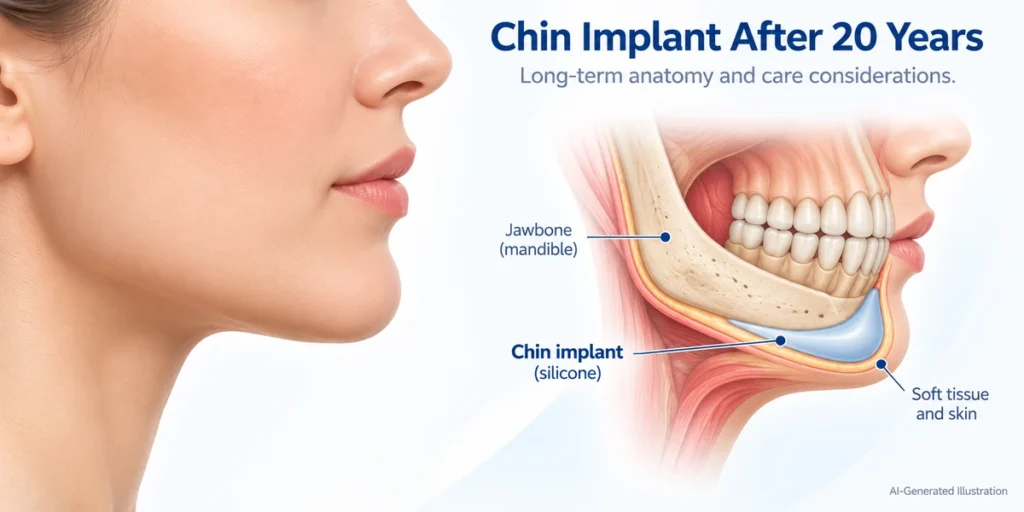
Chin Implant After 20 Years: Safety, Changes and Revision
A chin implant after 20 years may remain stable and comfortable without requiring replacement. However, facial ageing, implant displacement, changes in surrounding tissues and pressure-related changes to the chin bone may affect its long-term appearance or condition.
Chin implants are used to alter the projection and contour of the chin. Common materials include solid silicone and porous polyethylene.
Although these implants are intended for long-term placement, they are not completely free from complications.
Understanding the difference between normal facial ageing and implant-related problems can help determine when medical evaluation is appropriate.
What Happens to a Chin Implant After 20 Years?
Chin implants are generally designed to remain in place for an extended period.
Unlike temporary injectable fillers, solid implants do not ordinarily disappear through normal tissue absorption.
However, the surrounding anatomy can change over time.
Possible long-term changes include:
Reduced skin elasticity
Changes in facial fat distribution
Softening of jawline definition
Alterations in tissue support
Changes in implant position
Pressure-related changes in the underlying bone
Not everyone experiences these changes, and the implant’s age alone does not indicate a complication.
Is a Chin Implant Permanent?
Chin implants are intended for long-term use and may remain in place for decades.
However, permanent placement does not mean guaranteed lifetime stability.
An implant may eventually require removal or replacement because of infection, displacement, discomfort, tissue changes or other complications.
A stable, symptom-free implant does not automatically need replacement solely because 20 years have passed.
Chin Implant vs. Natural Facial Ageing
Changes around the chin do not always mean that the implant has moved or failed.
| Feature | Natural facial ageing | Possible implant-related change |
|---|---|---|
| Jawline | Gradual loss of definition | New contour irregularity or asymmetry |
| Skin | Reduced elasticity or sagging | Tightness, thinning or irritation over the implant |
| Chin projection | May appear different due to tissue changes | Possible displacement or malposition |
| Sensation | Usually no implant-specific symptoms | Persistent numbness, tingling or discomfort |
| Underlying bone | Normal age-related changes | Possible implant-associated pressure effects |
| Medical assessment | Depends on symptoms and concerns | Important when changes are new or progressive |
A clinical examination may be needed to distinguish these causes.
For another example of long-term facial changes after surgery, read Rhinoplasty After 20 Years: Long-Term Changes.
Can a Chin Implant Move After 20 Years?
Yes. Implant displacement can occur, even though many implants remain stable.
Possible contributing factors include:
Facial trauma
Changes in surrounding tissues
Implant position or fixation
Scar tissue changes
Pressure or structural changes involving the chin bone
Signs that may suggest implant displacement include newly noticeable asymmetry, an altered chin contour or a sensation that the implant has shifted.
These findings are not sufficient to confirm displacement without examination.
Can a Chin Implant Cause Bone Resorption?
Chin implants rest near the front of the lower jawbone, also called the mandible.
Over time, pressure from an implant may contribute to changes in the underlying bone.
What Is Bone Resorption?
Bone resorption refers to the loss or remodelling of bone tissue.
Some studies have documented bone changes associated with chin implants, although the frequency and clinical significance vary.
Not every implant causes meaningful bone loss.
How Is It Detected?
A clinician may consider imaging, such as CT, when symptoms or examination findings suggest a structural problem.
Routine CT scans are not automatically necessary for every person with a long-standing chin implant.
The choice of imaging depends on the clinical concern.
What Are the Possible Long-Term Complications?
Although some individuals experience no significant problems after many years, potential complications include:
1. Implant Displacement
The implant may shift from its intended position, potentially creating asymmetry or contour changes.
2. Infection
Infections can occur after implant surgery and may occasionally become apparent later.
Symptoms may include redness, swelling, warmth, pain or discharge.
3. Bone Changes
Pressure-related remodelling or resorption of the underlying chin bone may occur.
4. Capsular Contracture or Scar Tissue Changes
Scar tissue can form around an implant and may occasionally contribute to firmness or changes in contour.
5. Nerve-Related Symptoms
Persistent numbness, tingling, altered sensation or discomfort may be related to tissue or nerve irritation.
6. Implant Exposure
In uncommon circumstances, tissue breakdown may allow the implant to become exposed.
7. Changes in Facial Contour
Ageing, tissue changes or implant-related factors can alter the chin’s appearance.
These complications do not occur in every individual, and their likelihood cannot be predicted solely from the implant’s age.
Does a Chin Implant Cause a Double Chin After 20 Years?
A chin implant does not directly prevent the natural ageing of the neck and lower face.
Over time, changes in skin elasticity, fat distribution and tissue support may contribute to fullness beneath the chin.
A chin implant primarily changes projection. It does not remove excess neck fat or reliably correct loose skin.
Therefore, a double chin developing years after surgery does not necessarily mean the implant has failed.
Does a Chin Implant Need Replacement After 20 Years?
Not necessarily.
There is no universal 20-year replacement schedule for chin implants.
The decision to retain, remove or replace an implant depends on clinical findings.
When Observation May Be Appropriate
Observation may be considered when the implant is stable, comfortable and not associated with clinically significant concerns.
When Removal or Revision May Be Considered
A clinician may discuss intervention when there is:
Confirmed implant displacement
Persistent infection
Significant pain or discomfort
Implant exposure
Clinically important bone changes
Progressive contour deformity
Another condition requiring surgical management
Revision surgery is not guaranteed to be simple.
Long-standing scar tissue, changes in bone anatomy and the condition of surrounding tissues may affect the surgical approach and recovery.
For a related discussion of long-term synthetic implants, read Silicone Rhinoplasty After 10 Years: Implant Changes and Care.
How Is a Chin Implant Evaluated After Many Years?
A medical assessment may include several steps.
Medical History
The clinician reviews the original surgery, implant material, previous complications and new symptoms.
Physical Examination
The chin and lower face are examined for tenderness, asymmetry, skin changes and altered sensation.
Implant Position Assessment
The clinician evaluates whether the implant appears stable or displaced.
Imaging When Indicated
Imaging may help assess implant position or underlying bone changes when a specific concern is present.
Not every individual needs imaging or routine surgical intervention.
What Happens if a Chin Implant Is Removed?
Removing a long-standing implant may alter the appearance of the chin.
Possible consequences depend on the original anatomy, implant size, surrounding tissue condition and any underlying bone changes.
Some individuals may notice reduced chin projection or soft-tissue changes after removal.
A surgeon may discuss leaving the implant out, replacing it or considering another procedure.
However, each option has limitations and possible complications.
Removal does not guarantee that the chin will return to its exact preoperative appearance.
Chin Implant Long-Term Care Checklist
Individuals with a long-standing chin implant can consider the following precautions:
Monitor changes: Look for new asymmetry, swelling or altered chin contour.
Report persistent discomfort: Pain, tenderness or unusual pressure warrants assessment.
Check for sensory symptoms: Discuss new numbness or tingling with a healthcare professional.
Protect against facial trauma: Significant injury may affect implant position.
Avoid attempting repositioning: Do not manipulate or forcefully massage a suspected displaced implant.
Understand bone changes: Discuss imaging when examination suggests a structural concern.
Review surgical records: Keep details of implant type and previous procedures when available.
Seek evaluation when necessary: Follow an individualized plan based on symptoms and examination.
These measures support awareness but cannot guarantee that implant-related complications will never occur.
When Should You Seek Medical Attention?
Medical assessment is important if you notice persistent pain, increasing swelling, new asymmetry, a changing implant position, numbness, redness or skin breakdown.
Fever with facial swelling, spreading infection or discharge requires prompt medical evaluation.
Severe facial swelling with breathing or swallowing difficulty requires emergency care.
Frequently Asked Questions
1. Can a chin implant last for 20 years?
Yes. A chin implant may remain stable for 20 years or longer. However, its long-term condition depends on individual anatomy, implant characteristics and possible complications.
2. Does a chin implant need to be replaced after 20 years?
Not automatically. There is no universal requirement to replace a chin implant after 20 years. Removal or revision is considered according to symptoms and clinical findings.
3. Can a chin implant move after many years?
Yes. Implant displacement can occur and may cause asymmetry, discomfort or changes in chin contour. A clinical examination can help identify the cause.
4. Can chin implants cause bone loss?
Chin implants may be associated with pressure-related bone changes, including resorption. The extent and clinical significance vary between individuals.
5. Does facial ageing affect chin implant results?
Yes. Skin elasticity, facial fat distribution and surrounding tissues can change over time, altering the appearance of the chin even when the implant remains stable.
6. Is chin implant removal risky after 20 years?
Removal or revision carries surgical risks, including bleeding, infection, nerve injury, scarring and changes in contour. The complexity depends on the implant and surrounding tissues.
7. When should a chin implant be medically evaluated?
Assessment is appropriate for new pain, swelling, asymmetry, altered sensation, suspected displacement, skin changes or other persistent concerns.
Conclusion
A chin implant may remain in place for decades without requiring removal or replacement.
However, long-term stability cannot be guaranteed, and changes in facial tissues, implant position or underlying bone may occasionally occur.
Not every visible change indicates implant failure, and revision surgery is not automatically necessary after 20 years.
Individual medical evaluation helps determine whether observation, further investigation or treatment is appropriate.
Disclaimer: All content and visuals on this website are for educational and informational purposes only. Images may be AI-generated or illustrative. Individual treatment results may vary. This information does not replace professional medical advice, diagnosis or consultation.