
Rhinoplasty Surgery in Mumbai: Complete Guide by a Plastic Surgeon
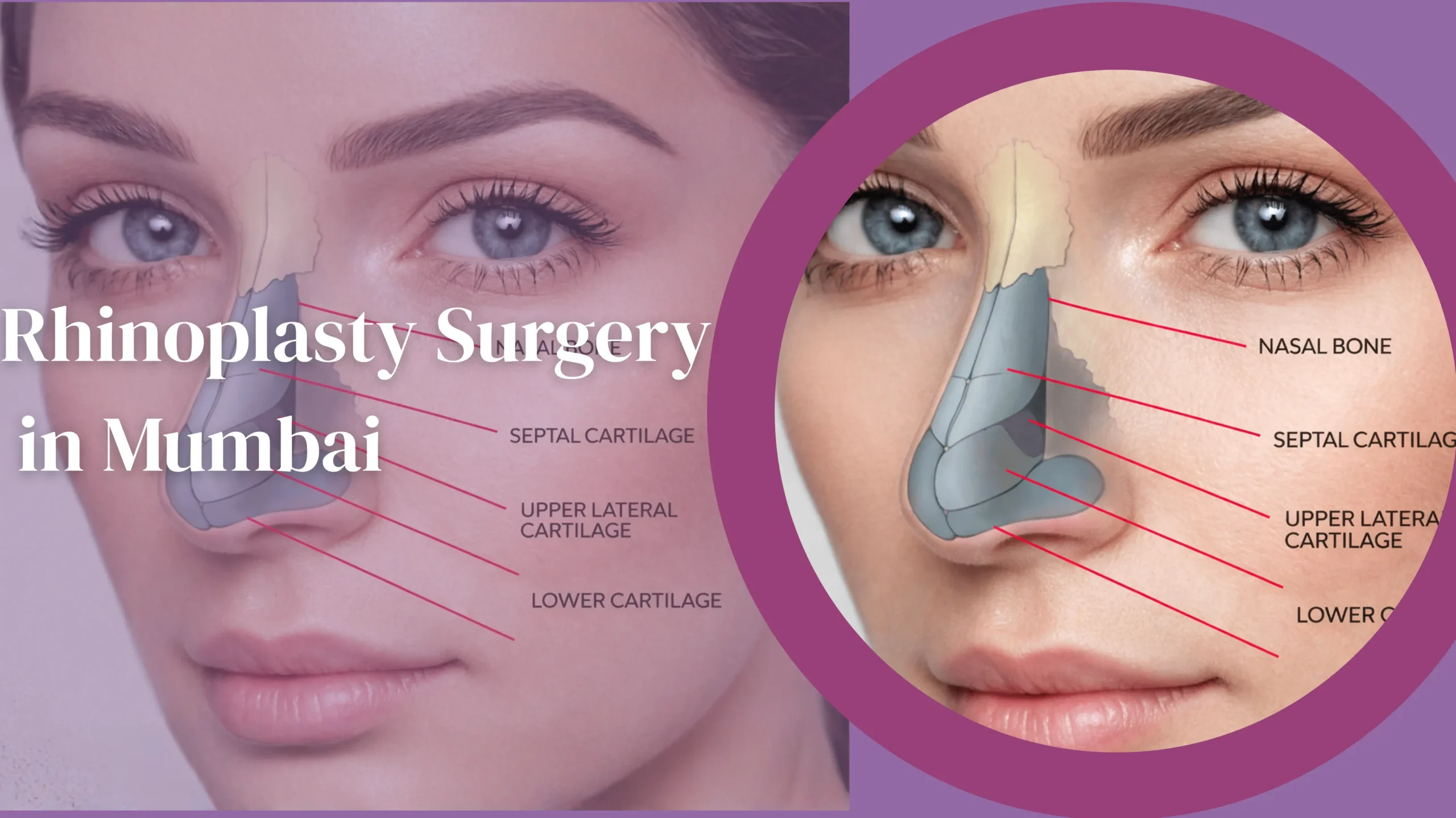
Rhinoplasty Surgery: Types, Procedure, Risks and Recovery
Rhinoplasty surgery is a procedure that reshapes the nose by modifying its bone, cartilage and surrounding tissues. It may be performed to address nasal appearance, structural abnormalities or selected breathing difficulties.
Commonly called a nose job, rhinoplasty includes several surgical techniques. The appropriate approach depends on nasal anatomy, breathing function, medical history and individual treatment goals.
Although rhinoplasty produces long-lasting structural changes, the procedure carries risks, requires recovery and cannot guarantee a specific appearance or perfect symmetry.
This guide explains rhinoplasty techniques, the surgical process, recovery, complications and important safety considerations.
What Is Rhinoplasty Surgery?
Rhinoplasty is surgery performed to change the shape or structure of the nose.
Depending on the clinical concern, surgery may involve:
Reshaping the nasal bridge
Adjusting nasal tip cartilage
Correcting selected structural asymmetries
Repositioning nasal bones
Supporting weakened nasal structures
Addressing certain causes of nasal obstruction
Reconstructing nasal structures after injury
Not every rhinoplasty changes both appearance and breathing function.
Some procedures focus on cosmetic concerns, while others address structural or functional problems.
What Are the Different Types of Rhinoplasty?
Several approaches are used according to the anatomical changes required.
1. Open Rhinoplasty
Open rhinoplasty uses incisions inside the nostrils and a small incision across the columella, the tissue between the nostrils.
This allows the surgeon direct access to the nasal framework.
The approach may be considered when extensive structural correction is necessary.
It leaves a small external surgical scar, which may become less noticeable with healing but does not disappear completely.
2. Closed Rhinoplasty
Closed rhinoplasty uses incisions made inside the nostrils.
It avoids an external columellar incision.
However, closed rhinoplasty is not automatically safer, more suitable or associated with faster recovery in every case.
3. Nasal Tip Surgery
Tip rhinoplasty focuses on the cartilage and supporting structures of the nasal tip.
The procedure may address selected concerns involving tip projection, rotation or contour.
Some cases require additional structural support or other nasal adjustments.
4. Septorhinoplasty
Septorhinoplasty combines nasal reshaping with correction of selected structural abnormalities involving the nasal septum.
It may be considered when nasal appearance and breathing-related anatomy both require assessment.
Not every breathing problem can be corrected by septorhinoplasty.
5. Revision Rhinoplasty
Revision rhinoplasty addresses selected concerns following previous nose surgery.
It may be more complex because earlier surgery can cause scar tissue, altered anatomy or reduced availability of nasal cartilage.
6. Reconstructive Rhinoplasty
Reconstructive procedures may be needed after trauma, congenital differences or certain medical conditions.
The surgical plan depends on the anatomical problem and available tissues.
Open vs. Closed Rhinoplasty: What Is the Difference?
| Feature | Open rhinoplasty | Closed rhinoplasty |
|---|---|---|
| Incision | Inside nostrils and across columella | Inside nostrils |
| Access to structures | Direct exposure of nasal framework | Access through internal incisions |
| External scar | Small permanent columellar scar | No external columellar incision |
| Typical use | Selected complex or structural corrections | Selected nasal corrections |
| Swelling | Depends on extent of surgery | Depends on extent of surgery |
| Recovery | Individualised | Individualised |
| Main limitation | External incision and possible scar changes | May offer less direct exposure for some operations |
Neither method guarantees superior results.
The surgical approach should follow the anatomical requirements rather than a general preference for one technique.
Who May Be Suitable for Rhinoplasty?
Suitability depends on the reason for considering surgery and the findings of a medical assessment.
A surgeon may review:
Completion of relevant facial and nasal growth
Overall physical health
Nasal bone and cartilage structure
Breathing difficulties
History of nasal trauma
Previous nasal surgery
Skin and tissue characteristics
Smoking or nicotine use
Expectations and understanding of surgical limitations
There is no single age that automatically makes everyone suitable for rhinoplasty.
For younger individuals, physical development, maturity and medical circumstances require particular consideration.
Surgery is elective when performed for cosmetic reasons, and choosing not to undergo it is a valid option.
How Is Rhinoplasty Surgery Performed?
The surgical process varies according to the technique and anatomical concern.
Step 1: Medical and Nasal Assessment
The surgeon examines the external nose and evaluates breathing function when relevant.
Medical history, medications, previous procedures and surgical risks are reviewed.
Step 2: Anaesthesia
Rhinoplasty is commonly performed under general anaesthesia, although the appropriate method depends on the planned procedure and individual circumstances.
Step 3: Surgical Access
Incisions are made according to the selected open or closed approach.
Step 4: Bone and Cartilage Modification
Selected nasal structures may be repositioned, reshaped, reduced or supported using cartilage grafts when indicated.
Step 5: Closure and Support
Incisions are closed, and an external splint or internal supports may be used depending on the procedure.
Step 6: Postoperative Monitoring
The individual receives instructions about wound care, medication, activity restrictions and follow-up examinations.
The surgical plan must take account of both nasal appearance and the need to preserve appropriate structural support and airflow.
Can Rhinoplasty Improve Breathing?
Rhinoplasty or septorhinoplasty may improve breathing when nasal obstruction is associated with certain structural abnormalities.
Examples include:
Deviated Nasal Septum
A significantly deviated septum may narrow the nasal airway.
Nasal Valve Problems
Weakness or narrowing of the nasal valves may interfere with airflow.
Post-Traumatic Changes
Injury may alter the alignment or support of nasal structures.
However, breathing problems may also be related to allergies, inflammation, nasal polyps or other medical conditions.
Surgery does not guarantee improvement in every case and can occasionally cause or worsen nasal obstruction.
What Is the Recovery Timeline After Rhinoplasty?
Recovery varies depending on the complexity of surgery, tissue characteristics and individual healing.
| Recovery stage | Common observations |
|---|---|
| First 1–7 days | Swelling, bruising, congestion and a nasal splint when used |
| Weeks 2–3 | Early bruising and visible swelling often decrease |
| Weeks 4–6 | Further healing; selected exercise may resume when medically cleared |
| Months 2–3 | Nasal contours continue changing as swelling settles |
| Months 3–6 | Additional reduction in swelling and tissue firmness |
| Months 6–12 | Further refinement of nasal appearance |
| Beyond 12 months | Residual tip swelling or scar-related changes may continue in some cases |
These are approximate recovery stages rather than guaranteed milestones.
The nasal tip may take longer to settle than other parts of the nose.
What Should You Expect During Rhinoplasty Recovery?
Swelling and Bruising
Swelling around the nose and sometimes the eyes is common during early recovery.
Mild residual swelling may remain after visible bruising resolves.
Nasal Congestion
Temporary nasal obstruction can occur because of internal swelling, crusting or postoperative supports.
Sleeping Position
The treating surgeon may advise sleeping with the head elevated during early healing.
Avoiding Nasal Pressure
Blowing the nose, pressing on the surgical area and activities involving facial contact may need to be restricted.
Exercise and Physical Activity
Strenuous exercise and contact sports should be resumed according to medical clearance.
Follow-Up Visits
Regular assessment can help identify healing problems, monitor nasal function and guide activity restrictions.
Recovery advice should be individualised.
What Are the Risks and Complications of Rhinoplasty Surgery?
Rhinoplasty involves potential surgical and anaesthetic risks.
Bleeding and Infection
Bleeding, wound complications and infection can occur.
Breathing Difficulties
Nasal obstruction may persist, develop or worsen because of changes in structural support or other causes.
Nasal Asymmetry
Differences between the two sides of the nose may persist or become noticeable during healing.
Numbness and Sensory Changes
Temporary numbness or altered sensation may affect the nasal tip and surrounding tissues.Perfect symmetry cannot be guaranteed.
Scarring
Open rhinoplasty creates a small external columellar scar. Internal and external scar tissue can also influence healing.Some changes can persist.
Septal Perforation
A hole in the nasal septum is an uncommon but recognised complication.
Unsatisfactory Contour
Healing may result in irregularities, asymmetry or a shape different from that anticipated.
Revision Surgery
Further surgery may sometimes be considered for structural, functional or appearance-related concerns.
Revision introduces additional complications and does not guarantee correction.
Surgical Rhinoplasty vs. Non-Surgical Nose Fillers
Injectable fillers are sometimes described as non-surgical rhinoplasty, but they do not provide the same anatomical changes as surgery.
| Feature | Surgical rhinoplasty | Injectable nose fillers |
|---|---|---|
| Primary method | Modifies nasal structures | Adds injectable material |
| Can reduce a bony hump | May reshape the underlying anatomy | Cannot remove the hump |
| Can correct structural obstruction | In selected cases | Not an established treatment |
| Results | Long-lasting structural changes | Temporary, depending on filler |
| Recovery | Surgical healing over weeks to months | Usually shorter initial recovery |
| Important risks | Infection, bleeding, breathing problems, scarring | Vascular occlusion, skin necrosis and rare blindness |
Nasal filler injections can cause serious vascular complications, including blindness. They should not be presented as a risk-free alternative to surgery.
How Long Do Rhinoplasty Results Last?
Rhinoplasty produces structural changes that may remain for many years.
However, the nose continues to undergo natural ageing.
Long-term appearance may be influenced by:
Skin elasticity
Cartilage support
Scar tissue
Original surgical technique
Nasal trauma
Facial ageing
Individual healing patterns
A stable structural change does not mean that the nasal appearance will remain completely unchanged throughout life.
For further information, read Rhinoplasty After 20 Years: Long-Term Changes and Risks.
Are Nasal Implants Used in Rhinoplasty?
Certain augmentation rhinoplasty procedures may use synthetic implants or cartilage grafts to support or alter nasal contour.
Implants introduce additional considerations, including infection, displacement, skin thinning and possible exposure.
The choice of material depends on individual anatomy, the intended correction and surgical risks.
For more information, read Silicone Rhinoplasty After 10 Years: Implant Changes and Care.
Rhinoplasty Surgery Safety and Recovery Checklist

Before considering nose surgery and during recovery, review these points:
Confirm medical suitability: Discuss general health, medications and previous surgeries.
Understand nasal anatomy: Review the structural changes proposed and their effect on breathing.
Discuss surgical techniques: Understand why an open or closed approach may be appropriate.
Review possible complications: Ask about bleeding, infection, breathing problems and revision surgery.
Follow postoperative care: Use medicines, dressings and nasal supports as directed.
Protect the nose: Avoid unnecessary pressure and risk of facial injury during healing.
Resume activity gradually: Follow individual instructions for exercise and contact sports.
Avoid smoking and nicotine: These may interfere with tissue circulation and healing.
Attend follow-up appointments: Monitor healing and report persistent symptoms.
Understand limitations: No surgical technique guarantees a particular appearance or breathing outcome.
When Should You Seek Medical Attention?
Contact a qualified healthcare professional if you experience increasing nasal pain, fever, spreading redness, unusual discharge, worsening nasal obstruction or persistent bleeding.
Heavy bleeding, rapidly worsening swelling or serious breathing difficulty requires urgent assessment.
Severe breathing difficulty or uncontrolled bleeding requires emergency medical care.
Frequently Asked Questions
1. What is rhinoplasty surgery?
Rhinoplasty is a surgical procedure that changes nasal bone, cartilage or surrounding tissues to address selected appearance-related or structural concerns.
2. What is the difference between open and closed rhinoplasty?
Open rhinoplasty uses an additional incision across the columella, while closed rhinoplasty uses incisions inside the nostrils. Suitability depends on nasal anatomy and the surgical plan.
3. How long does rhinoplasty recovery take?
Early recovery commonly takes one to two weeks, while swelling and nasal contour changes can continue for several months or longer.
4. Can rhinoplasty improve breathing?
Yes, in selected individuals with structural causes of nasal obstruction. However, not every breathing problem requires surgery, and improvement cannot be guaranteed.
5. Does rhinoplasty leave permanent scars?
Surgical incisions create scars. Open rhinoplasty generally leaves a small external columellar scar, while closed rhinoplasty avoids that external incision.
6. Are rhinoplasty results permanent?
Rhinoplasty creates long-lasting structural changes, but natural ageing, healing and trauma can alter nasal appearance over time.
7. What are the main risks of rhinoplasty surgery?
Possible risks include bleeding, infection, breathing difficulties, numbness, scarring, asymmetry, septal perforation and the possibility of revision surgery.
Conclusion
Rhinoplasty surgery may be considered for selected nasal appearance concerns or structural problems affecting breathing.
Open, closed, functional and revision techniques differ according to the anatomical correction required.
The operation involves surgical risks, recovery time and the possibility of changes or complications after healing.
An individual medical assessment is necessary to determine whether surgery is appropriate, which technique may be considered and what limitations should be understood.
Medical Disclaimer: This article is for general educational purposes only. It does not replace individual medical advice, diagnosis or informed surgical consent. AI-generated illustrations are educational representations and do not depict actual patient outcomes.