
Traction Alopecia: Causes, Treatment and Hair Regrowth
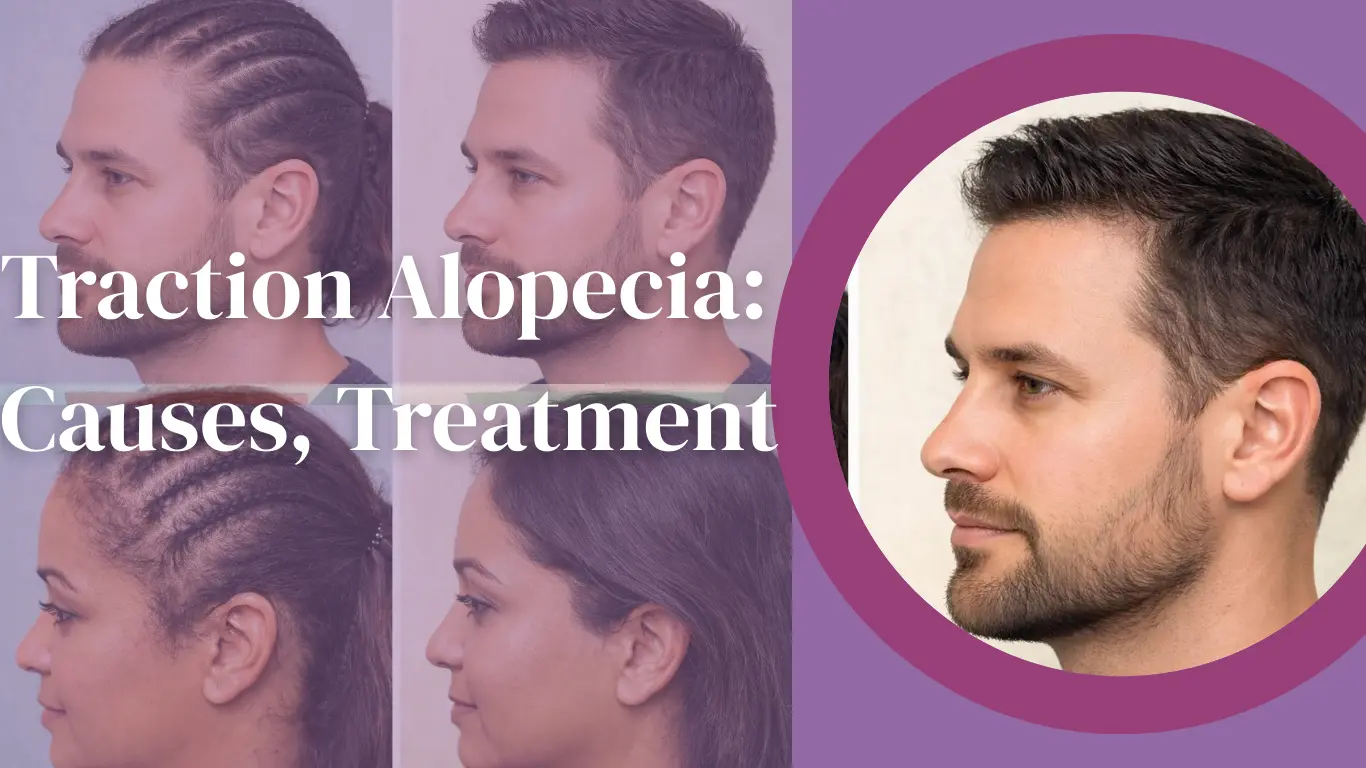
Traction alopecia treatment begins by stopping repeated pulling or tension on the hair follicles. This type of hair loss commonly develops from tight ponytails, braids, buns, extensions or other hairstyles that place prolonged stress on the scalp.
In its early stages, traction alopecia may improve when the source of tension is removed. However, long-standing traction can damage hair follicles permanently and cause scarring hair loss.
Early recognition, gentle hairstyling and appropriate medical assessment are important for preventing further damage.
What Is Traction Alopecia?
Traction alopecia is hair loss caused by repeated mechanical tension on hair follicles.
The condition commonly affects the hairline, temples and other scalp areas exposed to pulling.
Unlike some forms of hereditary hair loss, traction alopecia is primarily associated with external tension rather than genetic susceptibility.
The condition may initially be non-scarring, but repeated damage can eventually destroy hair follicles.
What Causes Traction Alopecia?
1. Tight Ponytails and Buns
Regularly pulling hair tightly backwards places tension on follicles around the forehead and temples.
2. Braids and Cornrows
Tightly braided hairstyles can create persistent pulling, particularly around the hairline.
3. Hair Extensions and Weaves
Extensions may add weight and tension to natural hair, increasing the risk of follicle damage.
4. Tight Hair Accessories
Hair clips, elastic bands, head coverings or headgear may contribute when they repeatedly pull or place pressure on the same hair-bearing areas.
5. Repeated Styling Damage
Heat and chemical treatments may weaken hair shafts and increase breakage. When combined with tight hairstyles, these practices may worsen hair damage.
Traction alopecia can affect individuals of different ages, genders and hair types.
What Are the Early Signs of Traction Alopecia?
Recognising the early symptoms can help prevent progression.
Common signs include:
Thinning along the forehead or temples
A gradually receding hairline
Short, broken hairs around the scalp margins
Tenderness or discomfort after hairstyling
Small bumps or redness near tightly pulled hairs
Itching or irritation around affected areas
A characteristic feature called the fringe sign may be present, where some fine hairs remain along the front or sides of the hairline despite thinning behind them.
Long-standing traction alopecia may produce smooth, shiny patches with reduced visible hair-follicle openings.
Can Hair Grow Back After Traction Alopecia?
Hair regrowth depends mainly on whether the follicles remain functional.
Early-Stage Traction Alopecia
When tension is stopped before permanent follicle damage occurs, hair may gradually regrow.
Long-Standing Traction Alopecia
Prolonged pulling can cause scarring and irreversible follicle damage.
In these areas, spontaneous regrowth may be limited or absent.
Early vs. Advanced Traction Alopecia
| Feature | Early-stage traction alopecia | Advanced traction alopecia |
|---|---|---|
| Follicle condition | Often preserved | May be permanently damaged |
| Scalp appearance | Thinning, broken hairs, possible redness | Smooth or shiny areas may develop |
| Hair regrowth | Often possible after stopping tension | May be limited or absent |
| Main management | Remove tension and assess inflammation | Prevent progression and discuss individual options |
| Long-term outlook | Often more favourable | Depends on extent of scarring |
Hair regrowth cannot be guaranteed, even when treatment begins early.
For a related discussion, read traction alopecia hair regrowth and recovery.
What Are the Treatment Options for Traction Alopecia?
The most important step is to identify and eliminate the source of repeated tension.
1. Change Hairstyling Habits
Consider loose hairstyles that do not cause pulling, tenderness or scalp discomfort.
Avoid repeatedly placing tension on the same area, and reduce the use of heavy or tight extensions.
2. Treat Scalp Inflammation
If the scalp is inflamed, a dermatologist may consider appropriate anti-inflammatory treatment.
Topical or injected corticosteroids may be used in selected cases, depending on the examination and diagnosis.
These medications should not be self-prescribed.
3. Topical Minoxidil
A clinician may consider topical minoxidil to support hair regrowth in selected individuals.
However, evidence specifically for traction alopecia is limited, and minoxidil cannot restore follicles that have been permanently destroyed.
Potential adverse effects include scalp irritation and unwanted hair growth outside the treated area.
Suitability during pregnancy or breastfeeding requires individual medical advice.
4. PRP Hair Therapy
Platelet-rich plasma (PRP) has been studied for certain hair-loss conditions.
However, evidence supporting PRP specifically for traction alopecia is insufficient to recommend it routinely.
It should not be presented as a guaranteed method of reversing traction-related scarring.
5. Hair Transplantation
Hair transplantation may be considered in selected individuals with stable, permanent hair loss.
Before surgery, assessment should establish that ongoing traction has stopped, scalp inflammation is controlled and the donor area is suitable.
Transplantation has limitations and risks, including scarring, infection, graft failure and an unpredictable degree of coverage.
For a general explanation of surgical planning, read hair transplant donor area assessment and graft considerations.
How Long Does Traction Alopecia Take to Recover?
The recovery timeline varies according to the duration of hair loss and whether follicles have been damaged.
| Time after removing tension | Possible observations |
|---|---|
| First few weeks | Reduced pulling-related discomfort and irritation |
| 1–3 months | Hair shedding and breakage may improve |
| 3–6 months | Early regrowth may become visible if follicles remain functional |
| 6–12 months | Further changes in hair growth and density may occur |
| Beyond 12 months | Persistent areas may require reassessment for scarring or another diagnosis |
These are general estimates, not guaranteed recovery milestones.
Continuing tight hairstyles during treatment may worsen the condition.
How Is Traction Alopecia Diagnosed?
A dermatologist may diagnose traction alopecia by reviewing the history of hairstyling practices and examining the scalp.
The assessment may include:
Pattern and duration of hair loss
History of hairstyles, extensions and scalp tension
Examination of broken hairs and scalp inflammation
Trichoscopy to examine the hair and follicle openings
Scalp biopsy in selected cases when the diagnosis is uncertain
Other conditions, including female pattern hair loss, alopecia areata and certain scarring alopecias, may cause similar-looking thinning.
Not every individual requires blood tests or a scalp biopsy.
For information about another common pattern of thinning, read female hair loss: causes and treatment considerations.
Traction Alopecia Prevention and Hair Care Checklist

Reducing scalp tension is important even when medical treatment is being considered.
Choose loose hairstyles: Avoid persistent pulling around the hairline.
Avoid painful styling: A hairstyle that causes scalp pain or tenderness should be loosened.
Limit heavy extensions: Reduce excessive weight on natural hair.
Change styling patterns: Avoid repeatedly pulling the same scalp areas.
Use gentle hair care: Reduce unnecessary heat, chemical exposure and rough brushing.
Monitor your hairline: Watch for thinning, short broken hairs or irritation.
Seek medical assessment: Consult a qualified healthcare professional if hair loss persists or progresses.
Follow prescribed treatment: Use medication only when clinically appropriate.
These precautions may reduce further damage but cannot guarantee regrowth from permanently scarred follicles.
When Should You See a Dermatologist?
Medical assessment is appropriate when you notice persistent hairline recession, widening bald patches, scalp pain, redness or progressive thinning.
Early evaluation is particularly important if the scalp appears smooth or shiny, as this may indicate loss of functional follicles.
A diagnosis is also necessary when hair loss continues despite changing hairstyles.
Frequently Asked Questions
1. What is traction alopecia?
Traction alopecia is hair loss caused by repeated tension on hair follicles, commonly from tight braids, ponytails, buns or extensions.
2. Can traction alopecia hair grow back?
Hair may regrow when the condition is identified early and tension is removed before permanent follicle damage occurs. Advanced scarring may prevent regrowth.
3. What is the first treatment for traction alopecia?
The first and most important measure is to stop hairstyles and practices that repeatedly pull on the hair follicles.
4. How long does traction alopecia take to recover?
Early regrowth may become noticeable after several months. Recovery varies according to the duration of tension, follicle damage and individual hair growth.
5. Can minoxidil treat traction alopecia?
Minoxidil may be considered in selected cases to support regrowth, but evidence is limited and it cannot restore permanently destroyed follicles.
6. Is PRP effective for traction alopecia?
Evidence for PRP specifically in traction alopecia is limited. It is not an established first-line treatment and should not replace removal of the underlying tension.
7. Is traction alopecia permanent?
Early traction alopecia is often reversible. However, prolonged pulling can cause permanent scarring and irreversible hair loss.
Conclusion
Traction alopecia develops when hair follicles are repeatedly exposed to pulling or tension.
Early changes in hairstyling practices may allow recovery and help prevent permanent follicle damage.
Medical treatments may be considered in selected cases, but their effectiveness depends on the stage and underlying condition.
Long-standing scarring can cause irreversible hair loss, making early diagnosis and prevention especially important.
Disclaimer: All content and visuals on this website are for educational and informational purposes only. Images may be AI-generated or illustrative. Individual treatment results may vary. This information does not replace professional medical advice, diagnosis or consultation.