
Missing the Crowning Glory: Hair is how you can gain in back
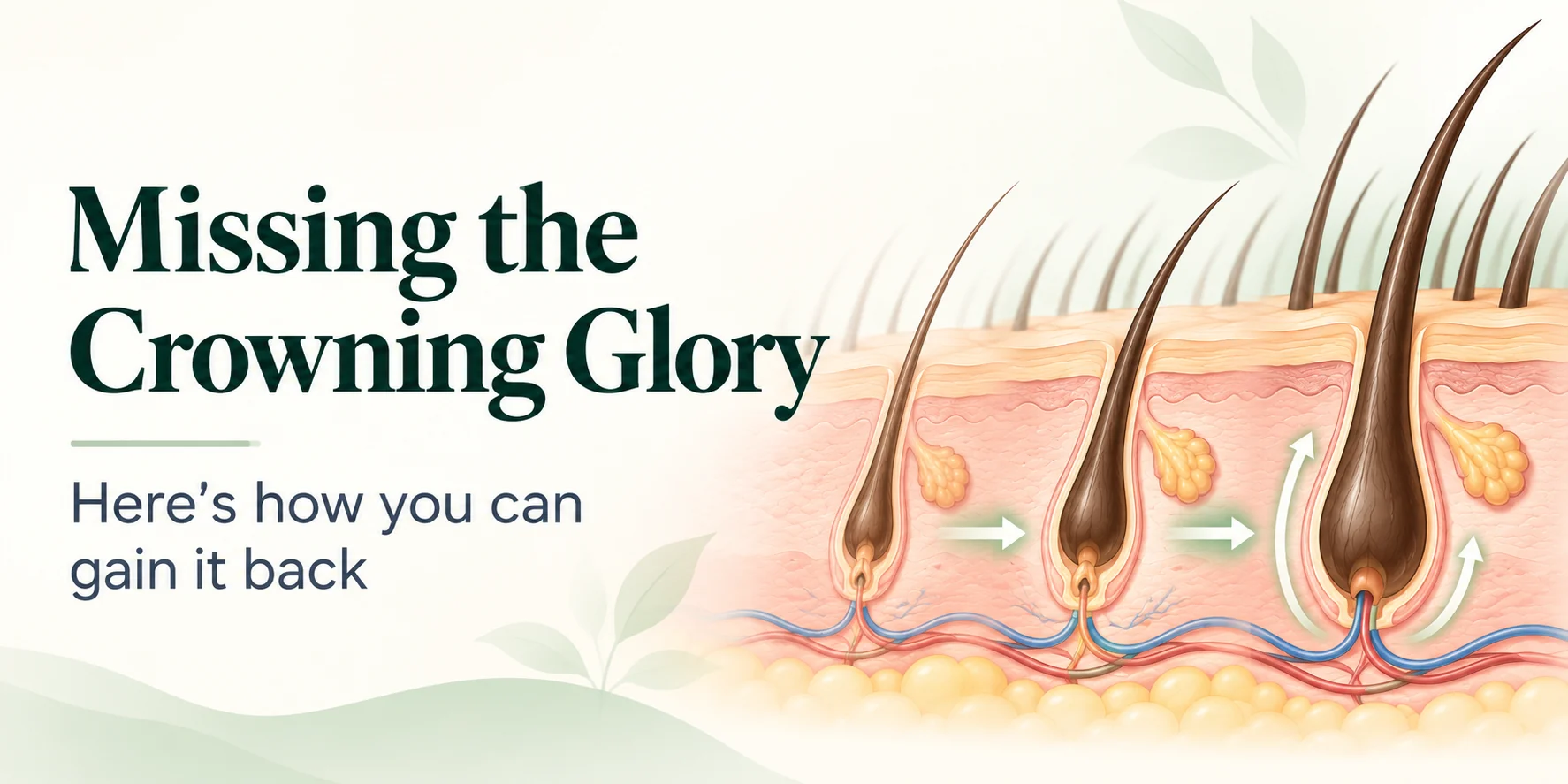
Hair loss is a common concern that can affect people of different ages and genders. It may appear as gradual thinning, increased hair shedding, a receding hairline, widening of the hair parting or distinct patches of missing hair.
Although daily hair shedding is a normal part of the hair growth cycle, persistent or noticeable changes may indicate an underlying condition. For example, male pattern hair loss is associated with genetic and hormonal influences, while other forms of hair loss may occur following illness, nutritional deficiencies or medical conditions.
Hair regrowth treatment refers to medical and supportive approaches intended to reduce excessive hair loss, improve hair density or encourage the growth of new hair where functioning hair follicles remain. The appropriate treatment depends on the cause of hair loss, the condition of the scalp, the health of the hair follicles and individual medical factors.
Some forms of hair loss improve naturally or after the underlying cause is treated. Others require ongoing medical management, and certain conditions can lead to permanent follicle damage. Individuals experiencing diffuse or progressive thinning may also benefit from understanding the causes and clinical assessment of female pattern hair loss.
Understanding why hair loss occurs is therefore the first step before considering any treatment.
What Is Hair Regrowth?
Hair regrowth is the process through which new hair emerges from functioning hair follicles following shedding, thinning or temporary interruption of hair growth.
Each hair follicle undergoes a repeating biological cycle. This process includes periods of active growth, transition, rest and shedding.
Hair regrowth depends on several factors, including:
The underlying cause of hair loss.
Whether the hair follicle remains viable.
The duration and pattern of hair loss.
Genetic and hormonal influences.
Nutritional status and general health.
Scalp inflammation or infection.
Response to medical treatment.
Not all types of hair loss are reversible. If a follicle has been permanently damaged and replaced by scar tissue, medical treatments generally cannot restore hair growth from that follicle.
For individuals considering surgical hair restoration, understanding hair transplant donor area assessment may provide additional information about follicle availability and the limitations of transplantation.
How Does the Hair Growth Cycle Work?
Understanding the hair growth cycle helps explain why hair loss occurs and why treatment results may take several months.
The hair growth cycle consists of four principal phases: anagen (growth), catagen (transition), telogen (rest) and exogen (shedding). Changes in this cycle can contribute to increased shedding or reduced hair density.
Medical treatments may influence hair follicle activity, but their effectiveness depends on the underlying diagnosis, follicle condition and individual response.

What Are the Common Causes of Hair Loss?
Hair loss is not a single disease. Several conditions can produce similar symptoms but require different approaches.
1. Androgenetic Alopecia (Pattern Hair Loss)
Androgenetic alopecia is a common form of progressive hair thinning influenced by genetic susceptibility and hormones.
In men, it frequently affects the temples, frontal hairline and crown. In women, it often produces diffuse thinning over the central scalp, sometimes with widening of the hair parting.
The condition involves gradual miniaturisation of susceptible hair follicles, which produce progressively finer and shorter hairs.
Early evaluation may help identify management options before more extensive follicle miniaturisation develops.
2. Telogen Effluvium
Telogen effluvium is a condition characterised by excessive hair shedding after a disturbance in the normal hair growth cycle.
Potential triggers include:
Significant illness or high fever.
Major surgery.
Childbirth.
Rapid weight loss or restrictive dieting.
Certain medications.
Substantial physical or psychological stress.
Thyroid disorders and some nutritional deficiencies.
Shedding may become noticeable approximately two to three months after the triggering event.
Many cases improve after the underlying trigger resolves, although prolonged or recurrent shedding can occur.
3. Alopecia Areata
Alopecia areata is an immune-mediated condition in which the body’s immune system targets hair follicles.
It may cause smooth, round or oval patches of hair loss.
The course is unpredictable. Some individuals experience spontaneous regrowth, while others develop recurrent or extensive hair loss.
Treatment depends on disease severity, age and other clinical factors.
4. Nutritional Deficiencies
Deficiencies in nutrients such as iron or zinc, inadequate protein intake and other nutritional problems may contribute to hair shedding.
However, taking nutritional supplements without a demonstrated deficiency does not necessarily stimulate hair regrowth.
Excessive intake of certain supplements may also be harmful.
5. Hormonal and Endocrine Conditions
Thyroid dysfunction and certain other hormonal conditions can contribute to hair thinning.
In some women, excess androgen activity may be associated with hair loss alongside symptoms such as acne or irregular menstrual cycles.
Investigations are selected according to the medical history and examination findings.
6. Scalp Disorders and Infections
Inflammatory scalp conditions and infections can interfere with normal hair growth.
Some conditions cause temporary shedding, while others may damage follicles permanently if inflammation continues untreated.
Symptoms such as scalp pain, redness, scaling, pustules or scarring warrant clinical evaluation.
7. Traction Alopecia and Hair Shaft Damage
Repeated tension from tight hairstyles may damage follicles over time.
Frequent heat styling, chemical processing and rough handling can also cause hair breakage, which may be mistaken for hair loss from the roots.
Early changes to hair-care practices may reduce further damage.
How Is the Cause of Hair Loss Diagnosed?
Medical assessment is important because treatment chosen without an accurate diagnosis may be ineffective or delay appropriate care.
A clinician may evaluate:
| Assessment | Why It Matters |
|---|---|
| Pattern of Hair Loss | Helps distinguish diffuse, patchy and patterned thinning. |
| Duration of Shedding | Identifies whether hair loss is recent, ongoing or progressive. |
| Family History | May support a diagnosis of hereditary pattern hair loss. |
| Medical History | Identifies illnesses, childbirth, medications or other possible triggers. |
| Scalp Examination | Checks for inflammation, infection, scaling and scarring. |
| Hair-Pull Test | May help identify active shedding. |
| Trichoscopy | Provides a magnified assessment of hair shafts and follicles. |
| Blood Investigations | May identify selected nutritional or endocrine abnormalities. |
| Scalp Biopsy | May be considered when diagnosis is uncertain or scarring alopecia is suspected. |
Medical Note: Not every individual requires all these tests. The appropriate assessment depends on medical history, symptoms and clinical examination findings. Additional investigations are selected when medically indicated.
Not every patient requires every test.
Investigations should be based on the clinical findings rather than a routine, identical panel for all individuals.
The American Academy of Dermatology emphasises identifying the underlying cause of hair loss before selecting treatment.
What Medical Treatments Are Available for Hair Regrowth?
There is no single treatment that works for every type of hair loss.
Treatment may involve medications, management of underlying medical conditions, selected procedures or hair transplantation.
1. Topical Minoxidil
Minoxidil is a medication commonly used for certain forms of pattern hair loss.
It is available in topical formulations such as solutions and foams. Depending on the formulation and medical advice, it is applied to the scalp once or twice daily.
How Does Minoxidil Work?
Minoxidil is thought to influence hair-follicle activity and support the growth phase of the hair cycle.
It may help reduce progressive thinning and improve hair density in some individuals.
When Can Results Be Expected?
Changes develop gradually. Some individuals notice an initial increase in shedding, and meaningful assessment may require approximately six to twelve months of consistent treatment.
Results vary, and not everyone experiences significant regrowth.
Possible Side Effects
Scalp irritation or itching.
Dryness or flaking.
Temporary increased shedding.
Unwanted hair growth on nearby skin.
Rare systemic effects such as dizziness, palpitations or swelling.
Minoxidil should not be used during pregnancy or breastfeeding without specialist advice, and relevant product guidance may recommend avoiding it.
Continued application is generally necessary to maintain its effect in pattern hair loss.
2. Finasteride
Finasteride is a prescription medication used in the management of male pattern hair loss.
It works by inhibiting an enzyme involved in converting testosterone into dihydrotestosterone (DHT), a hormone associated with follicle miniaturisation in genetically susceptible individuals.
Finasteride may slow progression and improve hair growth in some patients.
Possible Side Effects and Precautions
Potential adverse effects include:
Reduced libido.
Erectile or ejaculation difficulties.
Breast tenderness or changes.
Mood changes, including depression.
Other adverse effects requiring individual assessment.
Persistent sexual symptoms have also been reported.
Finasteride is not suitable for everyone and is generally not indicated for women under standard male-pattern-hair-loss product labelling. Pregnancy-related precautions are particularly important.
The decision to use it should follow an individual discussion of expected benefits, risks and available alternatives.
3. Low-Dose Oral Minoxidil
Low-dose oral minoxidil is sometimes prescribed by specialists for selected forms of hair loss.
Its use for hair regrowth is off-label in many jurisdictions, meaning this is not an approved indication under the relevant product authorisation.
Unlike topical minoxidil, oral treatment has systemic effects.
Potential adverse effects include:
Increased hair growth on the face or body.
Fluid retention or ankle swelling.
Light-headedness.
Changes in blood pressure.
Increased heart rate.
Rare serious cardiovascular complications.
A clinician must evaluate cardiovascular history, other medicines and the need for monitoring before considering oral minoxidil.
It should not be self-prescribed.
4. Anti-Androgen Treatment in Selected Women
In some women with pattern hair loss, a specialist may consider medicines such as spironolactone.
These treatments are not appropriate for everyone and may be prescribed off-label for hair loss.
Potential concerns include low blood pressure, menstrual changes, electrolyte disturbances and pregnancy-related risks.
The treating clinician determines whether treatment is appropriate and what monitoring is needed.
5. Corticosteroid Treatment for Alopecia Areata
Alopecia areata differs from hereditary pattern hair loss.
For limited patchy disease, a dermatologist may recommend topical or injected corticosteroids.
These treatments aim to reduce immune-mediated inflammation affecting the follicles.
Possible adverse effects include skin thinning, local discomfort and pigment changes.
Individuals with severe alopecia areata may require other specialist treatments, including systemic therapies that have significant monitoring and safety requirements.
Treatment is selected according to the type and severity of alopecia areata.
6. Platelet-Rich Plasma (PRP) Therapy
Platelet-rich plasma therapy involves preparing a concentrated portion of a patient’s own blood and administering it to selected areas of the scalp.
PRP contains platelets and associated biological factors involved in tissue signalling and repair.
How Is PRP Performed?
The procedure typically involves:
Collecting a small blood sample.
Processing the blood using a centrifuge.
Separating the platelet-rich component.
Injecting the prepared plasma into selected areas of the scalp using an appropriate sterile technique.
The procedure may require more than one session, but there is no universally established protocol for the preparation, concentration or frequency of PRP treatment.
Can PRP Stimulate Hair Regrowth?
Some studies suggest PRP may improve hair density or thickness in selected individuals with androgenetic alopecia.
However, clinical results are inconsistent across studies, and optimal treatment methods remain uncertain.
PRP should not be described as a guaranteed method of restoring hair growth, replacing follicles or reversing advanced baldness.
Possible Risks of PRP
Temporary scalp pain.
Bruising or swelling.
Injection-site bleeding.
Infection.
Local inflammation.
Incomplete or absent treatment response.
A 2024 review in Dermatologic Surgery highlighted encouraging evidence alongside continuing uncertainties regarding PRP preparation and standardised treatment protocols.
7. Low-Level Laser Therapy (LLLT)
Low-level laser therapy, sometimes called photobiomodulation, uses specific wavelengths of light delivered through selected medical devices.
Some studies suggest that LLLT may improve hair density in individuals with pattern hair loss.
Devices may include laser caps, helmets or comb-like systems.
How Does LLLT Work?
The proposed mechanism involves light-related effects on cellular signalling and follicular activity.
The precise mechanisms and optimal treatment protocols are still being investigated.
What Are Its Limitations?
Results vary among individuals.
Treatment often requires repeated sessions over several months.
Some devices have limited supporting clinical evidence.
Long-term effectiveness is not fully established.
LLLT cannot reliably restore follicles destroyed by scarring disease.
Low-level laser therapy may be considered for selected individuals after clinical evaluation, but it is not appropriate for every cause of hair loss.
8. Microneedling for Hair Regrowth
Microneedling involves creating controlled, small punctures in the scalp using a specialised device.
It has been studied as an additional treatment for some forms of hair loss, particularly in combination with topical medication.
Small studies suggest potential benefits, but the evidence is not sufficient to establish one standard protocol for all patients.
Possible risks include irritation, bleeding, infection and worsening of certain scalp conditions.
Microneedling should not be performed on an infected or actively inflamed scalp without appropriate medical assessment.
9. Hair Transplantation
Hair transplantation differs from medical hair regrowth therapy.
Instead of stimulating new follicles to develop, hair transplantation redistributes existing hair follicles from a donor area to areas affected by hair loss.
Common methods include:
Follicular Unit Extraction (FUE): Individual follicular units are removed from the donor region.
Follicular Unit Transplantation (FUT): A strip of donor tissue is removed and dissected into follicular units.
Hair transplantation may be considered for selected individuals with sufficiently stable hair loss and appropriate donor hair availability.
It does not create an unlimited number of new follicles or prevent continuing loss of non-transplanted hair.
Potential complications include infection, bleeding, scarring, donor-area thinning, poor graft growth and unsatisfactory hair distribution.
Further medical management may sometimes be required to address ongoing pattern hair loss.
10. Exosome and Stem Cell Treatments: What Does the Evidence Say?
Exosome-based products and stem cell-related interventions are being investigated for possible applications in hair restoration.
However, the available research remains preliminary, and important questions about safety, dosage, manufacturing consistency and long-term outcomes remain unanswered.
The US Food and Drug Administration has warned about unapproved regenerative medicine products and states that it has not approved exosome products. This describes the US regulatory position; approval requirements in other countries must
Such interventions should not be presented as established or guaranteed methods of hair regrowth.
Which Hair Regrowth Treatment Is Suitable for Different Types of Hair Loss?
The table below summarises commonly considered approaches. It is not a treatment recommendation for any individual.
Clinical Management Options for Different Types of Hair Loss
| Hair Loss Condition | Possible Clinical Management | Important Limitation |
|---|---|---|
| Male Pattern Hair Loss | Topical minoxidil, prescribed finasteride, selected procedures. | Often requires ongoing management. |
| Female Pattern Hair Loss | Topical minoxidil and selected prescription treatments. | Pregnancy considerations and variable responses. |
| Telogen Effluvium | Identify and address the trigger; observation where appropriate. | Medications are not always necessary. |
| Alopecia Areata | Topical or injected corticosteroids; selected systemic therapy. | Relapses may occur. |
| Nutritional Deficiency-Related Shedding | Correct confirmed deficiencies. | Supplements may not help without deficiency. |
| Traction Alopecia | Reduce hair tension and treat associated inflammation. | Longstanding follicle damage may be permanent. |
| Scarring Alopecia | Prompt diagnosis and control of inflammation. | Destroyed follicles generally cannot regrow. |
| Scalp Fungal Infection | Appropriate antifungal treatment. | Delayed treatment may lead to complications. |
Swipe left or right to view the complete table.
Medical Note: Treatment selection depends on the underlying diagnosis, medical history, scalp examination and individual clinical factors. This table is for educational purposes only and does not replace professional medical advice.
Treatment decisions require individual medical assessment.
How Long Does Hair Regrowth Treatment Take to Show Results?
Hair grows slowly, and the time required to assess treatment response depends on the underlying condition and the treatment used.
For pattern hair loss, medications may require several months before a meaningful change becomes apparent.
General Hair Regrowth Assessment Timeline
Illustrative timeline for selected treatments for pattern hair loss, not a prediction of individual results.
First month — Early treatment phase
The scalp may be adapting to topical medication. Temporary additional shedding can occur with minoxidil. Visible regrowth is not necessarily expected.
Months 2–3 — Monitoring phase
Some people may notice changes in shedding, although increased shedding or no visible improvement may also occur. The clinician assesses tolerance and adherence.
Months 3–6 — Initial response assessment
Early changes in hair thickness or density may become noticeable in responders. Absence of visible improvement does not automatically mean treatment has failed.
Months 6–12 — Longer-term evaluation
Response to treatments such as topical minoxidil can be evaluated more meaningfully. Treatment may be continued, adjusted or reconsidered according to findings.
Beyond 12 months — Ongoing management
Pattern hair loss may require continuing treatment to maintain benefits. The need for follow-up depends on the diagnosis, treatment and individual response.
These timeframes do not apply equally to telogen effluvium, alopecia areata, scarring hair loss or recovery after transplantation.
Why Might Hair Regrowth Treatment Not Work?
Several factors may influence the response to treatment.
Incorrect Diagnosis
Treatments intended for hereditary pattern hair loss may not address immune-mediated, nutritional, infectious or scarring conditions.
Advanced Follicle Damage
Longstanding hair loss associated with permanent follicular destruction is unlikely to respond to treatments designed to stimulate existing follicles.
Inconsistent Medication Use
Certain treatments require regular use over several months. Irregular application may reduce their effectiveness.
Untreated Medical Conditions
Thyroid disorders, nutritional deficiencies or persistent inflammatory conditions may continue to contribute to shedding.
Individual Biological Differences
Genetic susceptibility, follicle characteristics and treatment responsiveness vary from person to person.
A limited response does not necessarily mean additional procedures are appropriate. Reassessment of the diagnosis may be more useful.
Can Hair Regrowth Be Supported Naturally?
General health and hair-care habits can support normal hair growth, particularly where an underlying nutritional or mechanical problem is present.
However, healthy habits do not necessarily reverse genetically driven follicle miniaturisation.
Balanced Nutrition
Adequate protein, energy intake and essential nutrients are important for normal hair growth.
Restrictive diets and rapid weight loss can contribute to excessive shedding.
Gentle Hair Care
Avoiding excessive traction, heat exposure and chemical damage may reduce hair breakage and mechanical follicle injury.
Managing Underlying Conditions
Treatment of thyroid disease, iron deficiency and other identified medical conditions may improve associated hair shedding.
Stress and Sleep
Stress can contribute to some forms of hair shedding. Addressing persistent stress and maintaining healthy sleep habits may support general wellbeing, but neither is a proven standalone treatment for hereditary pattern hair loss.
Hair Oils and Home Remedies
Coconut oil may help reduce certain forms of hair-shaft damage. However, evidence that ordinary hair oils restore follicles affected by androgenetic alopecia is insufficient.
Applying onion juice, herbal mixtures or concentrated essential oils can cause scalp irritation or allergic reactions.
Natural products should not automatically be considered safe or effective because they are plant-derived.
Do Vitamins and Supplements Help Hair Regrowth?
Supplements may be useful when a clinically relevant deficiency is identified.
Commonly discussed nutrients include:
Iron.
Zinc.
Vitamin D.
Biotin.
Protein.
However, routine supplementation without medical indication may provide no additional hair-growth benefit.
High doses of certain nutrients can cause adverse effects, and some supplements can interfere with laboratory investigations.
The American Academy of Dermatology recommends addressing documented deficiencies rather than routinely relying on supplements for hair regrowth.
What Are the Possible Risks of Hair Regrowth Treatments?.
| Treatment | Potential Risks or Limitations |
|---|---|
| Topical Minoxidil | Irritation, dryness, temporary shedding, unwanted hair growth. |
| Oral Finasteride | Sexual adverse effects, mood changes and pregnancy-related precautions. |
| Oral Minoxidil | Fluid retention, blood pressure effects, palpitations and systemic complications. |
| Spironolactone | Low blood pressure, electrolyte disturbances and pregnancy-related risks. |
| PRP Therapy | Pain, bruising, infection and uncertain treatment response. |
| Laser Therapy | Variable effectiveness and limited long-term evidence. |
| Microneedling | Irritation, bleeding, infection and possible worsening of scalp disorders. |
| Hair Transplantation | Infection, scarring, donor depletion and variable graft survival. |
| Experimental Regenerative Treatments | Uncertain safety, efficacy and regulatory status. |
Medical Note: Treatment risks depend on individual health, diagnosis, medication dosage and procedure technique. Not all treatments are suitable for every type of hair loss. Medical evaluation is important before choosing treatment.
Treatment risks depend on medical history, dosage, technique and other individual factors.
For finasteride specifically, regulators have warned about depression, suicidal thoughts and sexual dysfunction that may persist after stopping treatment. New mood symptoms require prompt medical attention; suicidal thoughts require urgent help.
Readers can learn more about the role of medication, its limitations and other management approaches in the article on male pattern hair loss and treatment options.
When Should Someone Seek Medical Evaluation for Hair Loss?
Clinical evaluation is advisable when hair loss is sudden, unexplained, progressive or accompanied by symptoms affecting the scalp.
Examples include:
Sudden appearance of bald patches.
Rapidly increasing hair shedding.
Persistent scalp redness or pain.
Scalp scaling, pustules or discharge.
Loss of eyebrows or eyelashes.
Hair loss associated with significant fatigue, weight changes or other systemic symptoms.
Progressive thinning that causes concern.
Evidence of scalp scarring or loss of visible follicular openings.
The causes and assessment of hair loss may differ between individuals. For example, understanding female pattern hair loss and its diagnosis can provide additional information about progressive thinning, hormonal influences and relevant investigations.
A broader overview of hair loss assessment and available treatment approaches also explains why identifying the underlying condition is important before choosing treatment.
Painful inflammation, extensive infection or rapidly progressive suspected scarring alopecia warrants prompt assessment because delays may increase the risk of permanent follicle damage.
Frequently Asked Questions About Hair Regrowth Treatment
1. Can lost hair grow back naturally?
Yes, some forms of hair loss can improve naturally, particularly temporary shedding associated with illness, stress or other reversible triggers. However, hereditary pattern hair loss usually progresses over time, and scarring conditions may cause permanent follicle damage.
2. Which hair regrowth treatment is medically supported?
Topical minoxidil and oral finasteride have established evidence for selected forms of androgenetic alopecia, although finasteride is generally indicated for male pattern hair loss. Other treatments, including PRP, low-level laser therapy and certain prescription medications, may be considered depending on the diagnosis.
3. How long does hair regrowth treatment take to work?
Many treatments require several months before measurable changes become apparent. For topical minoxidil, approximately six to twelve months may be needed to assess its effectiveness. Results depend on the diagnosis and individual response.
4. Can hair regrowth treatment restore a completely bald scalp?
Not necessarily. Treatment is less likely to restore hair where follicles have been permanently destroyed. Some individuals with longstanding pattern hair loss may be assessed for hair transplantation, depending on donor availability and other clinical factors.
5. Is PRP effective for hair regrowth?
Some clinical studies suggest that PRP may improve hair density or thickness in selected individuals with pattern hair loss. However, the evidence varies, treatment protocols are not fully standardised and improvement cannot be guaranteed.
6. Does minoxidil cause initial hair shedding?
Some individuals experience temporary increased shedding after beginning minoxidil. This may relate to changes in the hair growth cycle. Persistent or severe shedding should be assessed rather than automatically attributed to the medication.
7. Can women use hair regrowth medication?
Yes, certain treatments, including topical minoxidil, may be appropriate for women with specific forms of hair loss. Other prescription medications require careful assessment, especially regarding pregnancy, breastfeeding and hormonal factors.
Conclusion
Hair regrowth treatment includes a range of medical and supportive approaches intended to manage hair thinning, excessive shedding and selected forms of alopecia.
The success of any treatment depends primarily on identifying the underlying cause, assessing whether hair follicles remain functional and selecting an approach supported by appropriate clinical evidence.
Topical minoxidil, finasteride and certain other medications may help selected individuals with pattern hair loss. PRP, low-level laser therapy and hair transplantation may be considered in specific circumstances. Other forms of hair loss require different management.
No treatment can guarantee complete hair restoration, and some conditions may cause permanent follicular damage.
An accurate diagnosis, understanding of potential risks and realistic expectations are essential before beginning treatment.
Medical References and External Links
The following medical resources support the clinical information in this article.
Medical Disclaimer
This article is intended solely for general educational purposes. It does not provide individual medical advice, diagnosis or treatment recommendations.
Hair loss can have multiple causes, and treatment suitability depends on clinical assessment, medical history and individual circumstances. Medicines and procedures discussed in this article may have contraindications, adverse effects and varying levels of scientific evidence.
Readers should consult an appropriately qualified medical professional before starting, changing or discontinuing any medical treatment.
Medical reviewer: To be confirmed by the publishing clinician.