
Buccal Fat Removal Results: Does It Make Your Face Look Older?

Buccal Fat Removal in Navi Mumbai: Who Is a Good Candidate?
September 9, 2026
Chubby Cheeks Treatment: Buccal Fat Removal vs Facial Liposuction
September 10, 2026Buccal fat removal does not automatically make your face look older, but removing too much cheek fat or performing the procedure on someone with an already thin or narrow face can create excessive hollowing over time. Because facial volume naturally changes with age, the best buccal fat removal results usually come from careful patient selection and conservative reduction rather than aggressive fat removal. Patients considering buccal fat removal in Navi Mumbai should therefore think about both their current facial shape and how their face may age in the future.
The purpose of cheek fat removal is to reduce persistent fullness in the lower cheeks and improve facial contour. It should not create an extremely hollow or sharply sculpted appearance. The amount removed should be planned according to cheek volume, bone structure, age, skin quality and overall facial proportions.
What Happens to Your Face After Buccal Fat Removal?
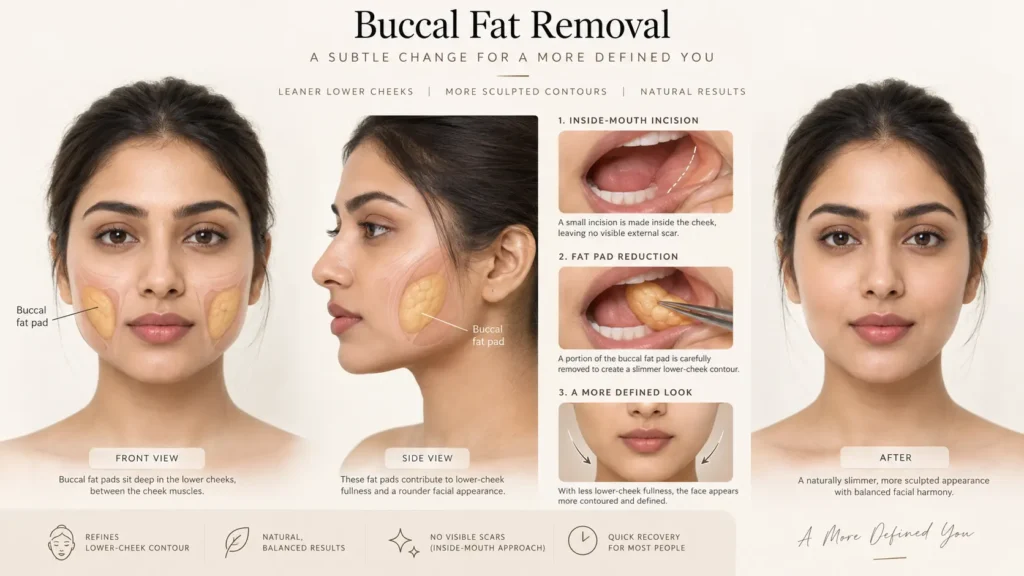
The buccal fat pads sit deep inside the cheeks between the cheekbones and jaw. Removing part of this fat can make the cheekbones and lower facial contour appear more defined.
However, swelling immediately after surgery can temporarily hide the result. As healing progresses, the cheeks gradually become less full and the final contour becomes clearer over several months. Cleveland Clinic notes that healing commonly takes around three weeks, while final results may take several months to become visible.

Does Buccal Fat Removal Make You Look Older?
ASPS surgeons have specifically cautioned that aggressive buccal fat removal may produce an overly hollow appearance as the face ages. At the same time, appropriately selected patients with persistent cheek fullness may achieve balanced long-term contouring.
Why Does Facial Fat Matter as We Age?
Ageing does not affect only the skin. Facial fat compartments also change in volume and distribution over time. Research discussed by ASPS found measurable loss of facial fat volume over a period of more than a decade, particularly in deeper facial compartments.
This means a face that looks full in the twenties or thirties may naturally become leaner later. Removing excessive cheek volume at a young age without considering future facial ageing can therefore increase the chance of a gaunt appearance later.
Who Has a Higher Risk of Looking Too Hollow?
People who already have naturally thin, narrow or angular faces generally require particular caution. Cleveland Clinic specifically notes that people with narrow faces or older individuals may not be ideal candidates because buccal fat naturally diminishes with age.
Additional caution may also be appropriate when a patient already has visible cheek hollows, significant age-related volume loss, prominent cheekbones with little soft-tissue coverage or expects an extremely sculpted appearance.
Who May Get Better Long-Term Buccal Fat Removal Results?
Buccal fat removal may be better suited to healthy adults who have persistent fullness in the lower cheeks despite maintaining a relatively stable weight.
Patients whose facial fullness is genuinely caused by prominent buccal fat pads, rather than overall weight, jaw muscles or loose skin, are more likely to benefit from appropriate cheek reduction. ASPS emphasizes that the procedure is intended to thin the cheek-hollow area and is generally avoided in naturally thin faces.
Is Partial Buccal Fat Reduction Better Than Removing All the Fat?
The objective should generally be facial balance rather than maximum fat removal. The amount of buccal fat required varies from person to person, and the two sides of the face may not contain exactly the same amount.
Conservative planning can preserve some natural cheek volume while reducing unwanted fullness. ASPS surgeons have highlighted concerns that overly aggressive removal may increase the risk of hollowing as patients age.
Patients considering buccal fat removal in Navi Mumbai should therefore have their facial anatomy evaluated individually rather than requesting a predetermined amount of fat removal.
What Do Natural Buccal Fat Removal Results Look Like?
Natural results should usually create a subtle reduction in lower-cheek fullness while preserving facial softness and balance. The face should still look like the same person rather than appearing dramatically thinner or hollow.
Good facial contouring should also complement the cheekbones, jawline and chin. The ideal change is therefore different for every face.
How Long Does It Take to See Final Results?
Early swelling means patients should not judge their appearance immediately after surgery. Swelling and tenderness gradually improve during the initial recovery period.
Cleveland Clinic reports that healing generally takes around three weeks, but several months may be needed before final buccal fat removal results become apparent
Does Buccal Fat Come Back?
The portion of buccal fat surgically removed does not simply grow back in the same way. However, the rest of the face continues to change throughout life.
Weight fluctuations, skin laxity, ageing and changes in other facial fat compartments can all alter the way the face looks years after surgery. For this reason, long-term appearance cannot be predicted solely from an immediate postoperative photograph.
Can Buccal Fat Removal Be Combined With Other Facial Contouring Procedures?
Sometimes cheek fullness is only one part of a patient’s facial concern. Chin proportions, jawline definition, loose skin or other areas of facial volume may influence the overall appearance.
Patients can learn about other facial surgery options in Navi Mumbai when a broader facial assessment suggests that buccal fat removal alone may not address the main concern.
How Can the Risk of Premature Ageing Be Reduced?
The most important factor is appropriate patient selection. A surgeon should assess whether the cheeks truly contain excess buccal fat and consider the patient’s facial width, cheekbones, skin quality, age and family pattern of facial ageing.
Avoiding excessive removal is equally important. The goal should be a proportionate result that still preserves enough facial softness for the patient’s anatomy.
Buccal Fat Removal in Navi Mumbai With Dr. Vinod Vij
Dr. Vinod Vij, Plastic and Cosmetic Surgeon in Navi Mumbai, has 30+ years of experience in plastic, cosmetic and reconstructive surgery. His official profile describes an approach based on careful patient assessment, individual anatomy, medical history and realistic treatment expectations.
For buccal fat removal, evaluating long-term facial proportions is especially important because the goal is not simply to remove cheek fat but to create a balanced contour that remains appropriate as the face changes over time.
Frequently Asked Questions
Not necessarily. The risk is greater when excessive fat is removed or the procedure is performed on someone who already has a thin or narrow face.
It can if too much volume is removed. Conservative treatment and appropriate patient selection can help reduce the risk of an overly hollow appearance.
The removed fat does not simply return, but ageing, weight changes and other facial volume changes can affect your future appearance.
Not every patient needs aggressive removal. The amount should be individualized to preserve natural facial proportions and avoid unnecessary hollowing.
Patients can consult Dr. Vinod Vij in Navi Mumbai for facial assessment, candidacy evaluation and individualized buccal fat removal planning.
Conclusion
Buccal fat removal results can remain natural and balanced when the procedure is performed for the right patient and the amount of cheek fat removed is carefully planned. The procedure does not automatically make the face look older, but excessive removal in a thin or unsuitable face can increase the risk of hollowing as natural facial volume changes with age. Patients considering buccal fat removal in Navi Mumbai should therefore focus on conservative facial contouring, realistic expectations and long-term planning rather than pursuing an extremely hollow-cheek appearance.
Considering Buccal Fat Removal in Navi Mumbai?
A detailed facial assessment can help determine whether your cheek fullness comes from the buccal fat pad and whether reduction is likely to remain proportionate over time.
