
Postpartum Hair Loss After 1 Year
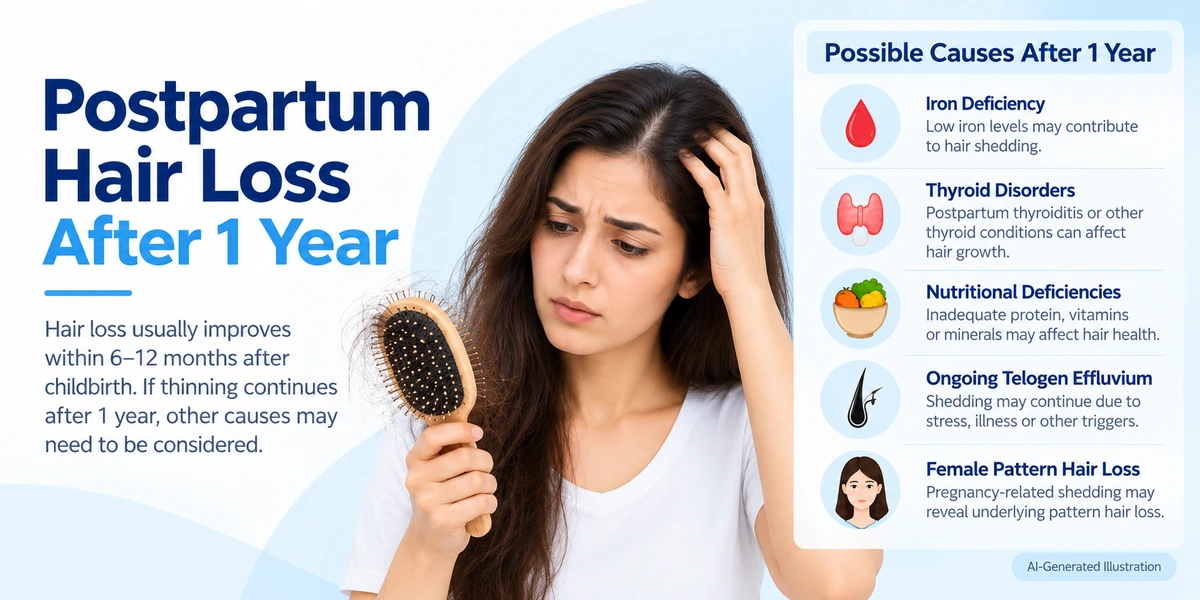
Postpartum hair loss after 1 year is less typical than shedding during the first few months after childbirth. Most women experience improvement within 6–12 months. If hair continues to fall excessively or normal fullness has not returned after one year, factors such as iron deficiency, thyroid disorders, ongoing telogen effluvium or female pattern hair loss may need evaluation.
Hair loss after childbirth is usually temporary. However, persistent thinning should not automatically be attributed to pregnancy hormones alone.
What Is Postpartum Hair Loss?
Postpartum hair loss, also called postpartum telogen effluvium, is increased hair shedding that occurs after childbirth.
During pregnancy, higher oestrogen levels help keep more hair in the active growth phase. After delivery, oestrogen levels fall, allowing more hair follicles to enter the resting and shedding phases.
This often causes noticeable shedding a few months later.
Although the amount of shed hair can appear substantial, the follicles usually remain capable of producing new hair.
How Long Does Postpartum Hair Loss Last?
Postpartum shedding commonly begins around two to four months after delivery and is often most noticeable around four months.
Many women experience improvement during the following months, with hair growth approaching its usual pattern by approximately one year.
| Time after childbirth | Typical hair changes |
|---|---|
| 0–2 months | Hair may still appear relatively full |
| 2–4 months | Increased shedding may begin |
| 4–6 months | Shedding may be most noticeable |
| 6–9 months | Hair shedding often starts decreasing |
| 9–12 months | Hair growth and fullness generally improve |
| Beyond 12 months | Persistent thinning may require medical assessment |
These are approximate timelines. Individual recovery varies.
For more information about the usual shedding pattern, read when postpartum hair loss stops and how it is managed.
Why Does Hair Loss Continue After 1 Year?
When significant hair loss persists beyond a year, several factors may contribute.
1. Iron Deficiency
Iron deficiency, sometimes associated with blood loss or inadequate iron intake, may contribute to diffuse hair shedding.
2. Thyroid Disorders
Postpartum thyroiditis or other thyroid conditions can affect the hair-growth cycle.
Fatigue, weight changes, palpitations or other symptoms may also be present.
3. Nutritional Deficiencies
Inadequate protein intake or certain nutrient deficiencies may affect hair growth. Supplements are useful when there is a demonstrated deficiency or other medical indication.
4. Ongoing Telogen Effluvium
Repeated illness, major stress, nutritional problems or other triggers may contribute to prolonged shedding.
5. Female Pattern Hair Loss
Pregnancy-related shedding may reveal previously less noticeable female pattern hair loss.
Unlike temporary postpartum shedding, female pattern hair loss can cause progressive thinning, often with a widening central part.
Read more about female pattern hair loss, its causes and treatment considerations.
How Is Persistent Postpartum Hair Loss Diagnosed?
A healthcare professional may review when the shedding started, whether it is diffuse or patchy, and whether other symptoms are present.
Assessment may include a scalp examination and, when indicated, blood tests such as:
-
Complete blood count (CBC)
-
Ferritin or iron studies
-
Thyroid function tests
-
Other nutritional or hormonal investigations based on clinical findings
Not everyone requires every test.
The goal is to distinguish temporary shedding from underlying conditions that need specific treatment.
How Can Postpartum Hair Loss Be Managed?


Management depends on the cause rather than the number of months since childbirth.
Maintain Adequate Nutrition
A balanced diet containing sufficient protein, iron and other essential nutrients supports normal hair growth.
Follow Gentle Hair-Care Practices
Avoid tight hairstyles, repeated pulling, excessive heat and harsh chemical treatments that can increase hair breakage.
Address Identified Medical Conditions
Iron deficiency, thyroid disease and other diagnosed conditions may require specific medical treatment.
Consider Medication Only When Appropriate
Treatment for female pattern hair loss may differ from treatment for postpartum telogen effluvium.
Medicines such as minoxidil are not routinely necessary for ordinary postpartum shedding. Their suitability, especially during breastfeeding, requires individual medical advice.
Avoid Unproven Treatments
PRP, mesotherapy, supplements and other procedures should not be assumed to correct normal postpartum shedding. Evidence, risks and treatment suitability differ.
Most uncomplicated postpartum telogen effluvium improves without a hair-restoration procedure.
Can Breastfeeding Cause Hair Loss After 1 Year?


Breastfeeding itself is not established as a direct cause of persistent hair loss.
Postpartum hormonal changes, nutritional status, illness and other factors may contribute to shedding during the same period.
Breastfeeding should not automatically be blamed for prolonged hair thinning.
If hair loss continues, a clinical assessment can help identify other possible causes.
When Should You See a Doctor?
Medical evaluation is advisable when hair shedding remains substantial after one year, continues worsening or occurs with scalp symptoms.
Assessment is particularly important if there is:
-
Patchy hair loss or clearly defined bald areas
-
A progressively widening hair part
-
Persistent scalp itching, redness, pain or scaling
-
Significant fatigue or unexplained weight changes
-
Heavy menstrual bleeding or symptoms suggesting anaemia
-
Sudden, severe shedding
If thinning continues well beyond the first postpartum year, the underlying cause should be reassessed rather than assuming it remains ordinary hormonal shedding.
Related reading: Understanding postpartum hair loss two years after childbirth.